Trekking
What a Mountain Guide Actually Does on a Mount Toubkal Trek
8 сентября 2026 г. · 8 min read
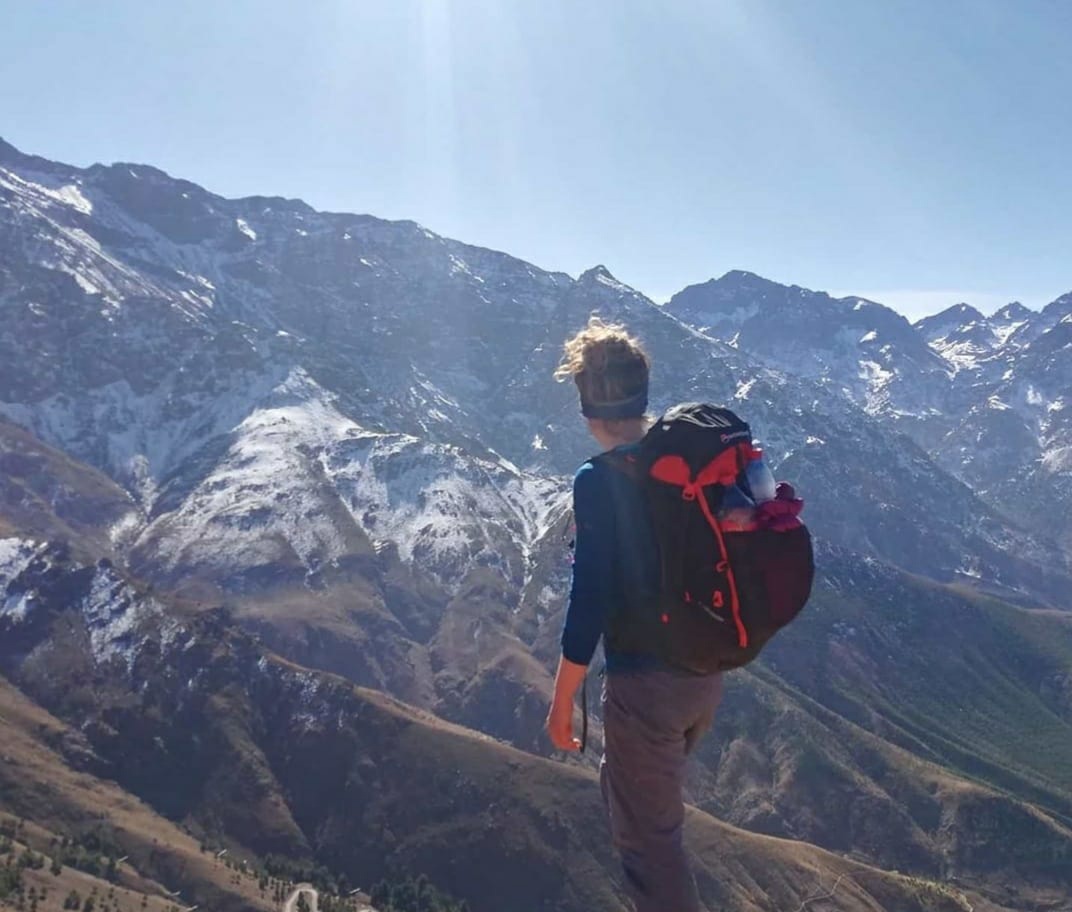
A plain description of the guide's working day on Toubkal, from the Imlil load-up to the summit call and the walk back down.
Before you arrive
Work starts before the trek does: checking the forecast trend rather than one day's icon, confirming the refuge or village stop, arranging mules and muleteers, and looking at the group — ages, altitude history, how much walking anyone has really done.
That last part shapes the plan more than the map does. A group of four with no altitude experience gets a different first day from two people who trekked in Nepal last year.
Day one: pacing, not distance
From Imlil the job is to slow people down. Almost every problem on Toubkal is the result of a fast first ascent, and the guide's main tool on day one is pace — regular stops, water, food, and watching who stops talking.
Meanwhile the practical layer runs quietly: the mules go ahead with the bags, lunch appears somewhere with shade, and the guide is already comparing the sky with what the morning forecast promised.
The refuge evening
At the refuge the guide is doing three things: feeding people properly, setting a realistic start time for the morning, and checking equipment while there is still time to fix a problem — a headtorch with dead batteries, boots that have rubbed, gloves nobody packed.
It is also when the honest conversation about the summit happens, so nobody is surprised at 05:00.
Summit day: the decision
Summit morning is the one moment where the guide's judgement is the whole product. Wind on the upper cirque, fresh snow, cloud sitting on the ridge, and the state of the group after a short night all go into one call: continue, wait, or turn.
A guide who turns a group around on a bad morning has done the job correctly. We would rather tell you that in advance than sell you a guaranteed summit, because nobody can guarantee one.
Winter is a different job
From roughly late autumn to spring the upper mountain holds snow and ice, and the guide's work shifts to snow conditions, crampon and axe technique, and timing the ascent around the state of the slope.
That is also when equipment stops being optional. What you cannot bring can usually be rented in Imlil, but rental is arranged separately and is never automatically included in a tour price.
Частые вопросы
- Does the guide carry my bag?
- No. On multi-day treks mules carry the main luggage between stops and you walk with a daypack. The guide walks with the group.
- What happens if I cannot continue to the summit?
- The plan is adjusted rather than abandoned — usually by turning back with part of the group while the rest continues, if that can be done safely. Decisions are made on the day.
- Is a summit guaranteed?
- No. Weather, snow conditions and how a group is coping all decide summit day. Any operator guaranteeing a summit is guaranteeing something they do not control.
Готовы спланировать поездку в Марокко?
Напишите нам ваши даты и желаемые направления. Мы оперативно сообщим о наличии мест, рассчитаем стоимость для вашей группы и предложим готовый план.