First-Timer’s Guide to a Traditional Moroccan Hammam in Marrakech
A step-by-step guide to navigating your first traditional Moroccan hammam in Marrakech. We cover the etiquette, the intense exfoliation process, and why it is the perfect recovery after exploring the medina or trekking the High Atlas.
If there is one cultural ritual that defines Moroccan life as much as the pouring of sweet mint tea, it is the hammam. Every neighborhood in Marrakech has one, recognizable by the domed roofs and the scent of woodsmoke drifting from the furnace that heats the water. But for first-time visitors, the prospect of navigating a traditional Moroccan hammam often raises more questions than excitement.
The idea of stripping down in a humid room to be scrubbed by a stranger can feel intimidating. Questions about modesty, hammam etiquette in Morocco, and what exactly happens behind those heavy steam-room doors are completely normal. It is an environment that requires you to let your guard down, both physically and mentally.
As a local tour operator, we regularly arrange hammam sessions for our guests — most often when they are dusty from the desert roads or aching after a long mountain trek in the High Atlas. In this complete guide, we break down exactly what to expect in a Moroccan hammam, removing the mystery so you can fully surrender to one of the most rejuvenating, deeply authentic experiences Marrakech has to offer.
The Cultural Importance of the Hammam
To understand the hammam is to understand a core pillar of Moroccan community life. Historically, before indoor plumbing was standard in every home, the local bathhouse was an essential facility for weekly hygiene and religious purification before Friday prayers.
Even today, in an era where most homes have modern showers, the hammam remains a weekly ritual for millions of Moroccans. It is entirely woven into the architecture of the medina. Traditionally, a neighborhood is built around a few essential services: the mosque, the Quranic school, the communal bakery, the water fountain, and the hammam. The hammam and the bakery often share the same wood-fired furnace; the heat used to bake the daily bread also warms the water for the bathhouse.
Beyond hygiene, the hammam serves as an equalizer and a social hub. Inside the steamy rooms, social classes blur, friends catch up on the week's events, business deals are casually discussed, and mothers look for potential brides for their sons. It is a space of connection.
Public vs. Private Hammams: Understanding the Difference
Before detailing the physical process, it is critical to understand the two very different types of hammams operating in Marrakech.
The Local Hammam (Hammam Beldi)
This is the communal neighborhood bathhouse. Men and women have separate facilities, or the same facility operates with separate gendered hours (usually men in the early morning and late evening, and women during the day).
If you visit a local hammam, you are expected to bring your own supplies: a plastic bucket, a small floor mat, authentic black soap, an exfoliating glove, your own shampoo, and your towels. It is a loud, social, and deeply authentic environment where locals chat, wash their children, and scrub each other's backs. The floors are wet, the steam is thick, and the atmosphere is entirely unpretentious. While visiting a Hammam Beldi is a fascinating cultural immersion, it can be overwhelming for a first-timer who does not know the unspoken rules.
The Private Hammam (Spa)
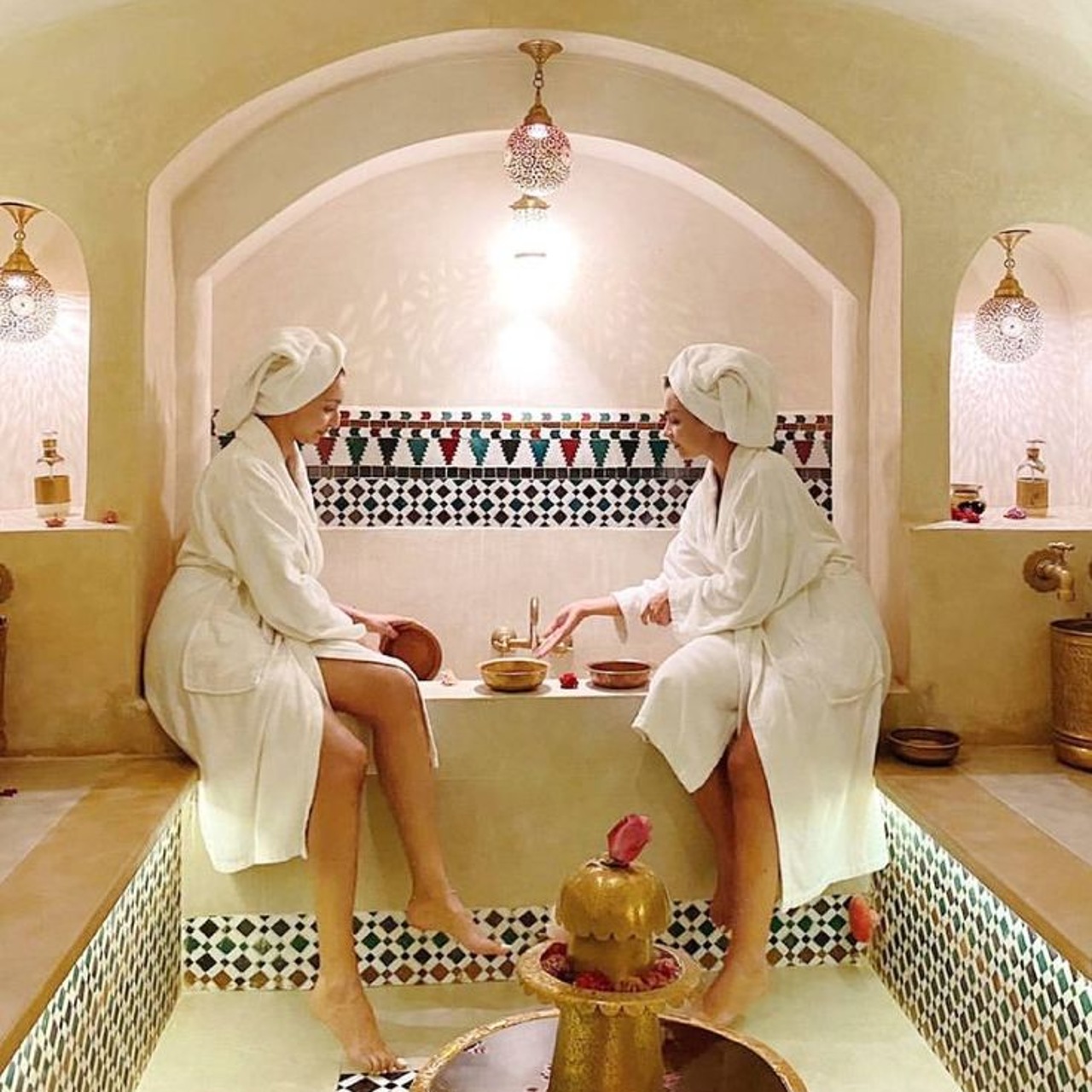
This is the refined version most visitors opt for, and the type of Marrakech hammam experience we arrange for our guests.
In a private hammam, you are given your own dedicated room (or you share a private space with your partner or traveling friends). The spa staff provides all the necessary materials—towels, robes, soap, and slippers. You have a dedicated attendant (a kessala for women, a kessal for men) who guides you through the entire washing and scrubbing process. It is a tranquil, spa-like experience focused entirely on your physical relaxation.
For a first-timer, a private hammam is the perfect introduction. It allows you to experience the authentic black soap and scrub ritual without the stress of navigating the complex social etiquette of a crowded public bathhouse.
What to Expect in a Moroccan Hammam: The Step-by-Step Process
While every spa adds its own slight variations—perhaps incorporating the scent of eucalyptus into the steam or playing soft instrumental music—the core ritual of the Moroccan hammam has remained unchanged for centuries. Here is exactly what will happen once you step inside.
1. The Welcome and Changing
Upon arrival, you will typically be welcomed into a tranquil reception area with a glass of sweet mint tea. You will then be guided to a changing room. You will be given a secure locker for your clothes and provided with a clean bathrobe and a pair of rubber sandals or slippers. You will strip down to your underwear or swimsuit bottoms (we will cover the exact dress code in the etiquette section below) and put on your robe.
2. Entering the Warm Room
Your attendant will lead you into the hammam itself—a beautifully tiled room often coated in traditional tadelakt (a waterproof lime plaster), filled with warm, thick steam.
Unlike a searingly hot dry sauna, a hammam uses moist, radiant heat. The temperature is warm and enveloping rather than suffocating. You will be asked to sit or lie down on a heated marble slab. Your attendant will then begin the process by dousing your body with warm water from a bucket or a handheld hose. The goal here is simple: relax, allow your pores to open, and let your muscles soften under the warmth.
3. The Application of Savon Noir
Next comes the famous savon noir, or black soap. This is not the foaming bar soap you use at the sink at home. Authentic Moroccan black soap is a thick, dark, gel-like paste made from macerated olives, olive oil, and potash. It is exceptionally rich in Vitamin E.
Your attendant will firmly massage this soap all over your body. It does not lather into bubbles; instead, it coats your skin in a slick layer, working to naturally soften the dead surface layers of your skin. After it is applied, the attendant will usually leave you alone to relax in the steam for about 10 to 15 minutes, allowing the soap and the heat to work their magic.
4. The Kessa Scrub (The Main Event)
Your attendant will return and thoroughly rinse off the black soap with warm water. Then, they will put on a kessa—a traditional mitt with a rough, crepe-like texture that feels similar to sandpaper.
This is where the famous Moroccan scrub begins. Using long, firm, sweeping strokes, the attendant will vigorously scrub your arms, legs, back, and torso. Be prepared: this is an intense physical process. As they scrub, you will visibly see small, dark rolls of dead skin peeling away from your body. It can look slightly alarming to see how much skin is removed, but it is deeply satisfying and completely painless. This intense exfoliation boosts blood circulation, removes toxins, and leaves your skin smoother than it has likely been since you were a child.
5. The Ghassoul Clay Mask and Hair Wash
After the scrub is complete, you are thoroughly doused in warm water again to wash away the exfoliated skin.
For the next step, your attendant will apply ghassoul (often spelled rhassoul), a mineral-rich volcanic clay mined deep in the Atlas Mountains. Mixed with fragrant orange blossom water or rose water, this silky clay is smoothed over your body and sometimes into your hair. Ghassoul naturally absorbs impurities and excess oils while depositing nourishing minerals like silica and magnesium back into your skin.
While the clay sets, your attendant will often wash your hair with a gentle shampoo and provide a deeply relaxing scalp massage.
6. The Final Rinse and Tea
A final dousing of warm water washes away the clay and shampoo. You are then handed a dry, fluffy towel or a fresh robe. You will step out of the steam room, completely physically reset and immaculately clean. Finally, you will be guided to a quiet relaxation room where more mint tea and perhaps some dates or almonds await you to help you rehydrate and ground yourself.
Hammam Etiquette Morocco: What You Need to Know
The most common anxieties surrounding the hammam revolve around etiquette, modesty, and communication. Here are the practical rules for visitors to ensure a comfortable experience:
- What to Wear: In a private spa hammam, men should wear swimming trunks or briefs. Women generally wear the bottom half of a bikini or regular cotton underwear. Do not bring your favorite, expensive white swimwear, as the dark black soap and the natural clay can sometimes leave a residue or scent. Most high-end spas will provide single-use disposable underwear if you prefer not to use your own.
- Toplessness: In women-only spaces within private spas, it is completely standard for women to be topless during the wash. If you are uncomfortable with this, you may wear a bikini top, though you should know it makes it much harder for the attendant to properly scrub your back and shoulders.
- Communication: If the scrub is too rough, or the water is too hot, you must speak up. The attendants want you to be comfortable, but they are used to scrubbing hard. A simple "softer, please" in English, French, or just gesturing gently will be universally understood.
- Couples: Traditional public hammams are strictly segregated by gender at all times. However, in private tourist spas, couples can usually book a private room together to share the experience side by side.
- Tipping: It is customary to leave a small tip for your specific attendant (the person who washed you) at the end of the service. Handing it directly to them before you leave the changing area is the polite way to show gratitude for their hard physical labor.
When is the Best Time for a Hammam in Marrakech?
Timing your hammam properly can significantly elevate your entire Moroccan travel experience. We highly recommend booking a hammam for the late afternoon or early evening, allowing you to transition smoothly into a relaxed dinner.
After the Medina: Spending a few hours navigating the narrow, bustling alleys on a guided walk through the Marrakech medina is visually thrilling, but physically tiring. The dust, the heat, and the constant dodging of motorbikes take a toll. A 5:00 PM hammam washes away the dust of the city and prepares you for a peaceful evening.
After the Mountains: This is the ultimate travel strategy. If you have just returned from our 2-Day Mount Toubkal Summit Trek or a multi-day walk through the Atlas valleys, your muscles will be screaming. The combination of radiant heat and a deep scrub, especially when followed by an Argan oil massage, is the absolute best way to prevent severe muscle stiffness and speed up recovery.
Integrating into Your Schedule: If you are currently looking at a broader Moroccan itinerary, we suggest slotting the hammam near the end of your stay. Getting a deep exfoliation right before you fly home ensures you leave Morocco feeling totally refreshed, carrying that famous holiday glow with you onto the plane.
Book Your Marrakech Hammam Experience
Navigating the medina to find a reputable spa, haggling over entry prices, and trying to communicate exactly what services you want can quickly take away from the relaxation of the experience.
At Toubkal Views, we offer a seamless, fully organized [Marrakech: Traditional Hammam, Professional Massage, Hotel Transport](/tours/marrakech-traditional-hammam-massage) package.
From 30 EUR, this comprehensive 2-hour experience includes:
- Reliable pick-up and drop-off directly from your Marrakech hotel or riad.
- The full traditional hammam ritual (incorporating the black soap, the rigorous kessa scrub, and the ghassoul clay mask) in a pristine, private spa setting.
- A professional massage using pure, locally sourced Moroccan Argan oil.
- A private room option for couples traveling together.
Everything is arranged locally on your behalf so you do not have to worry about a single logistical detail.
To book this relaxing add-on to your trip, simply visit the tour page or message us directly on WhatsApp at +212 606 258 056. We will organize your booking and arrange your driver. For more travel inspiration, feel free to browse our full list of activities to see how else you can fill your days in Marrakech.
Embracing the traditional Moroccan hammam is more than just booking a spa day; it is stepping directly into a centuries-old tradition of communal care, deep hygiene, and unparalleled physical relaxation. Leave your modesty anxieties at the door, embrace the warmth of the steam room, and prepare for the best scrub of your life.
Frequently asked questions
- Does the kessa scrub in a Moroccan hammam hurt?
- No, it should not hurt. The kessa glove is rough, similar to sandpaper, but because your skin has been thoroughly softened by the warm steam and the olive-based black soap, the scrubbing feels vigorously satisfying rather than painful. If your attendant is scrubbing too hard, simply ask them to use a gentler touch.
- What should I wear to a hammam in Marrakech?
- In private spas, men should wear swimming trunks or underwear. Women typically wear bikini bottoms or standard cotton underwear. Many spas also provide disposable underwear. Avoid bringing expensive or white swimwear, as the natural black soap and clay can occasionally cause discoloration.
- Can men and women go to a hammam together in Morocco?
- In local, public hammams, absolutely not—facilities are strictly segregated by gender at all times. However, in private spas catering to travelers, you can usually book a private room to share the hammam experience side-by-side with your partner.
- Should I get a hammam before or after a desert trip?
- We highly recommend booking your hammam after your desert trip or mountain trek. It is the perfect way to wash away the fine dust from the Sahara dunes or soothe tired muscles after days of walking in the High Atlas Mountains.
- Do I need to wash my hair before going to the hammam?
- No. In fact, washing your body and hair is the entire purpose of the hammam visit. Your attendant will typically wash your hair for you at the end of the treatment, often applying a nourishing volcanic clay mask directly to your scalp.