Winter Equipment for Mount Toubkal: Crampons, Ice Axe and Layers
The equipment side of a winter Toubkal ascent — crampons, ice axe, snowshoes, boots and layering — and what is worth renting locally.
Mount Toubkal in winter is a different mountain, and the difference is largely what you are wearing and carrying. From roughly December to April the upper slopes hold snow and ice, and the ascent stops being a long walk.
This page is the clothing and equipment list. Route choice, conditions and whether winter is right for you are covered in our Toubkal winter climb guide, and the season comparison is in winter vs summer on Toubkal.
One thing to read before the list: conditions vary week to week. Items below are grouped by how conditional they are, and the conditional ones are decided a few days before you walk, not months ahead.
Essential — every winter ascent
Base layer. Long-sleeve synthetic or merino, top and bottom. Not cotton: once it is wet from the climb it stays wet and cold.
Insulating mid layer. A fleece or light synthetic top. This is the layer you add and remove most often during the day.
Insulated jacket. Down or synthetic, warm enough to stand still in at altitude in the dark. Summit mornings start before sunrise and that is when it is coldest.
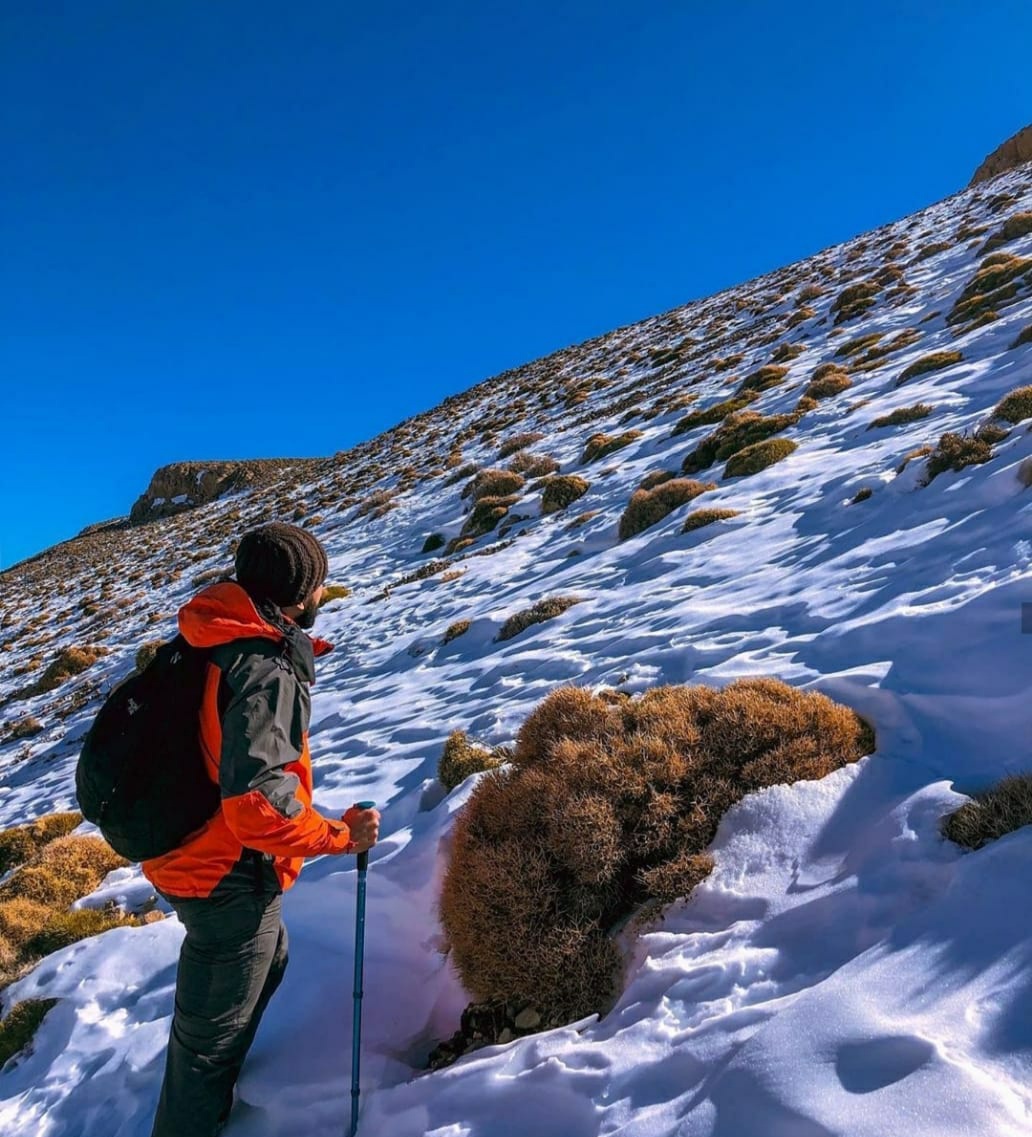
Windproof, waterproof shell. Jacket and overtrousers. The wind on the upper slopes does more than the temperature.
Trekking trousers. Warm, not jeans. Softshell or a lined walking trouser under the shell.
Stiff mountain boots. Enough sole rigidity to hold a crampon. Soft summer trekking boots will not do it, whatever the shop said. Boots must be worn in before you arrive.
Socks. Warm walking socks, plus a spare pair. Wet feet end days.
Gloves. A warm pair and a spare pair. Both get wet, and both are miserable to be without.
Hat and buff or neck gaiter. Most people underestimate wind on exposed skin.
Category 4 sunglasses or glacier glasses. Sun on snow at 4,000 m burns eyes as well as skin. Regular sunglasses are not enough on a bright snow day.
High-factor sun cream and lip balm. The same reason.
Gaiters. Snow in your boots ends days.
Head torch with spare batteries. Summit day begins in the dark. Cold shortens battery life.
Day pack. Around 30–35 litres, enough for layers, water and lunch on summit day.
Water. An insulated bottle or a flask; hydration tubes freeze.
Condition-dependent — decided days before, with your guide
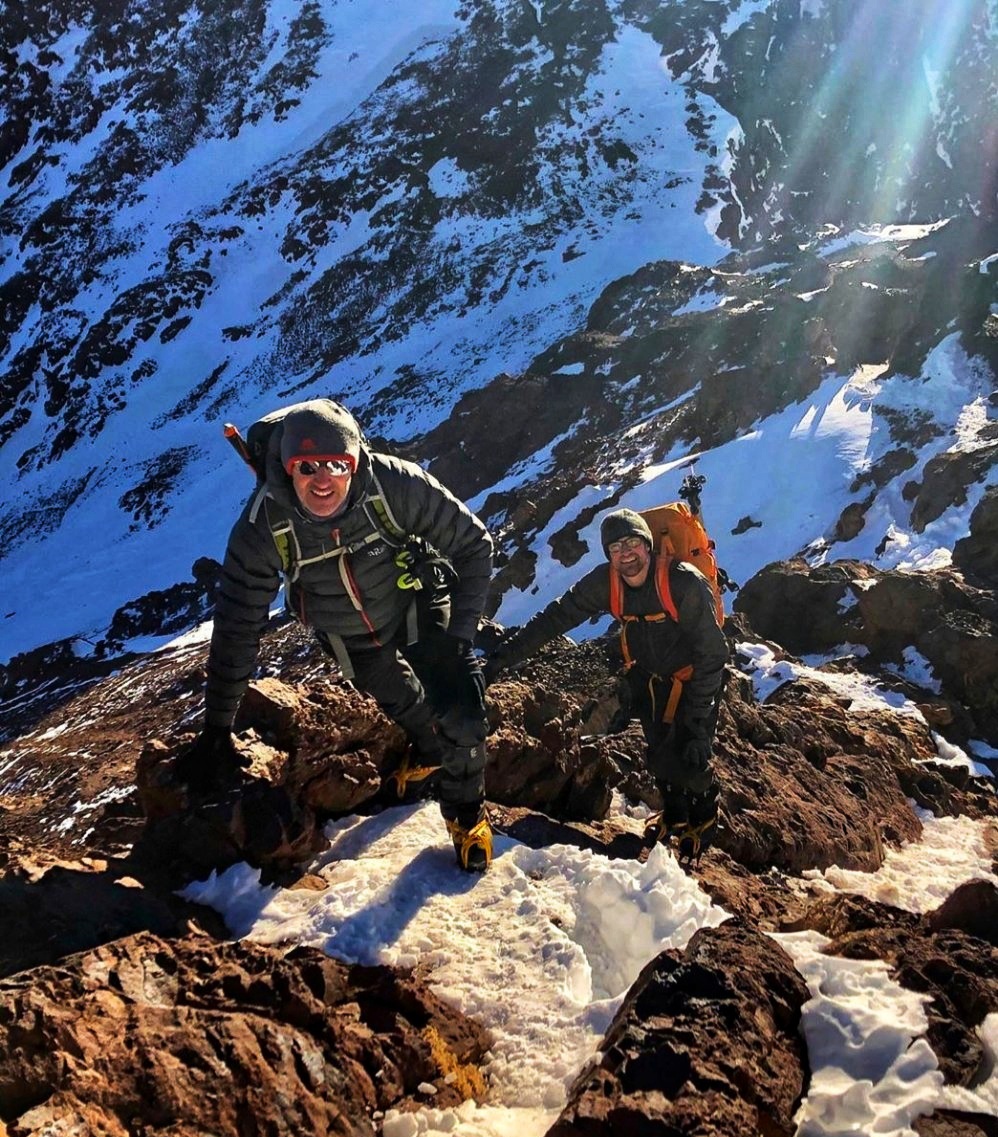
Crampons. Needed when there is snow and ice on the upper mountain, which is common but not constant across the winter months. If you carry them they must be compatible with your boots — crampons that do not match your boot type are a hazard, not a safeguard, and it is the single most common equipment mistake we see.
Ice axe. Carried for the upper slopes when conditions call for it. You should understand basic self-arrest before you need it. Your guide will brief you; the brief is not a substitute for having handled one.
Snowshoes. Useful after fresh snowfall on the approach, unnecessary on hard-packed neve.
Rope and technical hardware. Carried by the guide when conditions call for it. This is a judgement made by the person leading, not by the traveller.
Heavier insulation. After a cold front, an extra layer is worth more than any single piece of hardware.
Optional — helpful, not required
Trekking poles. Most people find them useful on the descent. Snow baskets help if there is fresh snow.
Hand and toe warmers. Small, light, and appreciated on a cold summit morning.
Thermos of hot drink. The same.
Camera with spare battery. Cold drains batteries quickly; keep them inside a jacket.
Ear plugs. The refuge is a shared dormitory.
In the refuge
The refuge is heated communally but not warm. Bring something comfortable and dry to change into — a spare base layer, dry socks, and light indoor shoes or thick socks. Sleeping is in bunks with mattresses; whether a sleeping bag or liner is needed depends on the refuge and the night, so ask us before you pack one.
What you can rent in Imlil rather than buy
Crampons, ice axes and snowshoes are the clearest rental case in the whole list — heavy, technical, and bought for a single trip otherwise. Our equipment operation in Imlil carries these categories, along with four-season sleeping bags and packs.
We do not publish stock levels, sizes or prices, because those change. Tell us your dates and shoe size on WhatsApp and we will confirm what is realistic before you fly.
What we will not tell you
We will not tell you a winter summit is guaranteed, and we will not tell you a fixed kit list applies to every winter week. Conditions decide, and a guide who turns a group around in a storm has done their job properly.
Read next
Winter climbing on Toubkal, winter vs summer, our Toubkal safety guide, and the Imlil equipment list.
Gear sorted? Choose a Toubkal trek that matches the season you are travelling in.
Getting up to Imlil to collect your kit?
Private Marrakech → Imlil in a Jeep Grand Cherokee. Your luggage travels with you and the driver takes you to the door, or to the closest point a vehicle can reach.
€50 one way · €90 round trip · private vehicle, total price
Book your transferFrequently asked questions
- Do I need crampons to climb Toubkal in winter?
- Yes, in typical winter conditions crampons and an ice axe are required, along with boots stiff enough to hold crampons.
- Can I rent crampons and an ice axe in Imlil?
- These categories are carried by our Imlil equipment operation. Availability varies by season and day, so confirm your items and sizes with us before travelling.
- When is winter on Mount Toubkal?
- Snow and ice conditions typically run from around December to April, though the exact window varies year to year.