Luxury
Luxury Desert Experiences in Morocco: Agafay vs the Sahara
September 4, 2026 · 13 min read
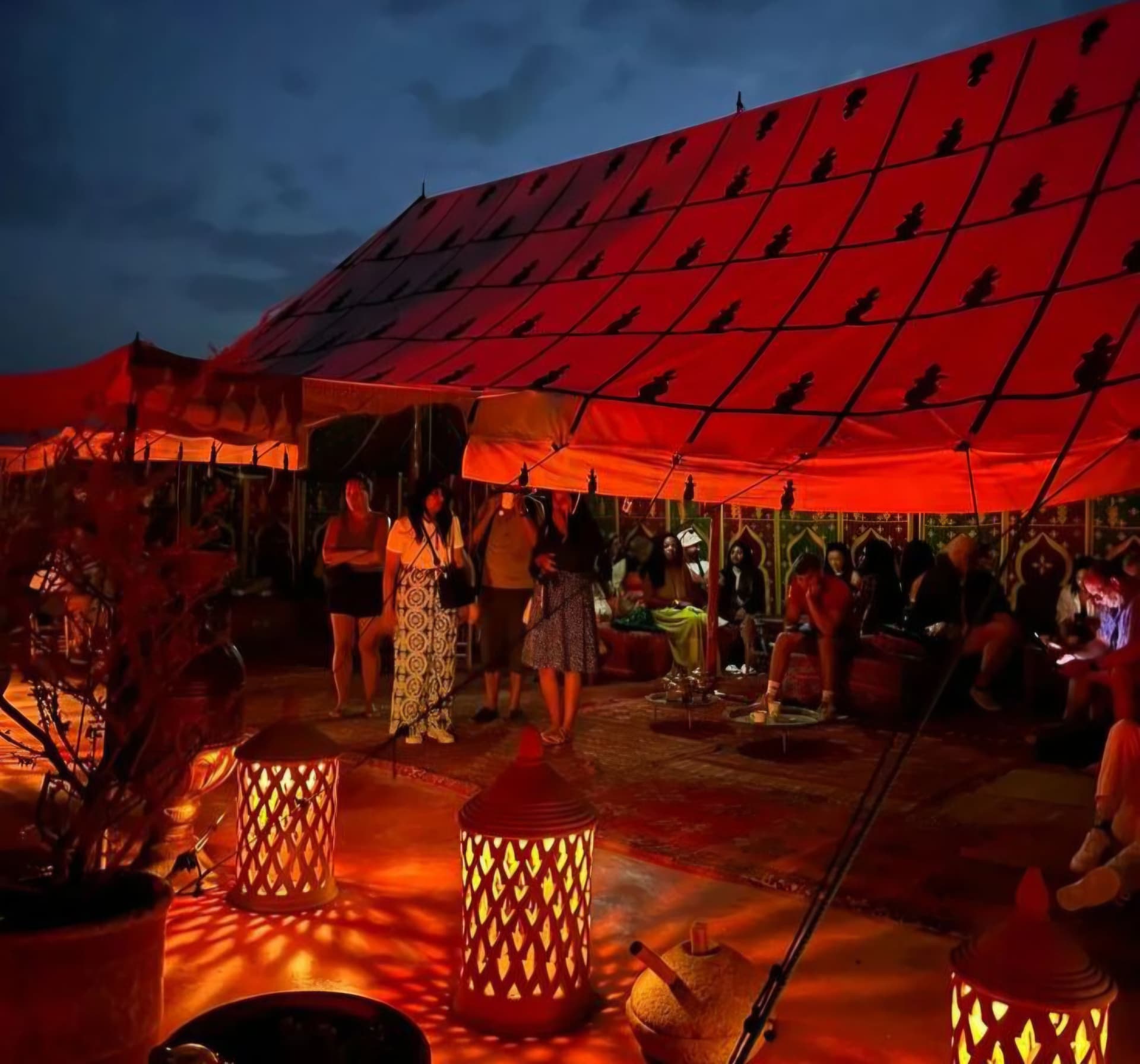
Two completely different deserts, forty-five minutes and nine hours from Marrakech. An honest comparison of landscape, travel time, camp quality, night skies and which one belongs in your itinerary.
They are not the same desert, and the choice is not about money
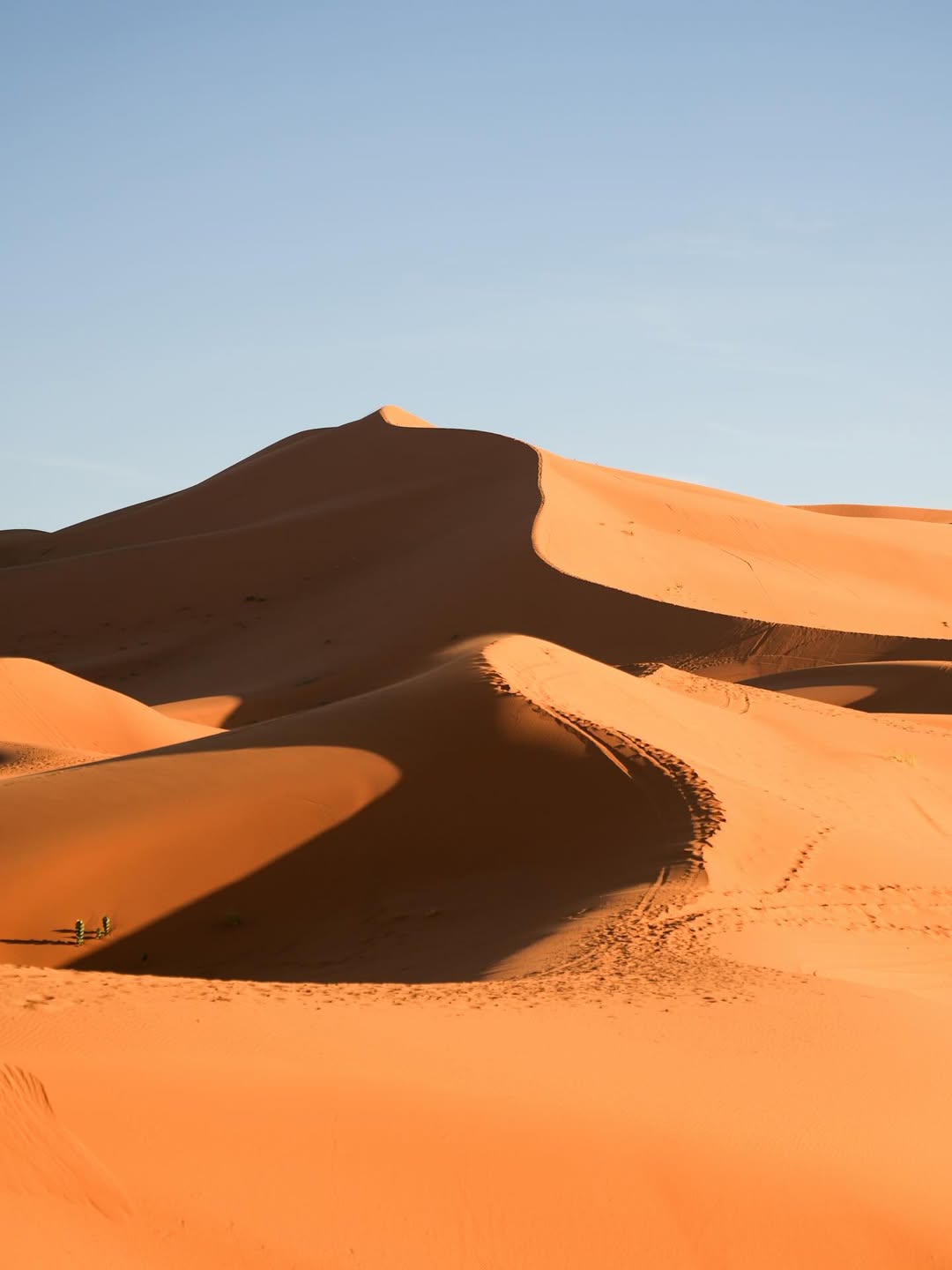
Marrakech sells two deserts and rarely explains that they have almost nothing in common. Agafay is a stone desert forty-five minutes from the city: pale chalk hills, dry riverbeds, argan trees, with the High Atlas along the horizon. The Sahara at Erg Chebbi is sand — genuine dunes up to 150 metres high — and it is roughly nine hours away by road.
Both can be done at a high standard, and both have camps calling themselves luxury. The decision between them is a decision about time and about what you actually want to see, not about budget. A very expensive Agafay evening will never produce a sand dune, and a modest Merzouga camp will.
What follows is the comparison we give travellers on the phone, including the parts that are unflattering to the option closest to home.
| Agafay | Sahara / Erg Chebbi | |
|---|---|---|
| Distance from Marrakech | c. 45 minutes | c. 9 hours each way |
| Minimum time needed | One evening | 2 nights, realistically 3 days |
| Landscape | Stone and chalk hills, Atlas horizon | Sand dunes up to c. 150 m |
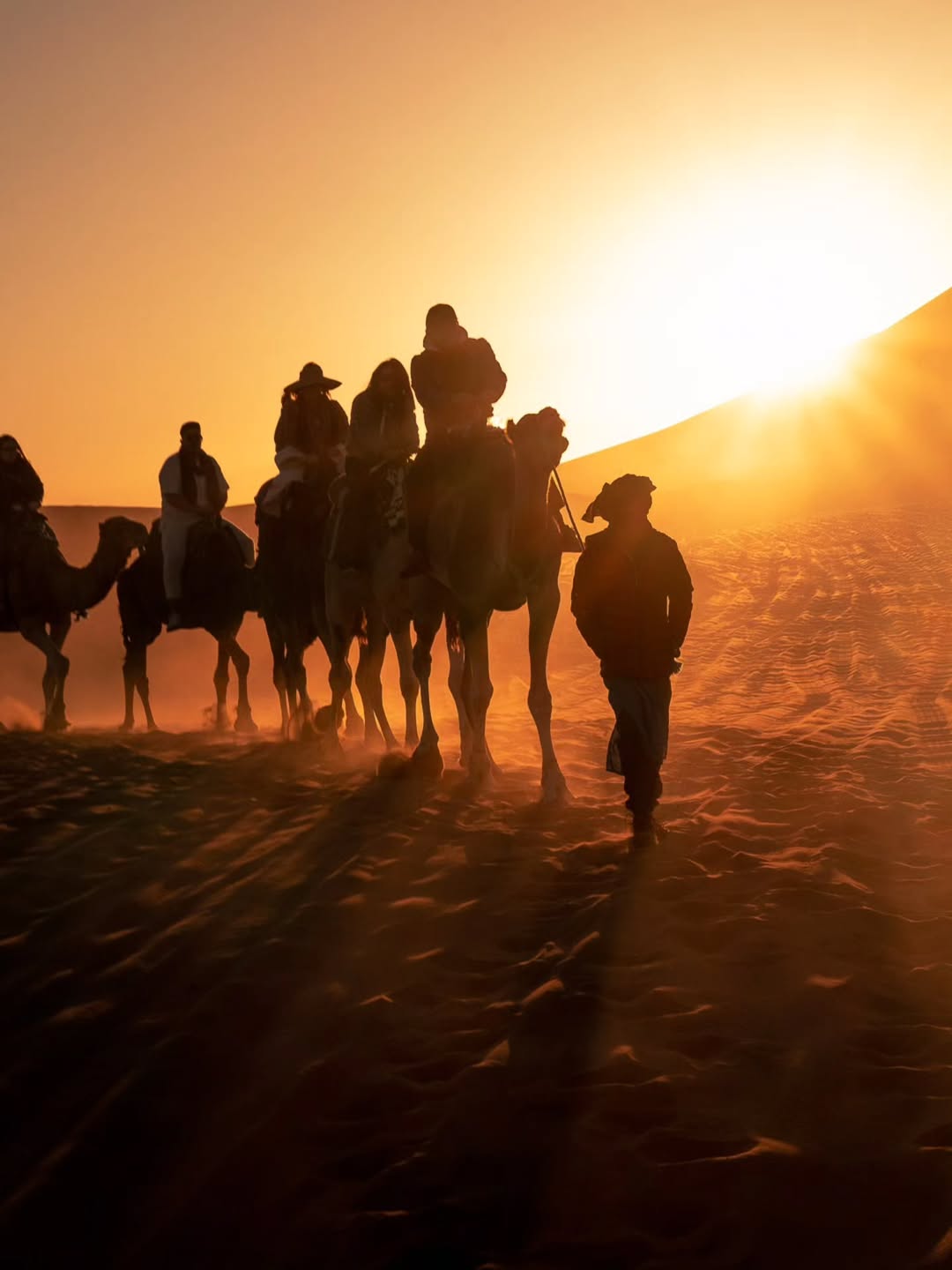
| Camel option | Short rides on stony tracks | Long caravan crossings over dunes |
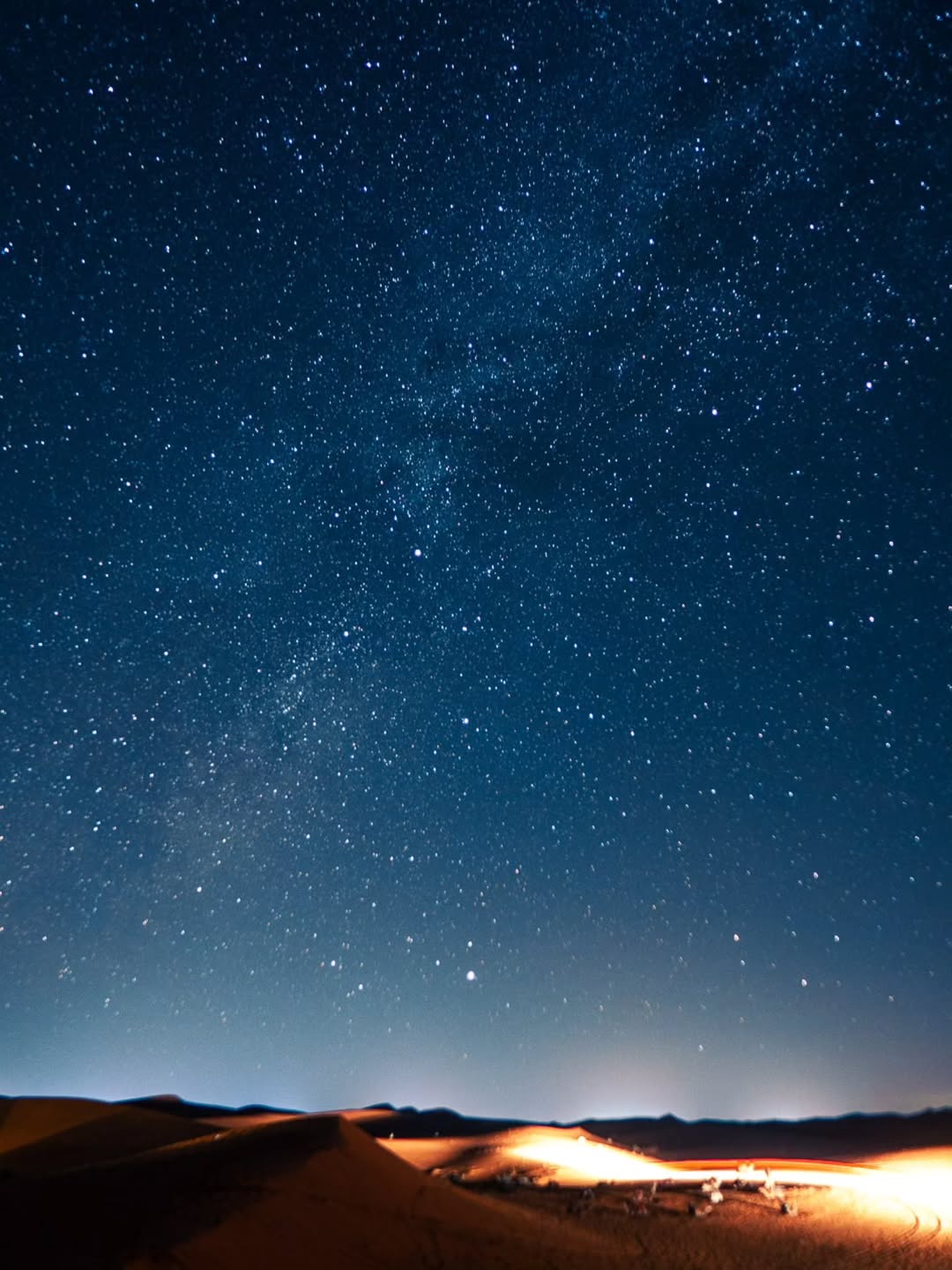
| Night sky | Good; some Marrakech light glow | Exceptional; no light pollution |
| Camp standard | Wide range, from basic to genuinely high-end | Wide range, from basic to genuinely high-end |
| Best for | Short trips, one free evening, families | First real desert experience, photography, silence |
The case for Agafay
Agafay's argument is arithmetic. It gives you desert silence, a horizon, a sunset and a camp dinner inside a single evening, without losing two days of a short trip to a road. For anyone with four or five days in Morocco, that is decisive.
It also photographs far better than its reputation suggests. The chalk hills fold into one another in a way that reads as lunar rather than sandy, and the Atlas along the northern horizon — snow-capped for a good part of the year — is a backdrop the Sahara simply cannot offer.
The honest caveats: it is stone, not sand, and travellers who arrived expecting dunes are always disappointed regardless of how good the evening was. It is also close enough to Marrakech that some light glow reaches the sky, and on busy weekends the popular camps are not remotely remote.
The case for the Sahara
Erg Chebbi delivers the thing people picture when they say Morocco. The dune field arrives without warning at the edge of the plain, the scale is genuinely disorientating, and the silence at night is total in a way that surprises even experienced travellers.
The night sky is the strongest single argument. There is effectively no light pollution for a very long way in any direction, and the difference between that and any sky near a city is not marginal.
The cost is time. Nine hours each way, which realistically means three days of a seven-day trip. The compensation is that the drive is itself one of the best routes in the country — the Tizi n'Tichka, Aït Ben Haddou, Ouarzazate and the gorges — so it is only wasted time if you treat it as transit rather than as itinerary.
What 'luxury camp' actually means, and how to check
This is the least regulated adjective in Moroccan travel. The same words — luxury desert camp — describe a canvas tent with a mattress and a shared shower block, and a tented suite with plumbing, air conditioning, a private terrace and a proper bed. Photographs do not reliably distinguish them.
Five questions settle it. Is the bathroom private and inside the tent? Is there running hot water? Is there power overnight, or does the generator go off? How far is the camp from where the vehicle stops, and how do you cover that distance? And how many tents are on site — a twelve-tent camp and a sixty-tent camp are not the same evening.
We will not describe individual camps' features on this page, because features change and we only state what we have confirmed for your dates. When we propose a camp we tell you which one it is, what its bathrooms are and what the transfer to it involves, and if a detail is unconfirmed we say so rather than borrowing the camp's own marketing copy.
Doing either one privately
Private makes a bigger difference in the desert than almost anywhere else, for an unglamorous reason: timing. Sunset is the event, and shared transfers arrive when the vehicle is full rather than when the light is right. A private vehicle leaves when you want to leave.
In Agafay that means arriving with an hour of light still in hand, walking a ridge before dinner and staying after the group buses have gone. In the Sahara it means the flexibility to break the drive where you choose, to stop at the gorges, and to take sunrise at your own pace rather than the camp's schedule.
It also means a table of your own. Private dining in the desert is arranged rather than bought off a list — what is possible depends on the camp and the date, so we confirm it specifically each time.
Season, heat and the parts people get wrong
Both deserts are at their best from October to April. Midsummer daytime temperatures in Merzouga regularly exceed 40°C, which does not make a desert night unpleasant but does make the middle of the day a matter of shade and patience.
Winter nights are cold in both — genuinely cold at Erg Chebbi, where a clear January night falls close to freezing. Camps provide blankets; bring a warm layer anyway. Nobody regrets packing a jacket and plenty regret not having one.
The most common practical mistake is footwear. Sand gets into everything, low shoes fill immediately on a dune, and flip-flops on a stony Agafay ridge are a bad evening. The second most common is underestimating how much the wind matters for photography: a windy afternoon at Erg Chebbi is spectacular to watch and difficult to shoot.
So which one belongs in your trip?
If you have fewer than six days in Morocco, take Agafay and spend the saved days in the mountains or on the coast. If seeing real dunes matters more to you than anything else in the itinerary, build the trip around Merzouga and accept that it will dominate the week.
If you have ten days, do both — they genuinely are different experiences, and an Agafay evening early in the trip does not spoil the Sahara later.
Every journey in our luxury division is quoted individually, in writing, before anything is paid. We do not publish a nightly rate we have not confirmed for your dates.
Frequently asked questions
- Is the Agafay desert worth visiting if I cannot get to the Sahara?
- Yes, provided you know it is a stone desert rather than a sand one. It delivers silence, a horizon, a sunset and a camp dinner inside one evening from Marrakech, which the Sahara cannot do in under three days.
- How far is the Sahara from Marrakech?
- Around nine hours by road each way to Merzouga and the Erg Chebbi dunes. Zagora is closer, at roughly seven hours, but its dunes are much smaller.
- Are there real sand dunes in Agafay?
- No. Agafay is chalk and stone hills with dry riverbeds and argan trees. Anyone selling you dunes forty-five minutes from Marrakech is selling you something else.
- What makes a desert camp genuinely luxury?
- A private bathroom inside the tent with running hot water, power that stays on overnight, a proper bed, a manageable transfer from the vehicle, and a limited number of tents. Ask about all five specifically — the word itself is unregulated.
- Can you spend one night in the Sahara instead of two?
- Technically yes, and we would advise against it: eighteen hours of driving for a single night makes the desert the least memorable part of the trip. Two nights is the point at which the journey pays for itself.