Luxury
The Perfect 7-Day Luxury Morocco Itinerary
September 4, 2026 · 15 min read
A day-by-day seven-day route through Marrakech, the High Atlas and the desert, with honest driving times, where to spend the extra night, and the two variations that work better for some travellers than the classic loop.
Book a version of this week
Prices are per person and come from each trip page.
The honest version of a seven-day Morocco trip
Seven days is the first length at which Morocco stops feeling like a sprint. It is enough for Marrakech, the High Atlas and a proper desert night, with one spare day to absorb the things that go slightly differently — which, in Morocco, is most days.
The mistake almost every seven-day plan makes is geography. Travellers send us routes with Marrakech, Fes, Chefchaouen, Merzouga and Essaouira in a week. That itinerary exists; it is thirty-two hours of driving and you will remember the vehicle. The route below is built around the fact that the Marrakech–Merzouga road is approximately nine hours each way in normal conditions and that no amount of money shortens it.
This is the version we build most often, followed by two variations that suit different travellers. All three assume a private vehicle and driver throughout, because on a route like this the vehicle is the itinerary.
Day 1 — Arrival in Marrakech
Private welcome at Marrakech Menara and transfer to your riad or hotel. If you are staying in the medina, a car cannot reach most doors — your bags travel the last two hundred metres by trolley, which is part of the charm and worth knowing in advance.
Do nothing ambitious. A hammam late afternoon, dinner on a terrace, and an early night against the flight. The single most useful thing on day one is arriving somewhere calm.
Day 2 — Marrakech, properly guided
A morning with a licensed city guide is the difference between seeing Marrakech and understanding it. The Ben Youssef madrasa, the Bahia or El Badi palaces, the Saadian tombs, and the working souks with someone who can explain which crafts are still made by hand and which are imported.
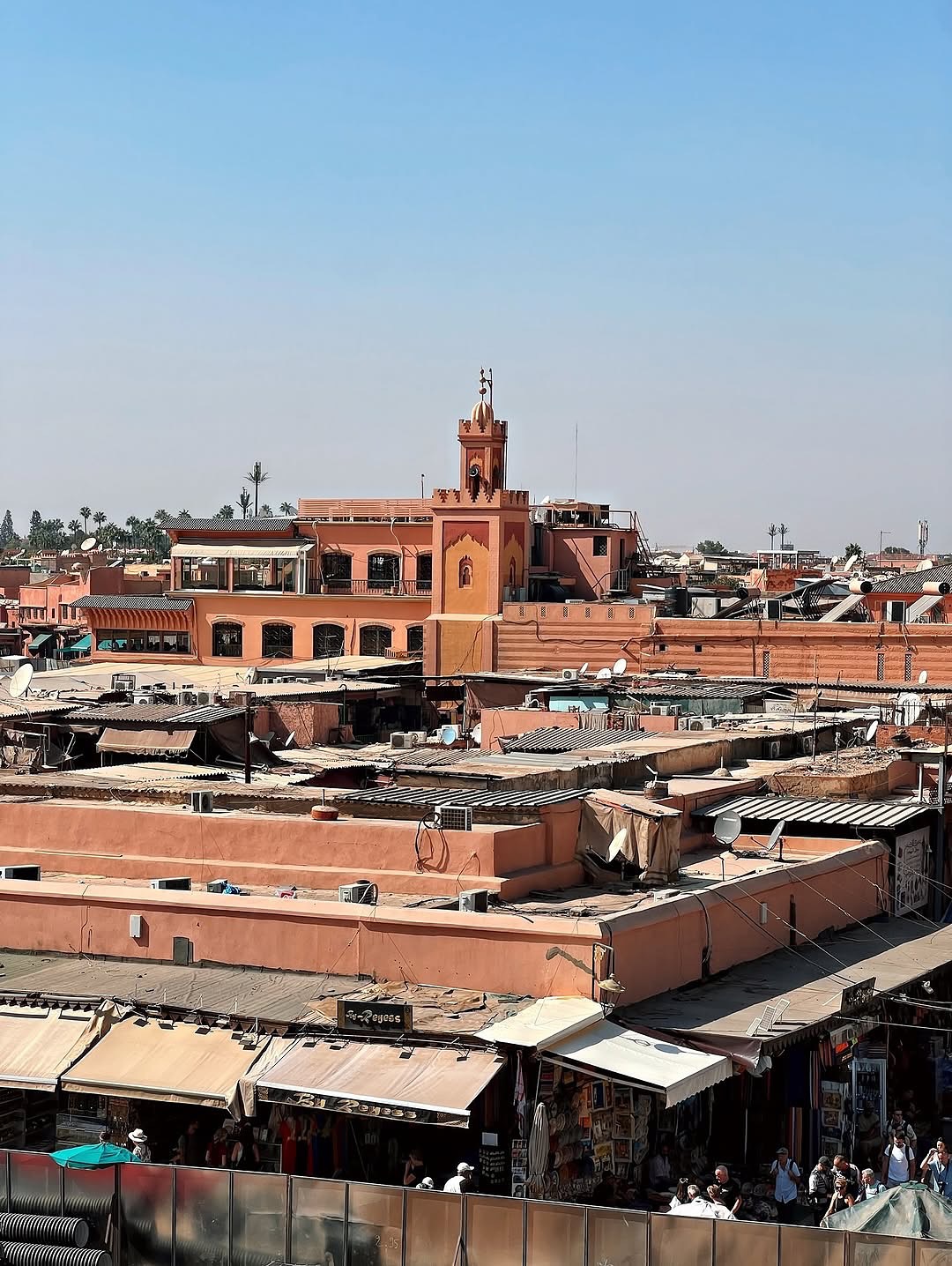
Afternoon free: the Majorelle and Secret Gardens, a rooftop, or the pool. Evening in Jemaa el-Fnaa if you want the theatre of it, or a quiet contemporary restaurant if you do not. Both are Marrakech.
Day 3 — Into the High Atlas
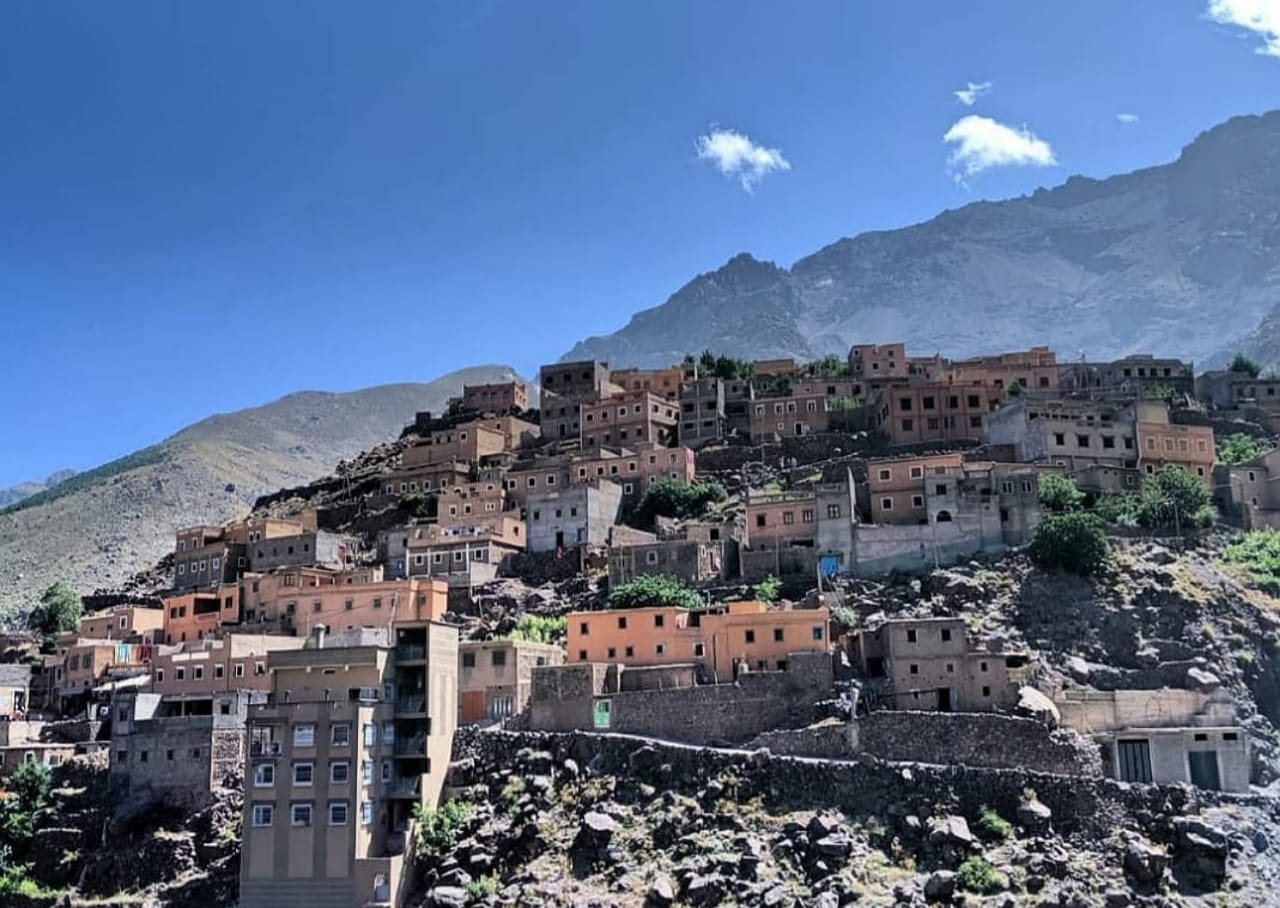
Ninety minutes out of the city and the temperature drops, the plain gives way to terraces and walnut groves, and the Toubkal massif appears. Asni, then Imlil, which is the last road head before the mountain.
A walking day sized to you: an hour on a village path, or a genuine half-day with height gain. Lunch in a village house or laid out on the mountain. Mule support where it makes the walk pleasant rather than punishing.
Stay the night in the mountains if you can. This is the change we most often recommend to seven-day plans, and the one travellers thank us for. Marrakech is loud and hot; the Atlas at night is neither.
Day 4 — The Tizi n'Tichka and Aït Ben Haddou
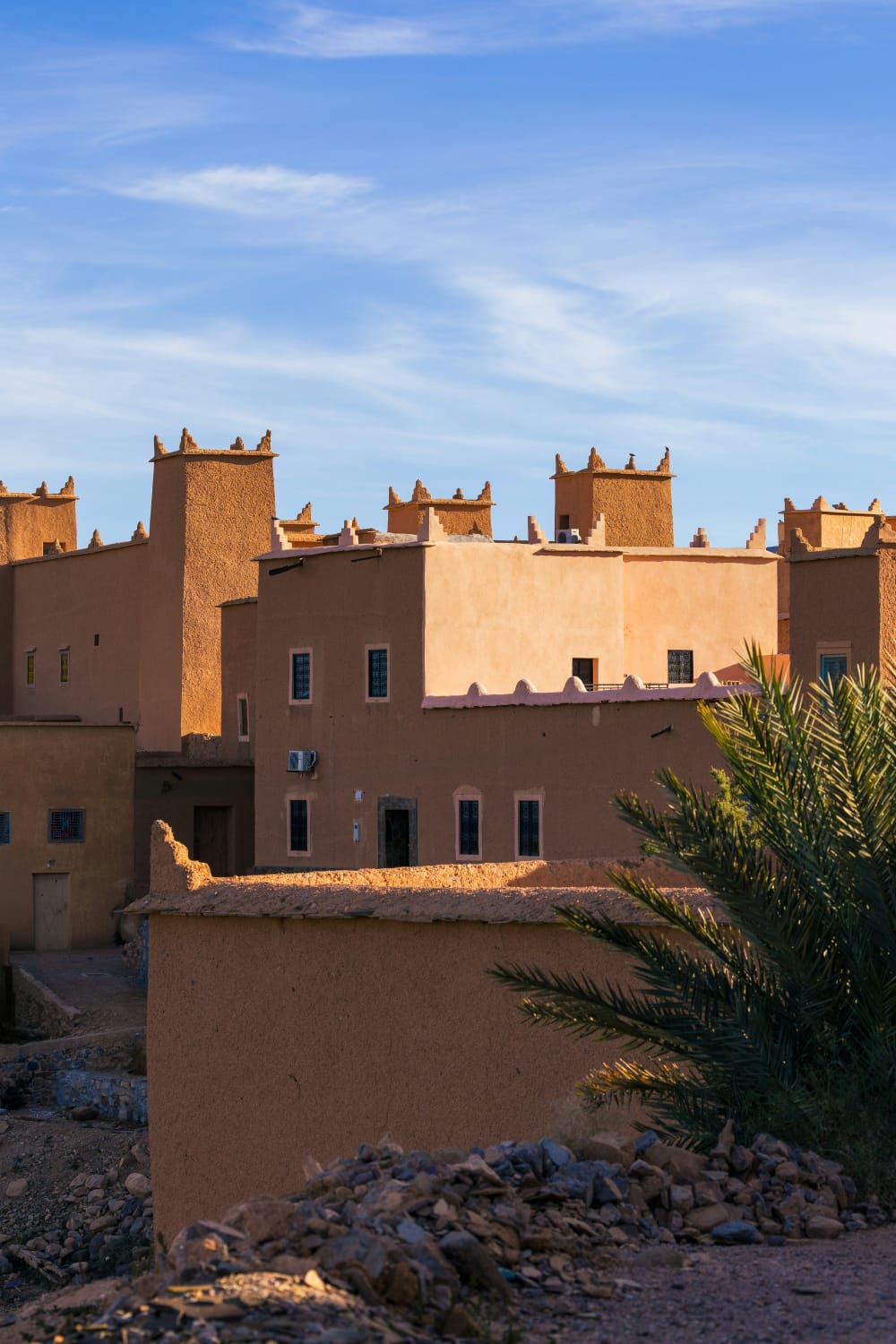
The long day, and a beautiful one. The Tizi n'Tichka pass crosses the High Atlas at 2,260 metres on a road that has been rebuilt and is now genuinely good, dropping into a completely different Morocco of red earth, palmeries and kasbahs.
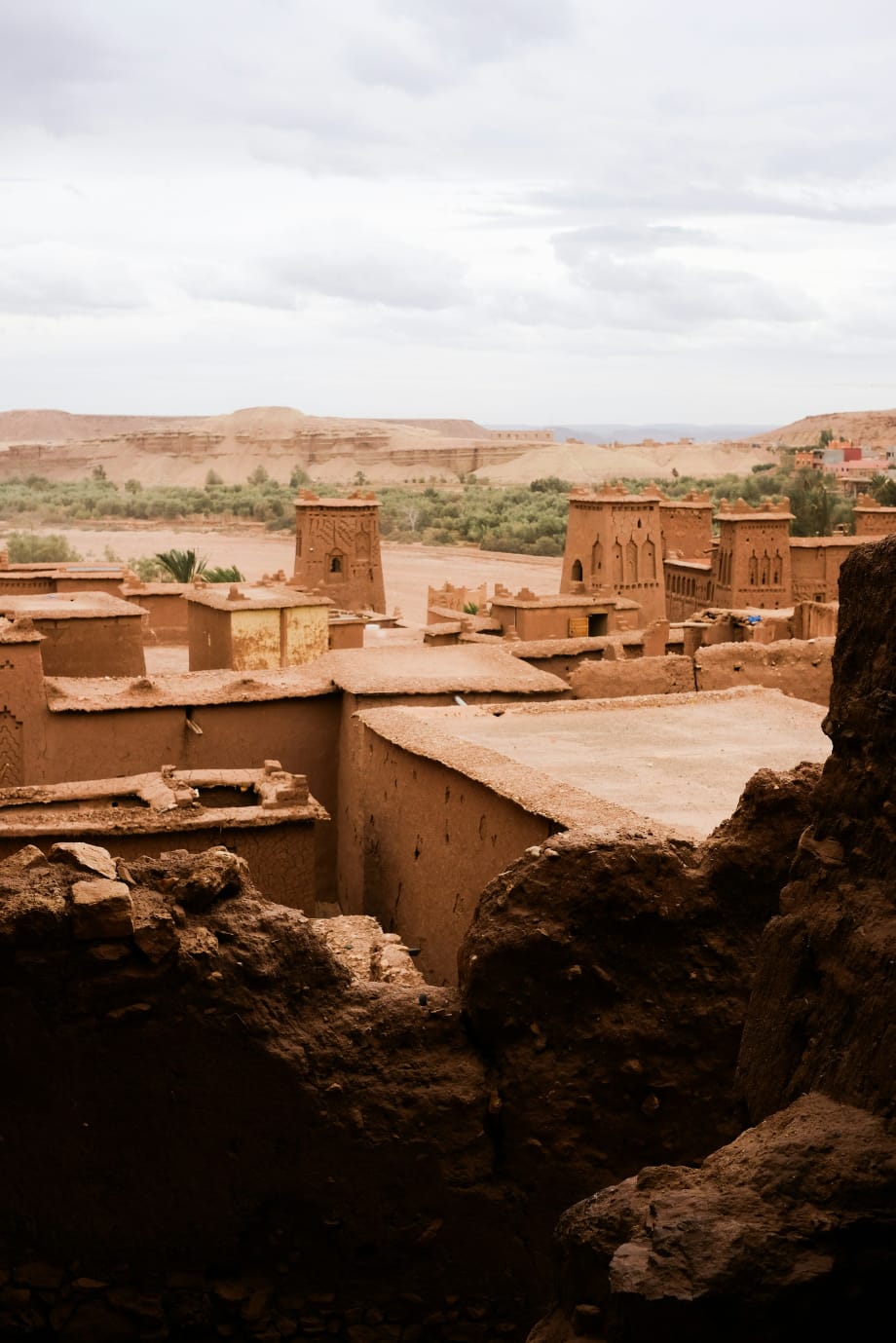
Aït Ben Haddou is the UNESCO-listed ksar you have seen in a dozen films. Go up through the village rather than straight to the top, and go with someone who can tell you what you are looking at. Ouarzazate follows, then the Draa valley or the Dadès, depending on your route to the dunes.
Realistic driving: seven to eight hours in total with the stops. This is the day where a private vehicle stops being a comfort and becomes the reason the day works.
Day 5 — Erg Chebbi and the night in the dunes
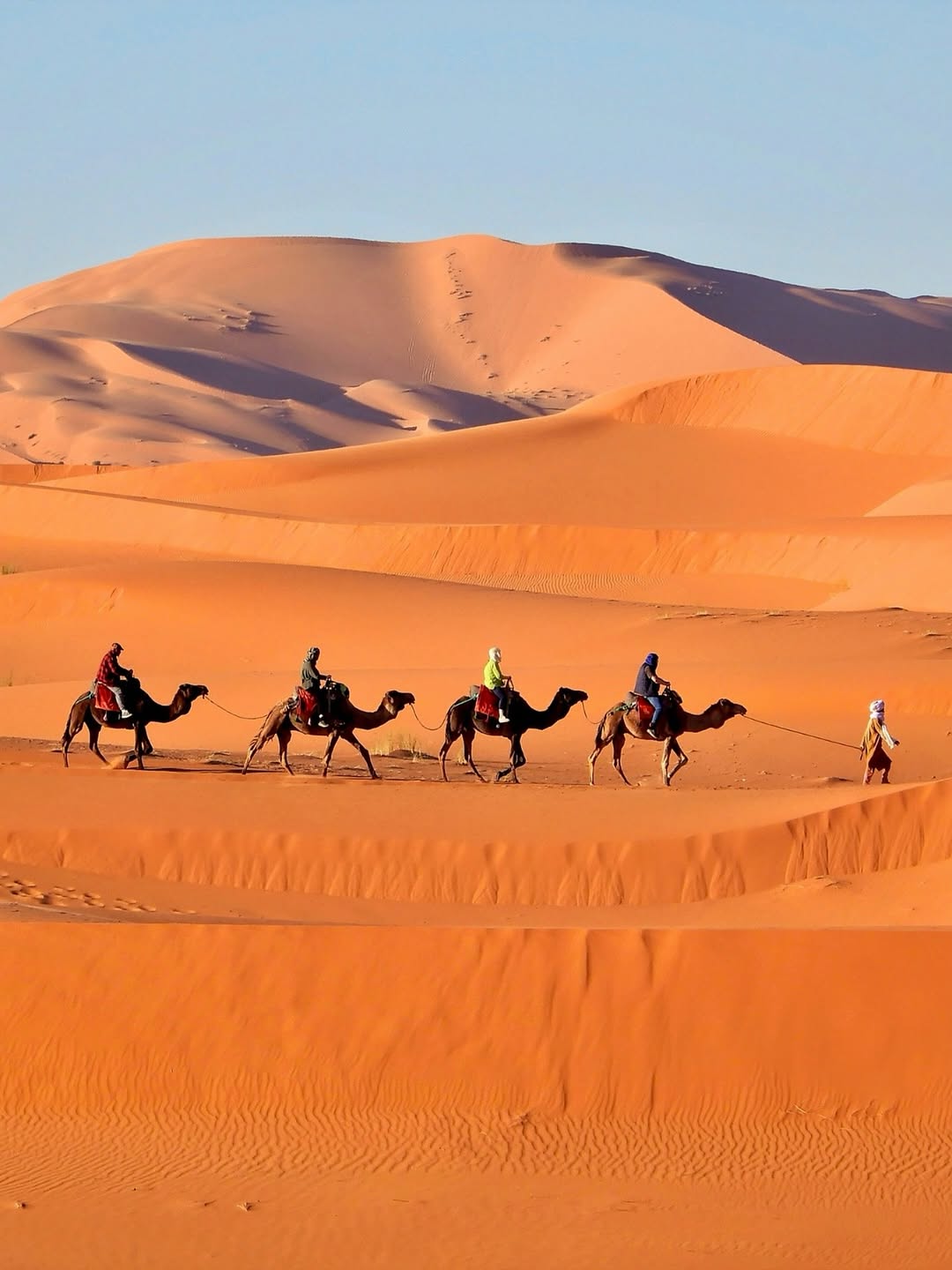
The final approach to Merzouga, and then the moment the dunes appear, which is genuinely startling because there is no gradual transition — the plain simply ends and the sand begins.
Late afternoon: camels or a 4x4 out to camp, depending on your preference and the heat. Sunset from a dune crest. Dinner at camp, drums if the crew are in the mood, and a night sky that people underestimate until they are under it.
One thing to check before you book any desert camp, ours included: what the bathroom actually is, whether there is power overnight, and how far the tents are from where the vehicle stops. Camps described identically online are not remotely identical.
Day 6 — Sunrise, and the road back
Sunrise over Erg Chebbi is worth the alarm; the dunes change colour for about twenty minutes and then stop. Breakfast at camp, then the return leg.
Break the drive rather than doing it in one push. The Todra and Dadès gorges, the Valley of a Thousand Kasbahs, or a night in Skoura's palmery all make the return a part of the trip rather than a penalty for having gone.
Day 7 — Marrakech, and the departure
Back into Marrakech mid-morning or early afternoon. The best use of a final half-day is almost always the thing you did not have time for on day two: a garden, the Yves Saint Laurent museum, a hammam before the flight, or a last hour in the souks with a guide who can negotiate for you.
Private transfer to Menara, timed to your flight with an honest margin for city traffic.
Two variations that suit some travellers better
The Atlas-led week. If the nine-hour desert drive does not appeal, replace the Sahara with two more nights in the mountains and an Agafay evening. You gain a slower, cooler, more scenic week and lose the true dunes. For couples and for anyone travelling in July or August, this is frequently the better trip.
The coast week. Marrakech, the High Atlas, then Essaouira for two nights: Atlantic air, a walled port town, seafood, and a three-hour drive rather than nine. It suits families and second-time visitors, and it is the version we recommend most often to travellers who have already seen the desert.
| Version | Driving load | Best for | Trade-off |
|---|---|---|---|
| Classic loop (above) | High — c. 18 hours total | First-timers who want the dunes | Two long road days |
| Atlas-led week | Low — c. 6 hours total | Couples, summer travel, slow pace | No sand dunes |
| Coast week | Medium — c. 9 hours total | Families, repeat visitors | No desert night |
Making this itinerary yours
Nothing above is a fixed departure. It is the skeleton we start from, and it changes with your dates, your pace and what you actually care about. Travelling with children shortens the driving days. Travelling in December moves the mountain plan. Wanting a specific property moves everything.
Send us the shape rather than the detail — when, how many, how you like to travel, and one thing that would make the trip a success. We come back with a route, honest driving times and one written price.
Every journey in our luxury division is quoted individually, in writing, before anything is paid. We do not publish a nightly rate we have not confirmed for your dates.
Frequently asked questions
- Is seven days enough for Morocco?
- Yes, for one coherent region plus the desert, or for two regions at a relaxed pace. It is not enough for Marrakech, Fes, Chefchaouen and the Sahara together — that plan is about thirty hours of driving and it is the most common mistake in seven-day itineraries.
- How long is the drive from Marrakech to the Sahara?
- Roughly nine hours each way to Merzouga and Erg Chebbi, which is why the desert leg needs at least two nights to be worth doing. Zagora is closer at around seven hours but the dunes are smaller.
- Can I do this itinerary in reverse or start in Casablanca?
- Yes. Starting in Casablanca suits travellers flying into the north and lets you add Rabat, Fes or Chefchaouen before coming south, though it usually needs nine or ten days rather than seven.
- Is the desert night actually comfortable?
- At the better camps, yes — proper beds, private bathrooms and rugs. Quality varies enormously and the word luxury is used loosely, so ask specifically about bathrooms, overnight power and the distance from the vehicle drop-off before you book anything.
- What is the best month for this route?
- April, May, October and early November give the best combination of desert temperature and mountain conditions. Midsummer makes the southern legs genuinely hot; midwinter is beautiful but the desert nights are cold and Atlas passes can hold snow.