Luxury
Luxury Morocco Tours: The Complete Guide to Private Travel in Morocco
September 4, 2026 · 16 min read
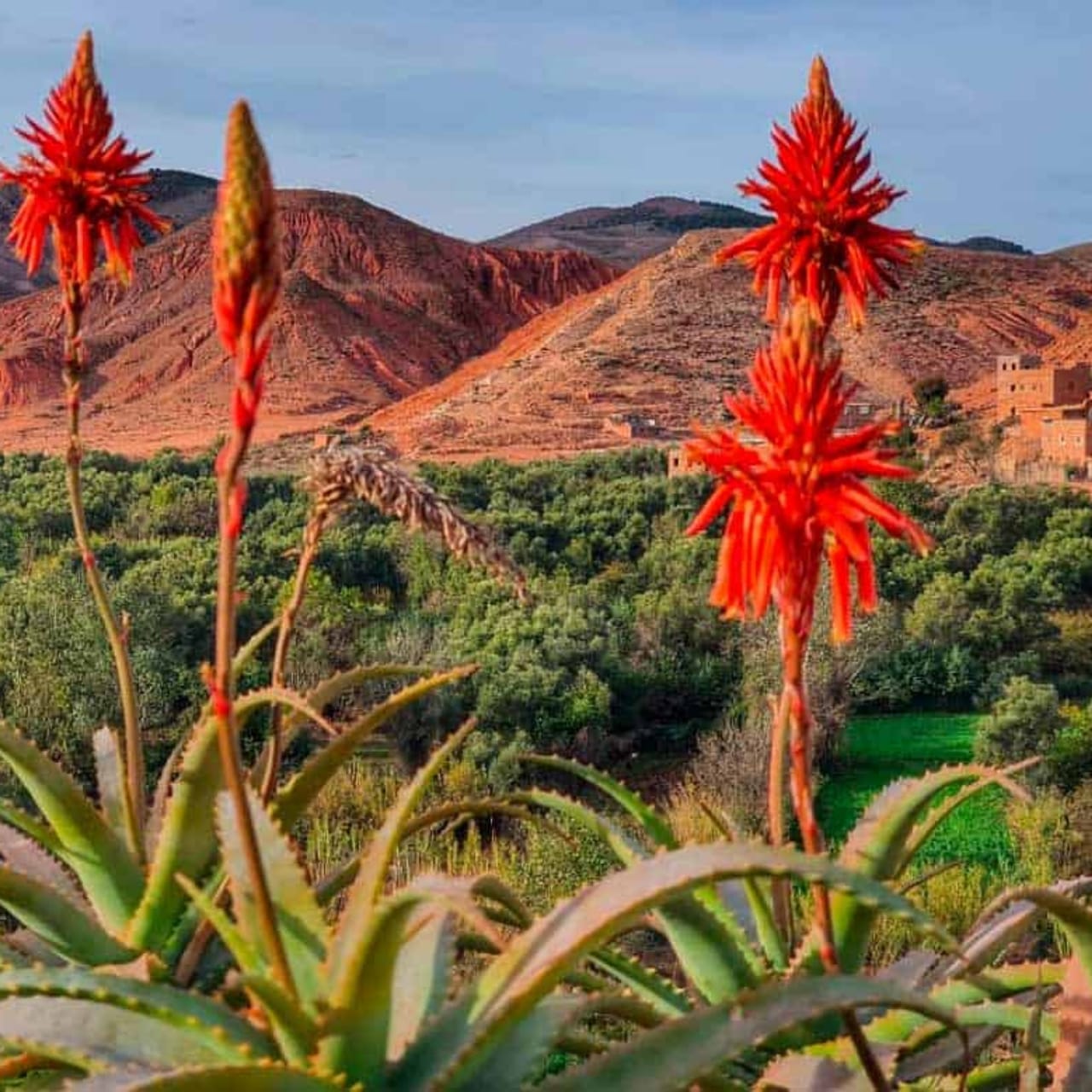
What luxury actually buys you in Morocco — private transport and a real driver, guides who live where you are walking, the four accommodation styles, how bespoke journeys are built and what a week costs in time rather than money.
What 'luxury' actually means in Morocco
In most destinations, luxury travel is a category of hotel. In Morocco it is mostly a category of logistics. The country's best experiences — a valley in the High Atlas at eight in the morning, a souk before the coaches arrive, a stone desert at the moment the light goes — are not gated by money. They are gated by transport, timing and by knowing someone who can open a door.
That is why the meaningful difference between a good Morocco trip and an exceptional one is rarely the thread count. It is whether you have your own vehicle and driver, whether the guide walking with you grew up in the valley, and whether someone is holding the schedule together so you never have to negotiate anything.
This guide sets out how private travel in Morocco is actually put together: the regions, the transport, the guiding, the accommodation styles, the dining, and how a bespoke journey moves from an idea to a confirmed itinerary. It is written by a Moroccan operator based between Marrakech and Imlil, so the mountain sections describe ground we work on daily and the rest is described honestly as coordination.
The four regions a luxury Morocco journey is built from
Almost every high-end Morocco itinerary is assembled from four building blocks. Understanding what each one costs you in time is the single most useful planning skill.
Marrakech is the arrival point and the cultural anchor: palaces, the medina, gardens, craft, and the country's densest concentration of exceptional riads and restaurants. Two nights is the minimum that does not feel rushed.
The High Atlas begins approximately 45 minutes from central Marrakech. Asni, Imlil and the Toubkal massif are close enough for a day, and good enough for three. This is where Morocco stops being a city break.
The desert splits in two, and the split matters more than any other decision in your itinerary. Agafay is stone desert, forty-five minutes from Marrakech, doable as an evening. The Sahara — the true dunes at Erg Chebbi near Merzouga — is a nine-hour drive each way and needs a minimum of two nights.
The kasbah route and the south — Aït Ben Haddou, Ouarzazate, the Dadès and Todra gorges, the Draa valley — is the connective tissue between Marrakech and the dunes, and it is scenery, not filler.
| Region | Minimum time | What it gives you | Skip it if |
|---|---|---|---|
| Marrakech | 2 nights | Medina, palaces, craft, dining, spas | You have been before and want quiet |
| High Atlas / Imlil | 1 day, ideally 2 nights | Mountains, villages, walking, cool air | You cannot walk 45 minutes on a path |
| Agafay | One evening | Stone desert, sunset, camp dinner, Atlas horizon | You specifically want sand dunes |
| Sahara / Merzouga | 2 nights minimum | Real dunes, camel trains, silence, stars | You have fewer than 6 days total |
| Kasbah route & gorges | 1–2 days in transit | Aït Ben Haddou, Ouarzazate, gorge roads | You are flying between cities |
Private transport: the part that quietly decides everything
Morocco is a driving country. From central Marrakech, Merzouga is approximately 9 hours by road, Imlil approximately 1.5 hours and Essaouira approximately 3 hours — indicative times in normal conditions, since traffic, stops, weather and road works all change them. In a group tour those hours belong to the coach. In a private journey they belong to you, and that is where most of the upgrade actually lives.
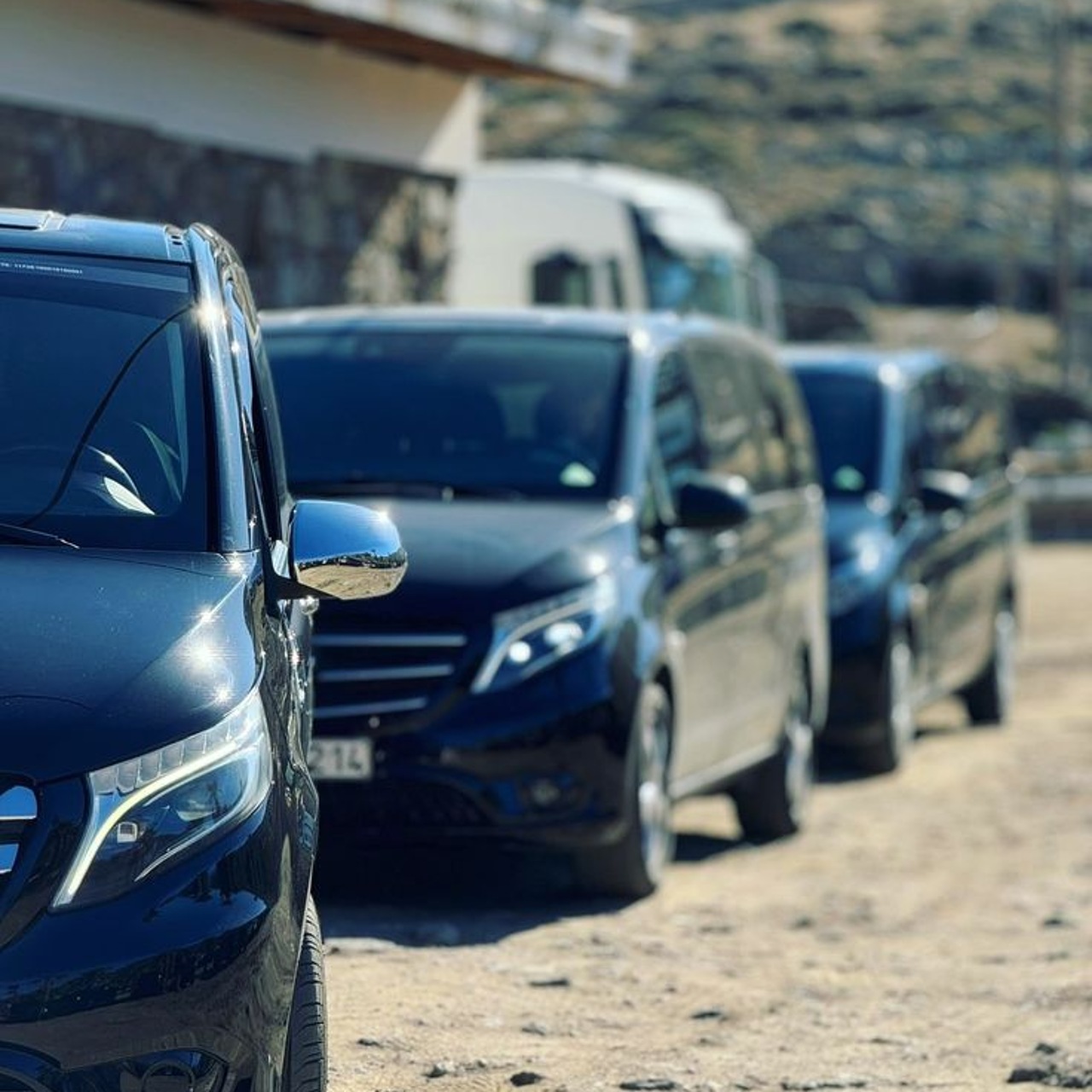
A private vehicle means door-to-door pickup from your riad, a departure time that suits your morning rather than a manifest, stops when the light is worth stopping for, and a driver who speaks English or French and knows which café on the Tizi n'Tichka pass is the one to use.
Vehicle class follows the route rather than the price bracket. A Mercedes Vito or V-Class style minivan is the comfortable default for tarmac transfers, airport runs and city-to-city legs. A Toyota Land Cruiser, Prado or equivalent 4x4 is what the terrain requires for desert pistes, the Agafay tracks and some mountain approaches. We do not guarantee a specific model on a specific date until the vehicle is confirmed for your booking — an operator who promises you a named vehicle before allocating it is guessing.
Guiding: the difference between a commentary and a relationship
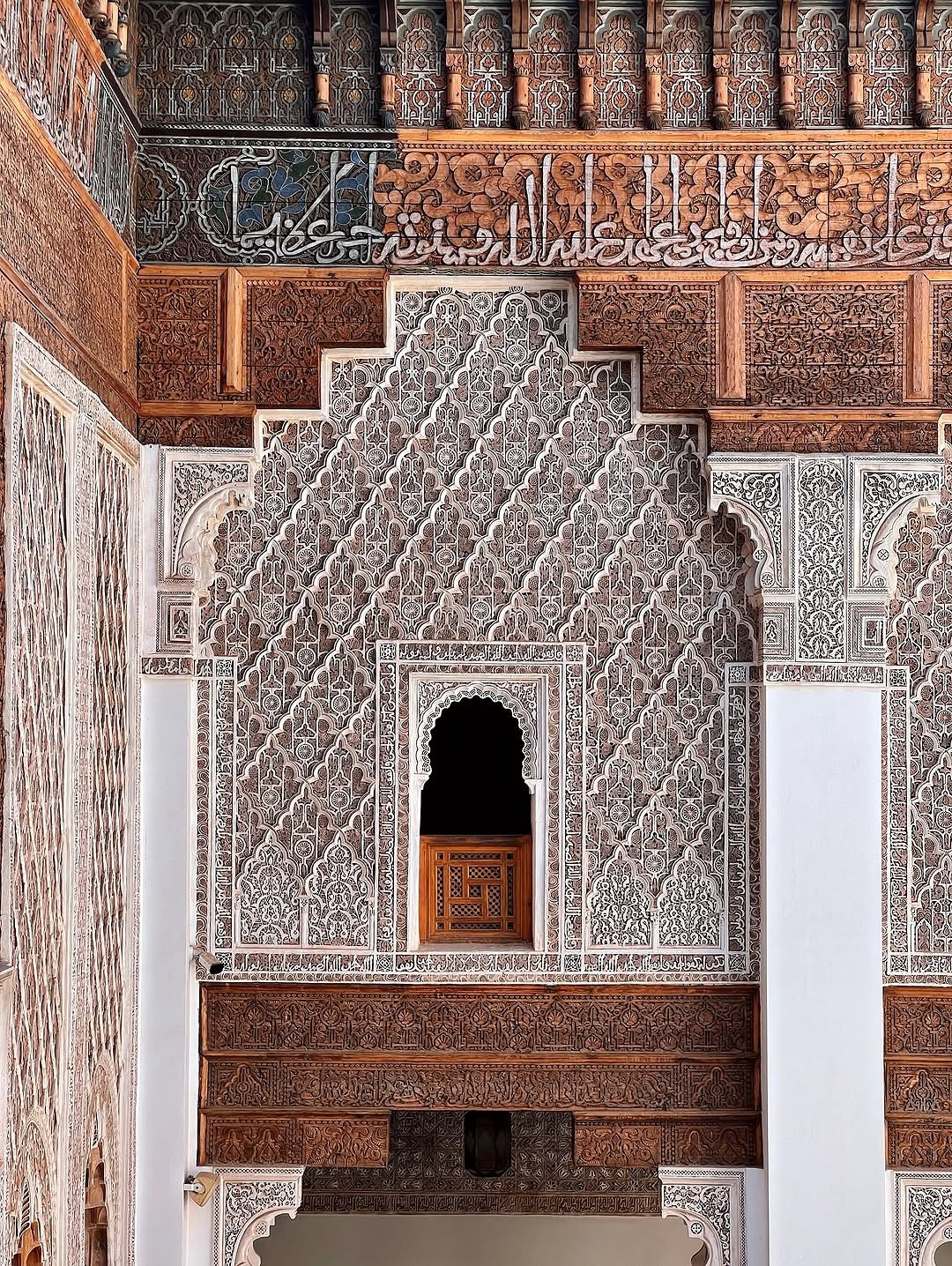
There are two kinds of guiding in Morocco and travellers routinely pay for one while wanting the other. A city guide is a licensed specialist who unlocks a medina you would otherwise walk past — the history of the Ben Youssef madrasa, why a tannery smells the way it does, which craft in the souk is still made by hand. A mountain guide is a qualified, insured professional who is responsible for you on ground where weather and altitude are real.
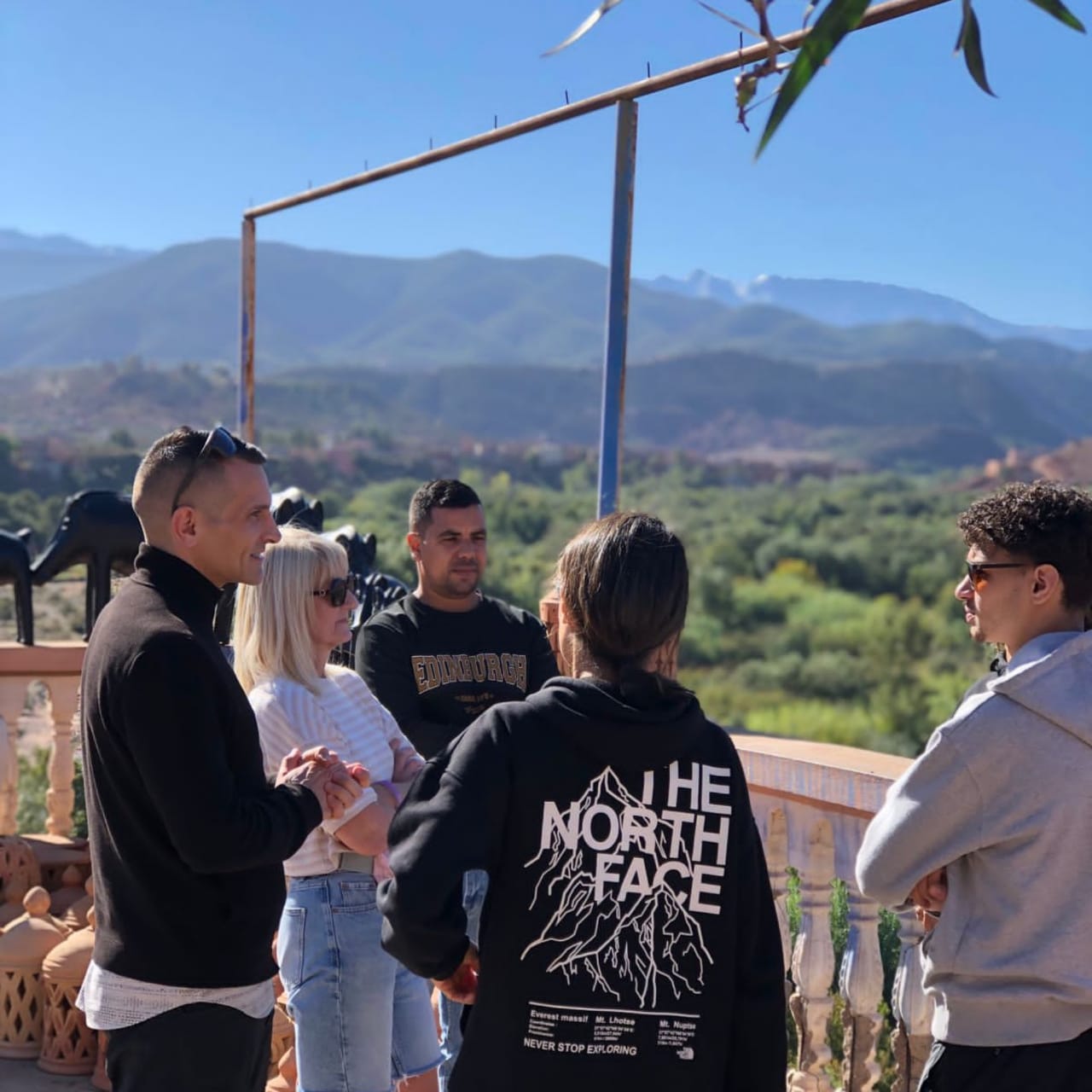
In the High Atlas the distinction is not academic. Anyone can call themselves a mountain guide. Accredited Moroccan mountain guides train formally, and the good ones come from the valleys themselves. Our own guides are from Imlil and the Asni valley, which is also why village hospitality on our routes is genuine rather than staged: they are walking you through the places they are from.
The practical test of a guide is whether the day changes when you do. If you are slower than expected, if the cloud comes in, if you fall in love with a village and want to stay two hours — a real private guide reshapes the day on the spot. A scripted one delivers the itinerary regardless.
The four accommodation styles, and who each one suits
Morocco's high-end accommodation does not sort neatly into stars. It sorts into four quite different experiences, and choosing the wrong one is the most common reason a well-funded trip disappoints.
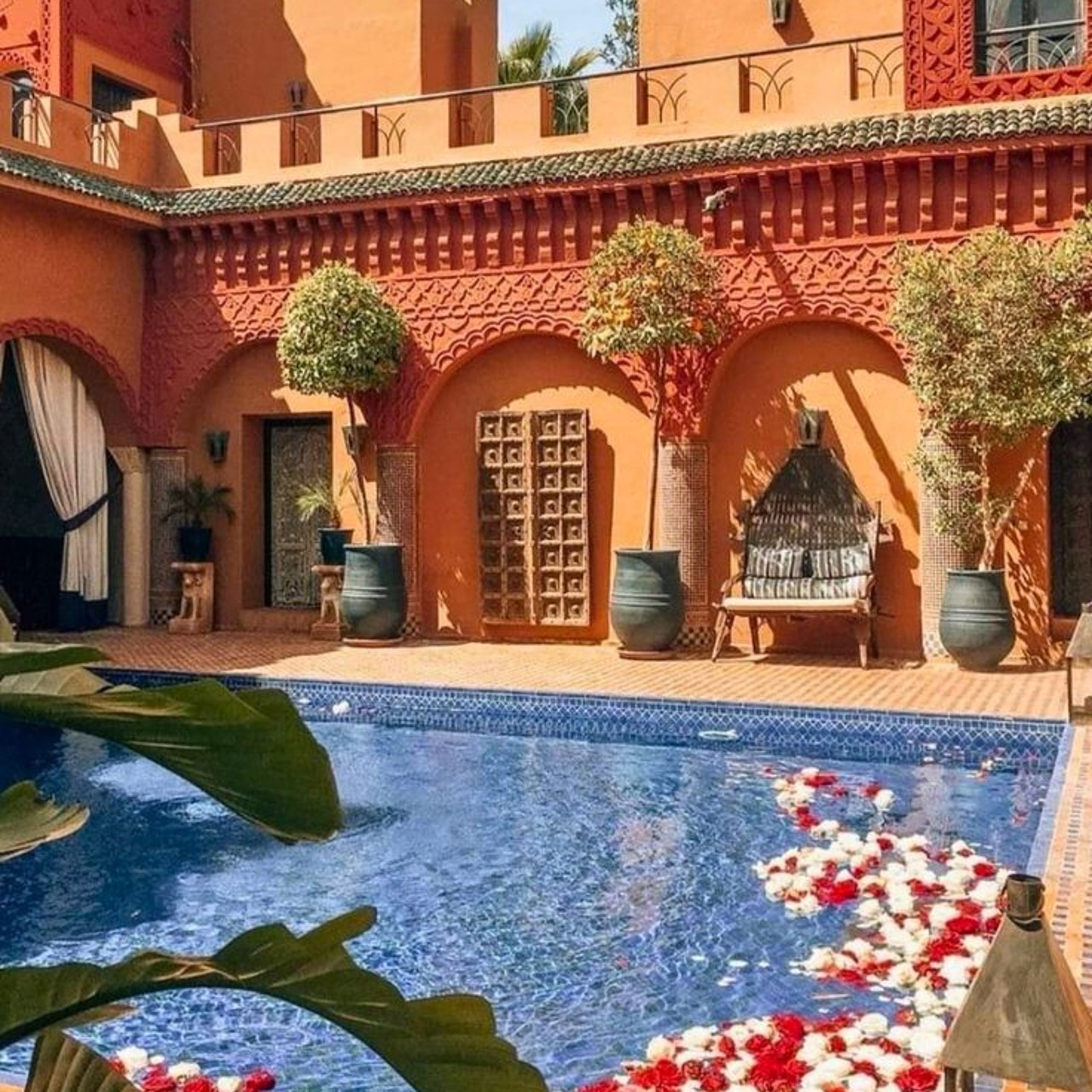
A riad is a courtyard house inside the medina walls. Five to fifteen rooms, an inward-facing courtyard, usually a plunge pool and a roof terrace. You are inside the old city, which means atmosphere, walking access and a certain amount of noise. Cars cannot reach most riad doors; a porter meets you with a trolley.
A palace hotel or resort sits outside the medina, usually in the Palmeraie or the Hivernage district. Space, gardens, full spa, proper pools, and a taxi ride between you and the medina. Better for families, longer stays and anyone who wants a resort day.
A mountain property in the Atlas is a category of its own: cooler air, terraces facing the peaks, and a stay that is about the view and the silence rather than the service theatre. This is where our own division is strongest, because the ground experience around the stay is ours.
A desert camp is the most variable category in the country. The word 'luxury' is used by everything from a canvas tent with a mattress to a suite with plumbing, air conditioning and a private terrace. Never book a camp on the adjective alone — ask what the bathroom is, whether there is power at night, and how far the camp is from where the vehicle stops.
Dining, and the two Moroccos on a plate
Moroccan food at the high end runs on two tracks. The first is the traditional canon done properly: a slow-cooked tagine, a Friday couscous, mechoui lamb, pastilla, and the mint tea ritual that is genuinely a ritual and not a performance for guests. The second is the contemporary Marrakech restaurant scene, which is one of the more interesting in North Africa and which almost no first-time visitor finds without help.
The single most memorable meal on most of our journeys is neither. It is lunch in a village house in the Atlas, cooked by the family, eaten on the floor with bread instead of cutlery, with the valley outside the door. It cannot be booked online. It exists because our team is known there.
Private dining — a table set for two on a terrace, a rooftop dinner, a table in the desert — is arranged rather than purchased. What is possible depends entirely on the property and the date, so we confirm each one specifically instead of promising it in advance.
Experiences worth building a day around
A hot-air balloon flight over the plains north of Marrakech is the most photogenic morning in the region: a pre-sunrise pickup, inflation at first light, a sunrise flight and a Berber breakfast after landing, about three and a half hours in total. We operate it ourselves as a shared flight (€145 per person) or a private flight (€700 per person).
A hammam is not a spa treatment with a Moroccan name. It is a steam room, black soap, a kessa glove and a scrub that is more vigorous than most visitors expect, followed by an argan oil massage. Done at a good property it is the best hour of the week.
Craft access is where a private journey earns its fee. Time with weavers who will explain the motifs in an Amazigh carpet, an argan cooperative where the work is actually being done, a cobbler's workshop — arranged as visits rather than as commission-driven shopping stops. Nobody on our journeys is taken to a shop that pays us.
How a bespoke journey is actually built
The process is less mysterious than the word 'bespoke' suggests. It runs in five steps, and it usually takes a week of back-and-forth rather than a month.
First, the brief: your dates, the number of travellers, who they are to each other, how you like to travel and what would make the trip a success. Second, the shape: we propose a route with honest driving times and tell you where your plan has too many places in too few days — which is the most common correction we make. Third, availability: we check the accommodation and the experiences for your specific dates, because nothing is real until the dates are held. Fourth, the written proposal: one route, one final price, everything it includes and everything it does not. Fifth, confirmation and a single WhatsApp thread from landing to take-off.
The one thing we will not do is quote a rate we have not verified. Accommodation pricing at the top of the Moroccan market moves with season, availability and length of stay. A figure published on a web page in advance is a marketing number, not a price.
What a luxury Morocco journey costs, honestly
We do not publish per-person figures for private journeys, and we would be suspicious of anyone who does. Four variables move the price far more than the number of days: your dates, your group size, the accommodation tier and how much ground you cover. Two identical seven-day routes can differ by a factor of three between a February midweek and Christmas week.
What we can tell you is where the money goes. Roughly: accommodation is the largest single line, private transport with a driver is the second, guiding is third, and experiences and meals follow. Group size matters enormously because transport and guiding are per-vehicle and per-guide, not per-person — a family of five pays little more for the ground journey than a couple.
Every proposal we send is one all-in figure in writing, with the inclusions and exclusions listed. Price on request is not evasiveness; it is the only truthful answer before we know your dates.
Private journeys you can book or shape
Prices are per person and come from each product page. A bespoke route is quoted personally — nothing is charged until you approve it.
Frequently asked questions
- What makes a Morocco tour 'luxury' rather than just expensive?
- Private transport with your own driver, guiding by people who live where you are travelling, accommodation chosen for your trip rather than for a brochure, and one person coordinating the whole thing so you never negotiate anything. Price follows those decisions; it does not create them.
- How many days do I need for a luxury Morocco tour?
- Five days is the minimum for Marrakech plus the High Atlas at an unhurried pace. Seven days is the first length where you can add either the Sahara or the coast without long daily drives. Ten days lets you take in the imperial cities as well.
- Is a private Morocco tour worth it compared with a group tour?
- In Morocco, more than in most countries — because so much of the trip is spent in a vehicle. Private means your departure times, your stops, your pace and no shared timetable, and for a family or a group of four or more the per-person difference is much smaller than people expect.
- When is the best time of year for a luxury trip to Morocco?
- March to May and September to November are the strongest overall. Winter is excellent for Marrakech and the desert and gives the clearest Atlas views, but mountain nights are cold and high routes may hold snow. July and August are hot inland; the coast and the mountains are the sensible answer then.
- Do you publish prices for your luxury journeys?
- No. Each journey is quoted for your dates, party size, accommodation and route, and you receive one final all-in figure in writing before anything is paid. We do not show a rate we have not verified.