Climbing Mount Toubkal in Winter: Season, Route and Conditions
Climbing Mount Toubkal between November and April means trading summer scree for snow and ice. Here is what you need to know about winter conditions, temperatures, and the alpine gear required to reach the 4,167-metre summit safely.
Climbing Mount Toubkal in the height of summer is a demanding, high-altitude trek. Climbing it in winter is an entirely different undertaking. Between late November and April, North Africa’s highest peak transforms from a dusty, scree-covered mountain into a serious, uncompromising alpine environment. The slopes are blanketed in deep snow, the temperatures drop well below freezing, and the wind chill at 4,167 metres can be exceptionally unforgiving.
At Toubkal Views, our local Amazigh guides lead trekkers up the mountain year-round. While winter ascents offer pristine, uncrowded landscapes and crisp, dramatically clear views across the High Atlas Mountains, they also demand a significantly higher level of preparation, physical resilience, and the exact right equipment. You cannot turn up in trail running shoes and a light fleece and expect to reach the summit in January. The mountain commands respect, and your safety depends entirely on understanding the conditions.
If you are planning a Toubkal winter climb, here is a highly realistic look at the environment you will face, the gear you absolutely need to carry, and how to physically and mentally prepare for the ascent.
When is the Winter Climbing Season?
Snow can sometimes fall on Mount Toubkal as early as October and linger in the shaded gullies until late May, but the true winter season — where snow cover is consistent and alpine equipment is required — generally runs from December to March, with snow often lingering into April.
If you are trying to decide on the best time to climb Mount Toubkal, winter is firmly for those who want an authentic mountaineering experience rather than a demanding summer hike.
December and January: These are usually the absolute coldest months on the mountain. The days are short, meaning your summit push starts well before dawn in the pitch dark. Temperatures at the refuge and the summit are at their lowest point of the year, demanding premium insulation layers. February and March: Often considered the prime winter climbing months by our local guides. The snowpack by this time is usually deep and consolidated. Ironically, walking up steep, firm snow in crampons is actually far easier on the legs than sliding backward on the loose, frustrating scree of summer. April: A transition month in the High Atlas. Lower down the valley in Imlil, spring is clearly arriving with blooming trees and warmer air, but the summit often remains heavily snow-capped. You can experience incredibly strong sunshine reflecting off the snow during the day, requiring serious eye protection to prevent snow blindness, while still facing freezing temperatures at dawn.
Winter Conditions and Unforgiving Temperatures
The single most important thing to understand about a Toubkal winter climb is the sheer, biting cold. While the vibrant city of Marrakech might be a pleasant 18°C to 20°C in January, the High Atlas Mountains are a completely different climatic world.
In Imlil (1,740 m): Days can feel mild in direct sun and turn cold as soon as it goes down. The trail out of the village is usually clear of snow, though it can be muddy or layered with frost in the early morning shadow. Ask us for the current conditions before you pack — we live in this valley and we will tell you what it is actually doing.
At the Toubkal Refuge (3,207m): By the time you reach the Toubkal Refuge, you are well above the winter snow line. As soon as the sun dips behind the ridges — which happens early in a deep valley — the temperature drops fast. The dormitories are unheated, and nights there are genuinely cold. This is the single reason a four-season sleeping bag matters more than any other item on the list.
On the Summit (4,167m): Summit morning is bitterly, painfully cold. You start walking long before dawn so that you have time to descend safely before the afternoon sun softens the snow. It is far below freezing, and wind chill on the exposed ridge and the summit plateau makes it feel colder still. Unprotected water freezes, which is why bottles travel insulated and inside the pack rather than clipped to the outside.
The Route in Winter: Imlil to the Summit
Day 1: The Approach from Imlil to the Refuge
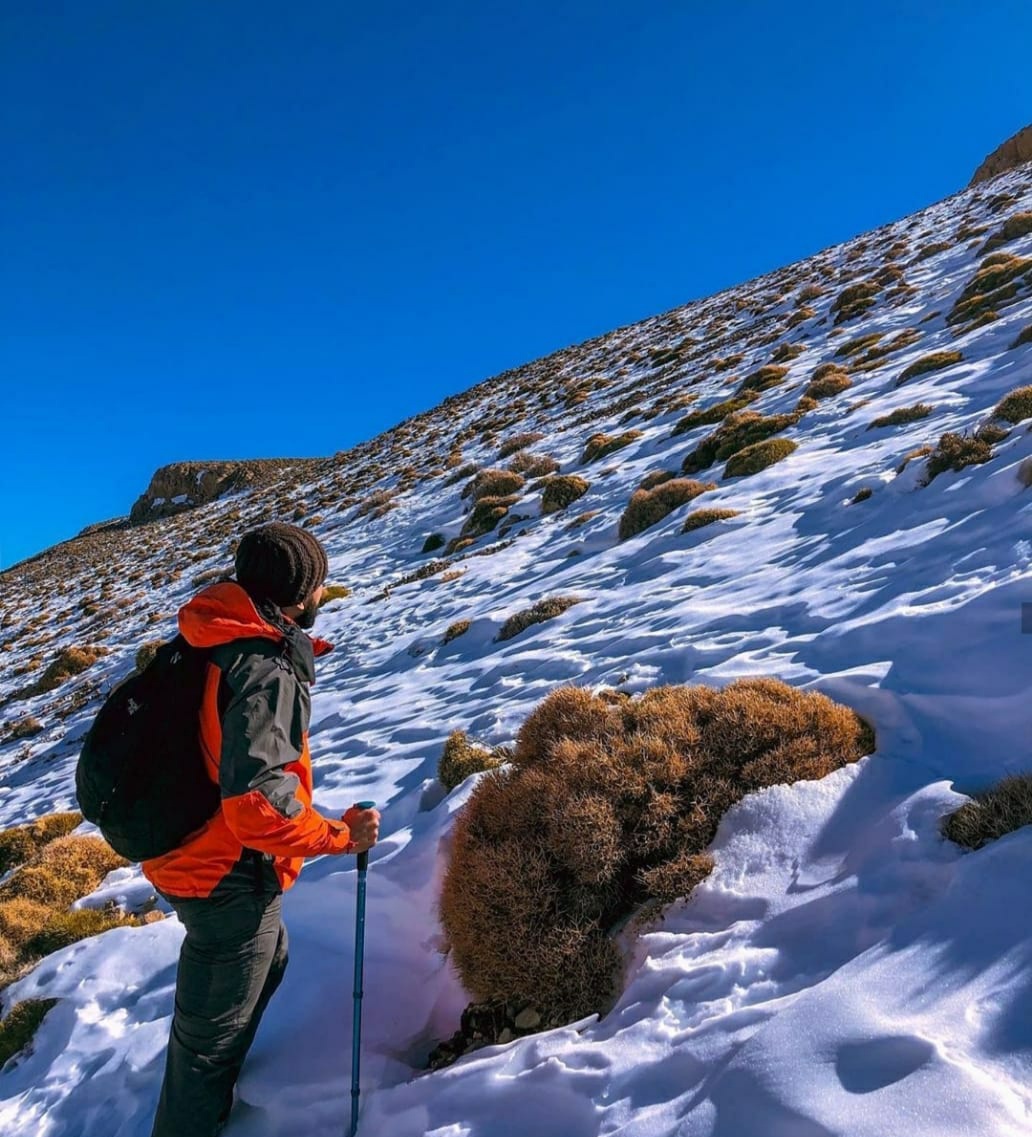
The trek from the trailhead in Imlil up to the refuge takes around 5 to 6 hours for a fit walker. In deep winter, you will usually encounter the permanent snowline shortly after passing the white-painted shrine at Sidi Chamharouch. The path here is heavily trodden by mules and other trekkers. In the shade, it can become hard-packed, treacherous ice, while in the afternoon sun, it turns into wet slush. Trekking poles are highly recommended here to maintain your balance and prevent slipping. You usually will not need to wear full crampons for this day, but having micro-spikes easily accessible in your pack can be incredibly useful if the path is particularly iced over.
It is also worth noting that in heavy snow conditions, mules cannot always reach the refuge. In these cases, local Amazigh porters take over, carrying equipment on their backs for the final steep, snowy section to the mountain huts.
Night 1: Surviving the Refuge
The mountain refuges (Les Mouflons and the CAF Nelter Refuge) are highly functional but basic. They provide shelter from the wind, hot, nourishing meals cooked by your team, and a foam mattress, but they are absolutely not centrally heated. The communal dining areas are warmed by a roaring fireplace or gas heaters, offering a brief respite. However, the dormitories where you sleep are freezing cold. A high-quality, four-season winter sleeping bag is completely non-negotiable if you want to get any sleep before your alpine start.
Day 2: The Summit Push
This is where the summer and winter experiences diverge most sharply. In summer, the route up the South Cwm is a steep, zigzagging, exhausting trudge up loose rock and sliding scree. In winter, it is a steep, continuous, blindingly white snow slope.
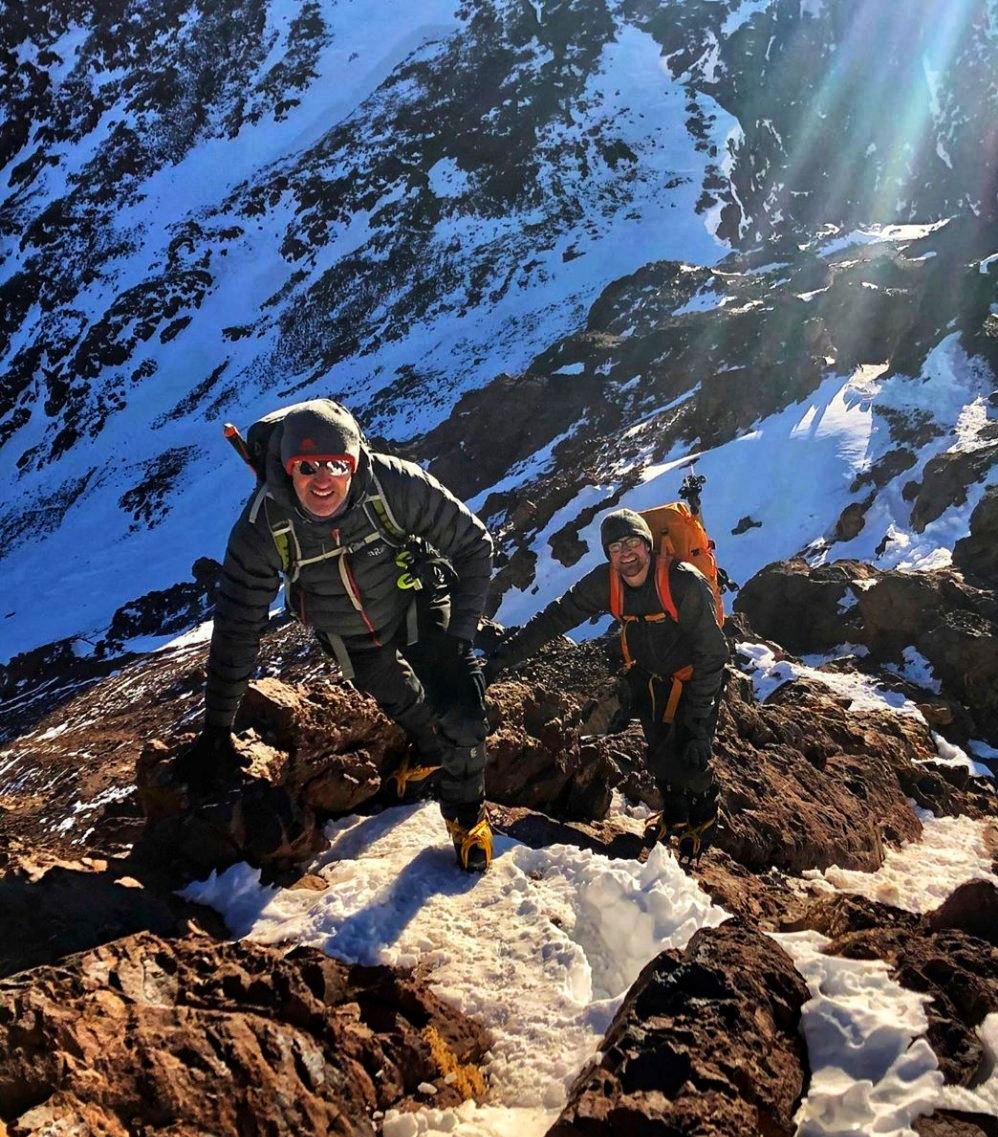
You will sit on a bench at the refuge and strap your crampons onto your boots before you even begin walking. Headlamps light the way as you step methodically into the tracks of the climbers immediately ahead of you. The snow is usually rock-hard and icy in the early hours before dawn, which is exactly what you want—it is ideal for your metal crampons to bite firmly into.
The gradient is relentlessly steep in places. While it is not a technical vertical ice climb that requires ropes, harnesses, or pitching, a slip here without the ability to self-arrest could easily result in a long, dangerous, and potentially fatal slide. This is exactly why an ice axe is carried in hand, and why you must know how to use it instinctively.
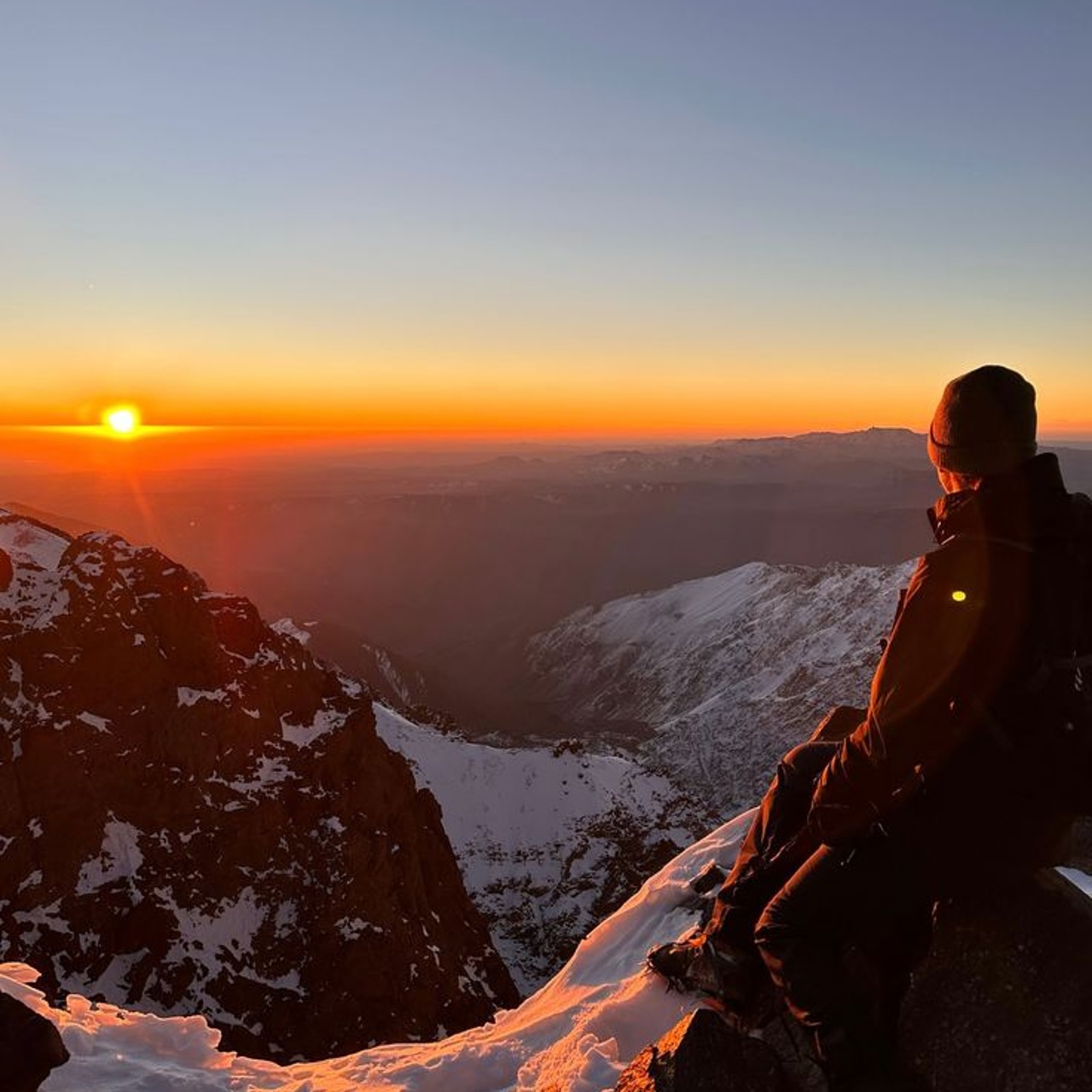
As the sun finally rises over the horizon, hitting the surrounding 4,000-metre peaks with a golden alpine glow, the morale boost is highly significant. Once you crest the steep slope and reach the Tizi n'Toubkal pass, you are instantly exposed to the prevailing winds. The final ridge walk to the metal tripod at the summit is a spectacular but cautious mix of wind-scoured rock, blue ice, and hard snow.
The descent requires just as much focus, if not more, than the ascent. Most mountain accidents happen on the way down. As the sun rapidly warms the mountain, the snow softens, massively increasing the risk of slipping, twisting an ankle, or punching heavily through the crust (known as post-holing). You will carefully return to the refuge, pack up the rest of your gear, strip off your heavy outer layers, and continue the long, exhausting walk all the way back down the valley to Imlil.
Essential Winter Gear List
Your safety and comfort on a winter ascent of Mount Toubkal depend entirely on your layering system and the quality of your equipment. If you are lacking the right gear, a responsible guide will refuse to take you higher than the refuge for your own safety.
1. Technical Equipment
- Crampons: Absolutely essential. These must be proper, rigid mountaineering crampons (10 or 12 points) that strap securely onto stiff boots, not rubber pull-on micro-spikes designed for flat icy pavements.
- Ice Axe: A standard walking or general mountaineering ice axe, sized to your height. Your guide will check the length before you set off.
- Helmet: Highly recommended. Falling rocks and chunks of ice are incredibly common on the steep slopes above the refuge, especially as the morning sun hits the face and melts the ice holding loose rocks together.
- Trekking Poles: Indispensable for the approach and descent, but ensure they have wide snow baskets attached to prevent them from sinking deeply into the powder.
If you want more detailed information on technical gear, read our comprehensive guide to winter equipment like crampons and ice axes.
2. Footwear
- Mountaineering Boots: Standard, flexible summer hiking boots are simply not safe for winter mountaineering. You need stiff-soled boots (B1 or B2 rating) that are explicitly compatible with crampons. They must also be fully waterproof and heavily insulated against the cold.
- Socks: Heavyweight merino wool mountaineering socks. Always bring dry spares, as sweaty feet freeze quickly.
3. Layering System
The golden rule of winter mountaineering is never to wear cotton. It holds onto your sweat, loses all insulating properties, and freezes against your skin.
- Base Layers: Thermal merino wool or synthetic top and bottoms.
- Mid-Layers: A warm, breathable fleece or thick wool sweater.
- Insulation Layer: A high-quality, thick down jacket or a heavy synthetic insulated puffer jacket to wear during breaks and on the summit.
- Outer Shell: A heavy-duty, waterproof, and windproof jacket (Gore-Tex or similar) with a large storm hood, along with fully waterproof overtrousers.
- Trekking Trousers: Thick, wind-resistant winter softshell trousers.
4. Head and Hands
- Gloves: You need a highly effective layered system here too. Bring thin liner gloves (so you can take quick photos, tie your boots, or adjust gear without exposing your bare skin to the freezing metal of your ice axe), plus thick, waterproof, heavily insulated mountaineering gloves or expedition mittens.
- Headwear: A warm, fleece-lined beanie that fully covers your ears, plus a buff, neck gaiter, or balaclava to protect your face, nose, and neck from biting winds and ice crystals.
- Eyewear: Category 3 or 4 sunglasses (ideally a wrap-around glacier style) or proper ski goggles. Snow blindness is a very real, very painful risk on bright days above the clouds.
5. Sleeping and Hydration
- Sleeping Bag: A genuine four-season winter bag. Three-season bags are the most common mistake we see at the refuge.
- Water Bottles: Do not bring a hydration bladder with a drinking tube; the water inside the exposed tube will freeze solid within an hour, rendering your water supply inaccessible. Bring wide-mouth Nalgene-style bottles. Fill them with boiling water at the refuge before you leave, and keep them insulated inside spare wool socks or wrapped in clothing deep inside your backpack.
Renting Gear in Imlil vs. Bringing Your Own
Many trekkers coming to Morocco do not own a full set of heavy winter mountaineering gear, and it is entirely possible to rent essential equipment in the village of Imlil before the trek begins. Read our guide on renting vs buying trekking gear in Morocco for more context.
What you should rent locally: Crampons, ice axes, and trekking poles are heavy, awkwardly shaped, and difficult to fly with on commercial airlines. There are numerous rental shops in Imlil that supply adequate technical hardware for a reasonable daily fee. Your guide will typically help you visit a reputable shop the morning of your trek to ensure the gear fits and functions correctly.
What you should bring yourself: Whenever possible, bring your own boots. Renting boots is a massive gamble on fit, and climbing Mount Toubkal in winter with crippling blisters or dangerously cold toes is thoroughly miserable. We also strongly suggest bringing your own sleeping bag, your own layered gloves, and your own technical clothing layers to guarantee high quality, reliable warmth, and proper fit.
Safety, High Altitude, and the Vital Role of Your Guide
We do not send anyone up Toubkal without one of our licensed local mountain guides, and in winter that matters more than at any other time of year. A good Amazigh guide will expertly assess avalanche risks, navigate safely in sudden whiteout conditions, cut steps into the ice if necessary, and know exactly when to turn back if the weather deteriorates or if ice conditions become dangerously unstable. You can read more in our Mount Toubkal safety guide.
Winter climbing also demands massive amounts of physical energy. Trudging uphill through knee-deep snow while wearing heavy boots and carrying winter gear is utterly exhausting. This intense physical exertion makes proper altitude acclimatisation even more critical than it is in summer. Drink plenty of water (even if you do not feel thirsty in the cold), eat high-energy snacks constantly, and communicate honestly and frequently with your guide if you begin to feel the classic symptoms of Acute Mountain Sickness, such as a throbbing headache, deep nausea, or extreme, uncharacteristic fatigue.
Climb Mount Toubkal This Winter With Us
At Toubkal Views, our guides are highly trained local Amazigh mountaineers who have spent their entire lives in these valleys. We have successfully summited Mount Toubkal in every single weather condition imaginable, prioritising safety, acclimatisation, and an authentic mountain experience above all else.
If you want a deeply rewarding, dedicated winter mountaineering experience with enough time built in for essential snow skills training and proper altitude acclimatisation, our 8-Day Winter High Atlas Expedition is the ultimate itinerary. For highly fit, experienced trekkers who are shorter on time, the 4-Day Mount Toubkal Summit Trek keeps the acclimatisation night and the weather flexibility that winter demands.
To check winter availability, ask our local team about current snow conditions, or book your upcoming trek, send a WhatsApp directly to founders Mustapha and Ahmed at +212 606 258 056 or email us at toubkalviewstours@gmail.com. We look forward to guiding you to the roof of North Africa safely.
For the full range of itineraries across the year, see our Mount Toubkal treks.
Frequently asked questions
- Do I need previous mountaineering experience to climb Toubkal in winter?
- You do not need to be a highly experienced alpinist, but you should have excellent cardiovascular fitness and ideally some previous experience walking in winter conditions. You must be comfortable using crampons and an ice axe, though our guides can provide instruction on how to use them safely.
- How cold does it get on Mount Toubkal in winter?
- Daytime temperatures in Imlil can be mild, but at the refuge (3,207m), nighttime temperatures frequently drop to -5°C or lower. On the summit, ambient temperatures can hit -15°C, and wind chill can make it feel closer to -25°C.
- Can I rent crampons and an ice axe in Imlil?
- Yes, Imlil has numerous gear rental shops where you can hire crampons, ice axes, trekking poles, and even boots and sleeping bags. We recommend bringing your own boots and clothing layers, but renting the heavy metal hardware locally is a common and practical choice available for a reasonable daily fee.
- Are the Toubkal mountain refuges heated in winter?
- The dining areas are warmed by fireplaces or gas heaters, but the dormitories where you sleep are unheated and very cold. A four-season sleeping bag with a comfort rating of at least -10°C is essential for a safe and comfortable night.
- Is the route to Toubkal dangerous in winter?
- Winter mountaineering always carries inherent risks, including extreme cold, high winds, and slips on steep snow or ice. The route above the refuge is steep. However, with the correct gear, a licensed local guide, and common sense regarding weather conditions, it is a manageable and rewarding objective.