Turismo responsable
Las mulas del Alto Atlas: su papel en la vida de montaña y el trekking
8 de septiembre de 2026 · Lectura: 8 min
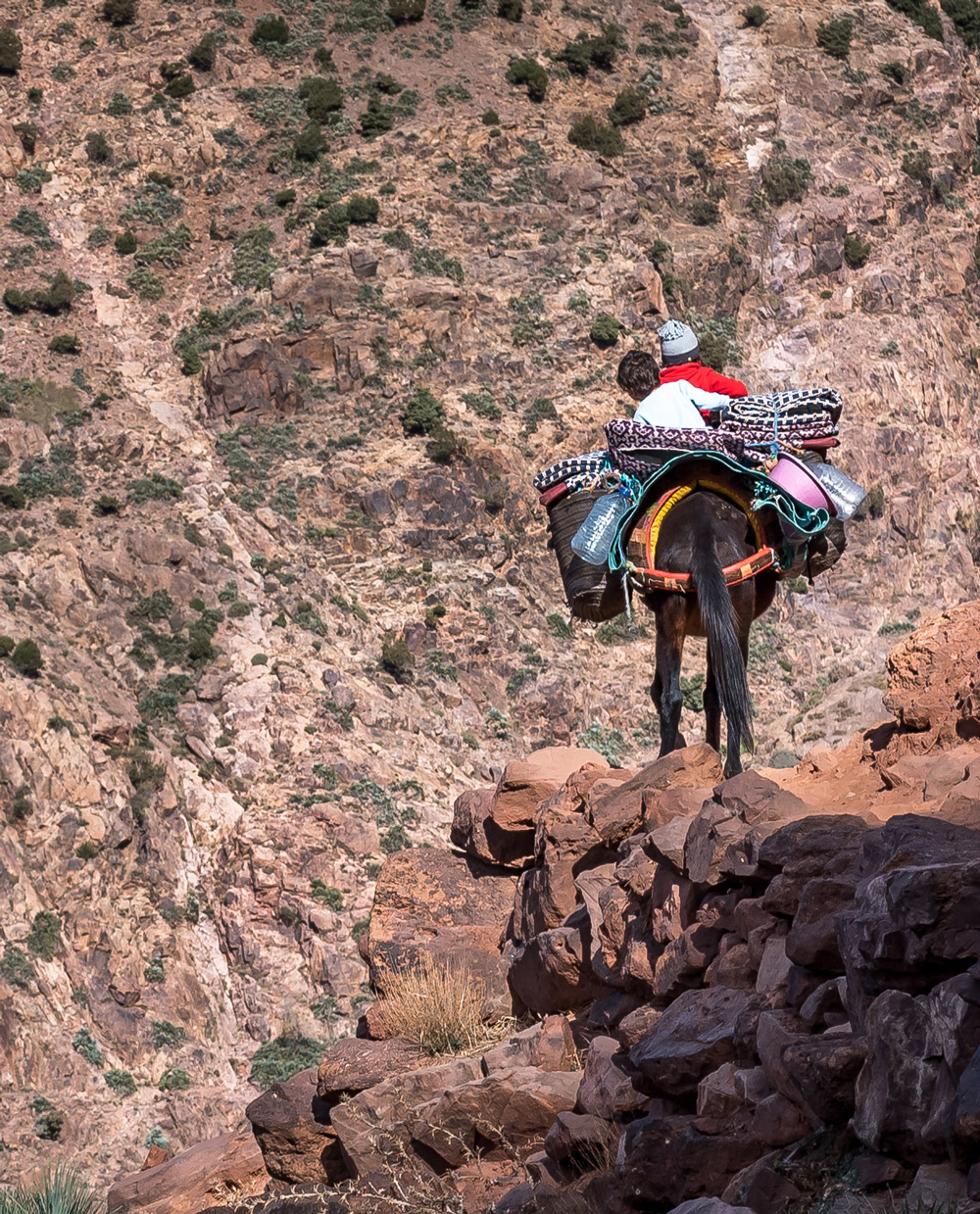
Antes de cargar con las mochilas de trekking, las mulas sostienen la vida de los valles. Descubre su papel crucial en el Alto Atlas y cómo actuar al cruzarte con ellas.
Treks supported by muleteers
Prices are per person and come from each trip page.
El sistema de transporte de la montaña
Más allá de donde terminan las carreteras, el Alto Atlas se mueve a lomos de mula. Harina, bombonas de gas, cemento, nueces, vigas para tejados, paja y, a veces, personas que no pueden caminar: todo se transporta en animales por senderos demasiado estrechos, empinados o inestables para cualquier vehículo.
El trekking es solo una pequeña parte de su labor. La mula con la que te cruces de camino al refugio del Toubkal probablemente pase la mayor parte del año ayudando en las tareas del pueblo, no en el turismo.
¿Por qué una mula y no un asno o un caballo?
Las mulas son perfectas para este terreno: tienen el paso más firme sobre roca suelta que un caballo, son más fuertes que un asno y avanzan con más precaución en tramos expuestos que ambos. En un paso estrecho, la mula pisa con absoluta precisión; por eso los muleros confían en ellas donde un vehículo o un caballo serían un peligro.
También son animales de trabajo muy longevos, por lo que su estado de salud es un fiel reflejo de la ética y la profesionalidad de una agencia local.
El mulero importa tanto como la mula
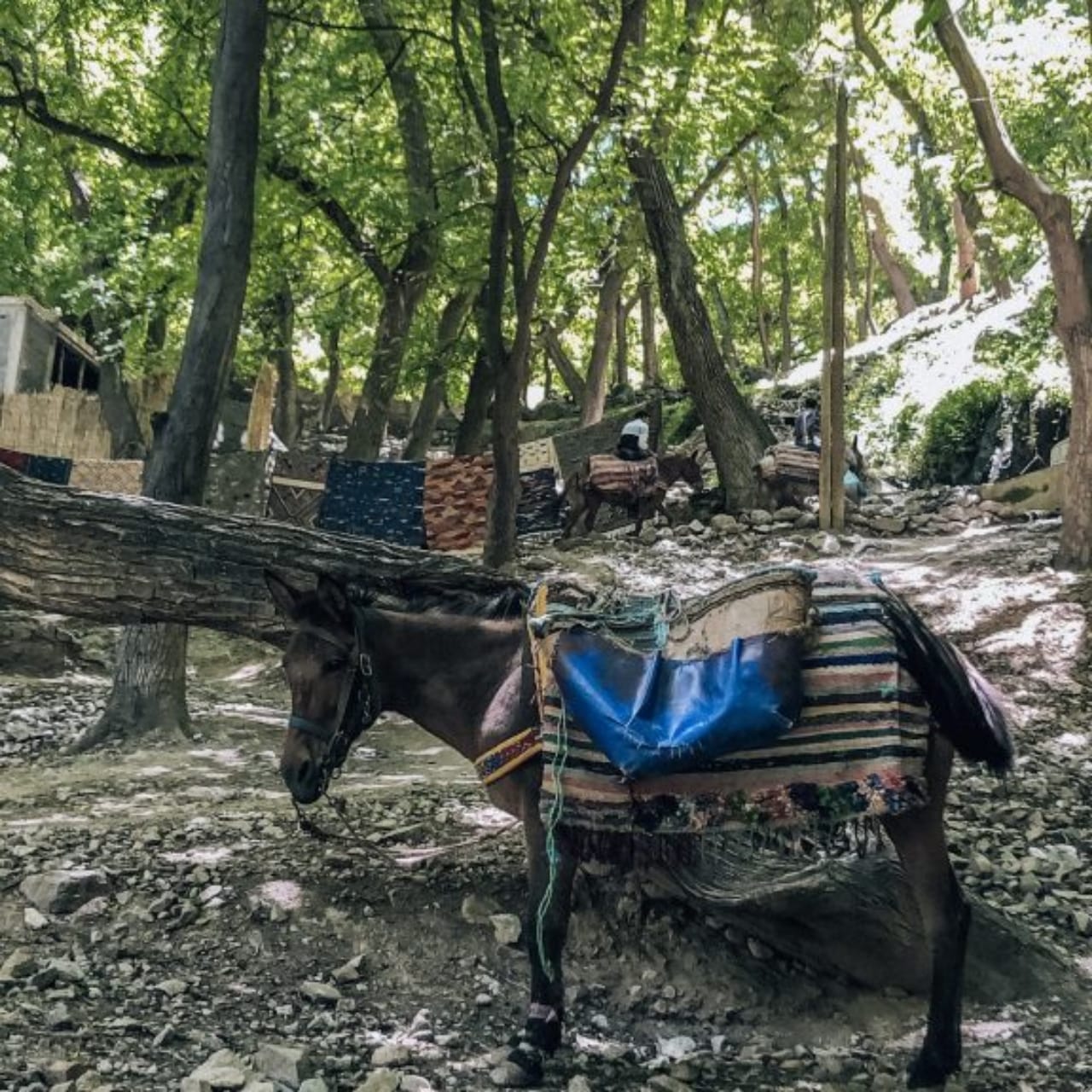
Cada mula trabaja con un mulero que la carga, la guía, la alimenta, la abreva y vela por su descanso. Cargar es todo un arte: un peso mal equilibrado causa rozaduras y lesiones, por lo que una carga bien dispuesta se amarra, se acolcha y se revisa constantemente a lo largo de la jornada.
Los muleros son un pilar fundamental de la economía de montaña, no meros figurantes. Su salario y sus condiciones laborales deben ir de la mano del debate sobre el bienestar animal.
Cruzarse con mulas en el sendero
Échate hacia el interior del camino (del lado de la montaña, nunca del precipicio) y quédate quieto mientras pasa la mula cargada. No intentes acariciarla, no camines entre el animal y su guía, y deja espacio suficiente en las curvas cerradas, ya que la carga puede oscilar.
Si quieres tomar fotos, pídele permiso al mulero. Al fin y al cabo, es su jornada laboral.
Cómo trabajamos con las mulas
En Toubkal Views contamos con mulas para nuestras rutas de trekking en el Alto Atlas, y asumimos su bienestar como una responsabilidad directa y no como un simple detalle logístico. Los animales de trabajo merecen respeto y cuidados, no ser tratados como mero equipo de transporte.
Asimismo, colaboramos con las iniciativas de bienestar animal de SPANA para los animales de trabajo en la zona de Imlil. Se trata de una colaboración estrecha, no de una asociación oficial, certificación ni respaldo formal, y la describimos con total transparencia y rigurosidad.
Preguntas frecuentes
- Can I ride a mule on a trek?
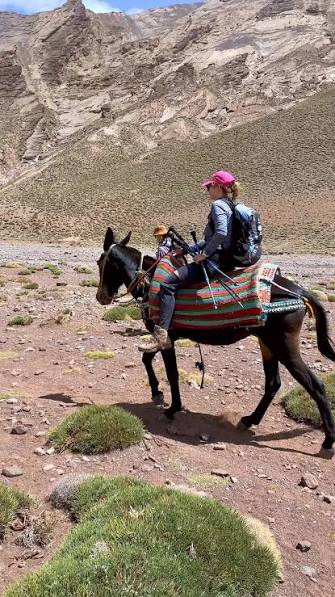
- Riding is sometimes arranged in the valleys, particularly for people who cannot walk a section. Ask us for your specific trek rather than assuming it is available or included.
- Do mules go all the way up Toubkal?
- No. Mules work the valley and refuge approaches. The upper mountain and the summit are walked.
- Are mules used on every Toubkal Views trek?
- They are used where a trek needs luggage moved between overnight stops. Day walks do not usually need them.