M'Goun & Aït Bougmez Trekking Guide: Routes, Season and How It Compares to Toubkal
The Central High Atlas is quieter, longer and more pastoral than the Toubkal massif. Here is how M'Goun and the Aït Bougmez valley actually work as treks.
Most people planning a trek in Morocco start with Mount Toubkal, and for good reason: it is the highest peak in North Africa, it is close to Marrakech, and it can be climbed in two days. The Central High Atlas is the other answer, and it suits a different kind of traveller.
This guide explains what M'Goun and the Aït Bougmez valley are, how a trek there is usually structured, and what we can and cannot promise you before you have a written itinerary from us.
Where the Central High Atlas is
The Toubkal massif sits directly south of Marrakech; you can be at the Imlil trailhead in about ninety minutes. The M'Goun massif is several hours further east, reached through the Aït Bougmez valley. That drive is the first honest thing to know: you spend most of a day getting there and most of a day coming back.
What you get in exchange is space. There is no refuge queue, no single busy summit trail, and far fewer trekkers on the paths.
Ighil M'Goun
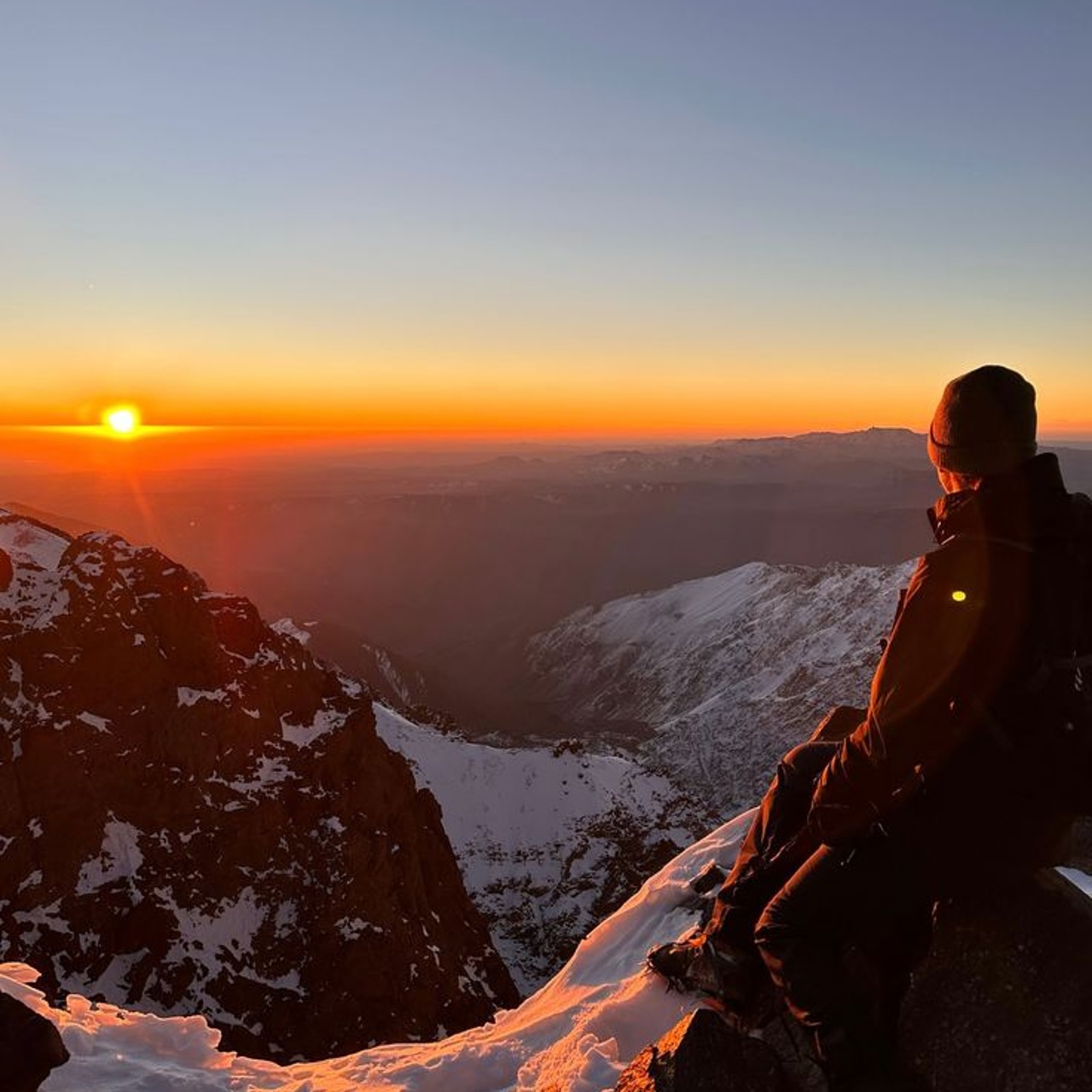
Ighil M'Goun is Morocco's second-highest massif, with a summit at roughly 4,070 m. Unlike Toubkal, where the summit day is a steep push from a refuge, M'Goun is reached along a long, broad ridge. There is no scrambling and no technical climbing — but you are high, for a long time, on a big walking day.
Typical trips are around six days from Marrakech: a transfer day, three to four walking days building height through the pastures, the summit, and the return.
The Aït Bougmez valley
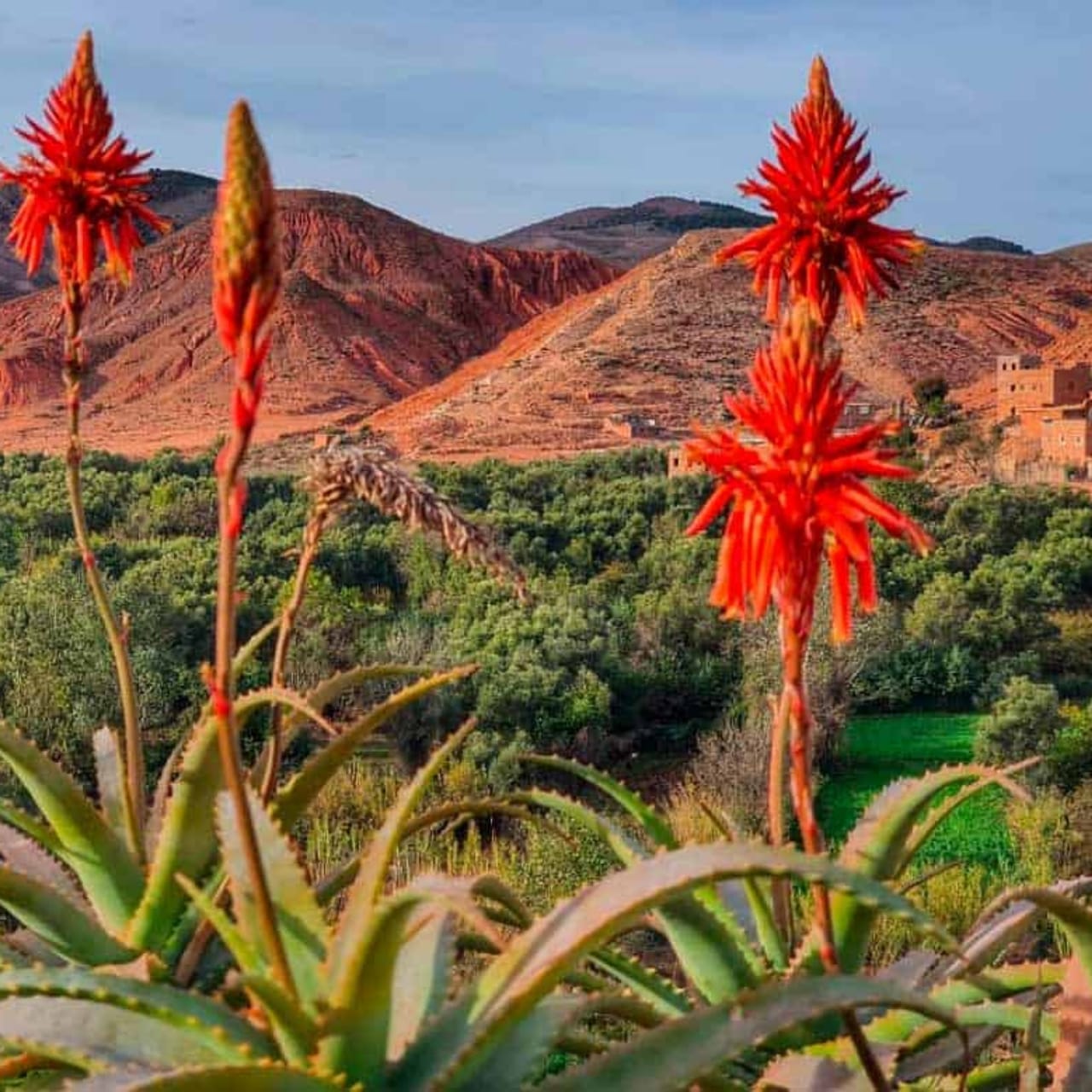
Aït Bougmez is known as the Happy Valley. It is unusually wide and flat for the Atlas — an irrigated floor of fields and walnut trees, with mud-brick villages along the edges and mountains rising on both sides.
It works as a trek in its own right for people who do not want a 4,000 m summit day: shorter walking days, gîte nights, and side valleys and passes above the fields for the views. It is also the normal approach to M'Goun, which is why the two are so often combined.
How it compares to Toubkal
| Toubkal massif | Central High Atlas (M'Goun / Aït Bougmez) | |
|---|---|---|
| Getting there | About 90 minutes from Marrakech | Most of a day each way |
| Shortest realistic trip | 2 days | 4 days (valley), about 6 days (summit) |
| High point | 4,167 m | About 4,070 m on M'Goun |
| Summit day | Short, steep, from a refuge | Long ridge walking at altitude |
| Accommodation | Refuge and village gîtes | Village gîtes and supported bivouac camps |
| Trail traffic | Busy in season | Quiet |
Neither is "better". If you have three days and want the highest peak, Toubkal wins. If you have a week and want to walk through country where the mountains are still farmed and grazed, the Central High Atlas is the one.
Season
The usual walking season in the Central High Atlas is roughly April to October. Snow can hold on the high ground into spring, and the high camps are cold well after the valleys have warmed up. We confirm early- and late-season departures with the guide before accepting a date rather than selling a month that may not work.
Fitness
For the valley trek, if you can walk four to five hours on hill paths for several days in a row, you will manage. For the M'Goun summit you should have recent multi-day walking experience and be comfortable with consecutive days above 3,000 m. Altitude, not technique, is what turns people back.
What we confirm in writing
We publish the typical shape of these routes, not a fixed guaranteed itinerary. The exact overnight stops, walking hours, transfer times, group size and per-person price are confirmed in writing when we quote you, because they change with dates, numbers and partner availability. We would rather send you an accurate quote than publish a schedule we cannot hold to.
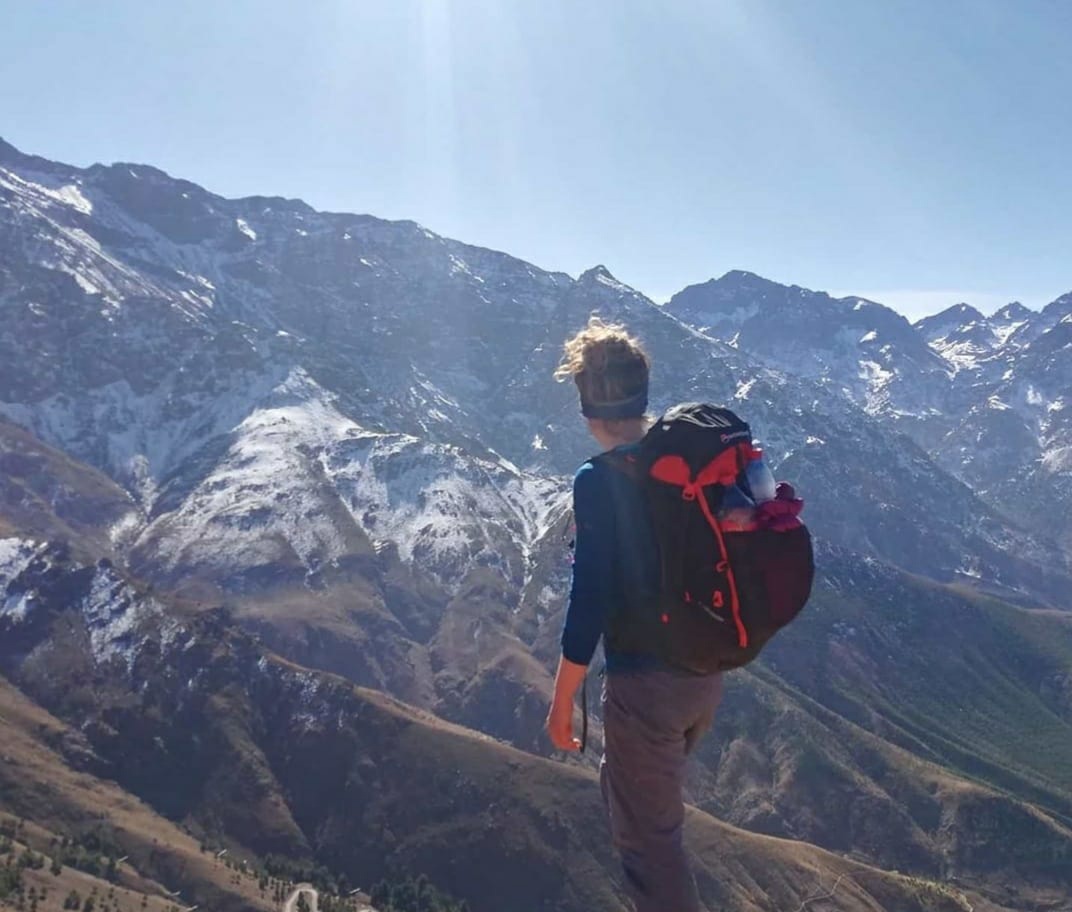
We also have not yet published our own photography of the M'Goun massif or the Aït Bougmez valley. The pictures you see on the trek pages are our own High Atlas images, and we do not label them as something they are not.
Next step
Tell us your dates, how many of you there are, and whether you want the summit or the valley. We reply with the itinerary and a written per-person price.
Frequently asked questions
- Is M'Goun harder than Toubkal?
- It is lower but longer. Toubkal has the harder single summit day; M'Goun asks for more consecutive days of walking at altitude.
- How many days do I need for M'Goun?
- Around six days from Marrakech, because a full day is lost to the road transfer at each end.
- Can I trek Aït Bougmez without climbing M'Goun?
- Yes. The valley works on its own as a four-day village-to-village trek with moderate days and gîte nights.
- When is the season?
- Roughly April to October. Snow can hold on the high ground into spring, so early departures are confirmed with the guide first.