Erg Chebbi Dunes: What They Are Like and What to Do There
Erg Chebbi is the dune field that makes Merzouga worth the drive. Here is what the sand is actually like, what there is to do beyond the camel ride, and how to spend a full desert day.
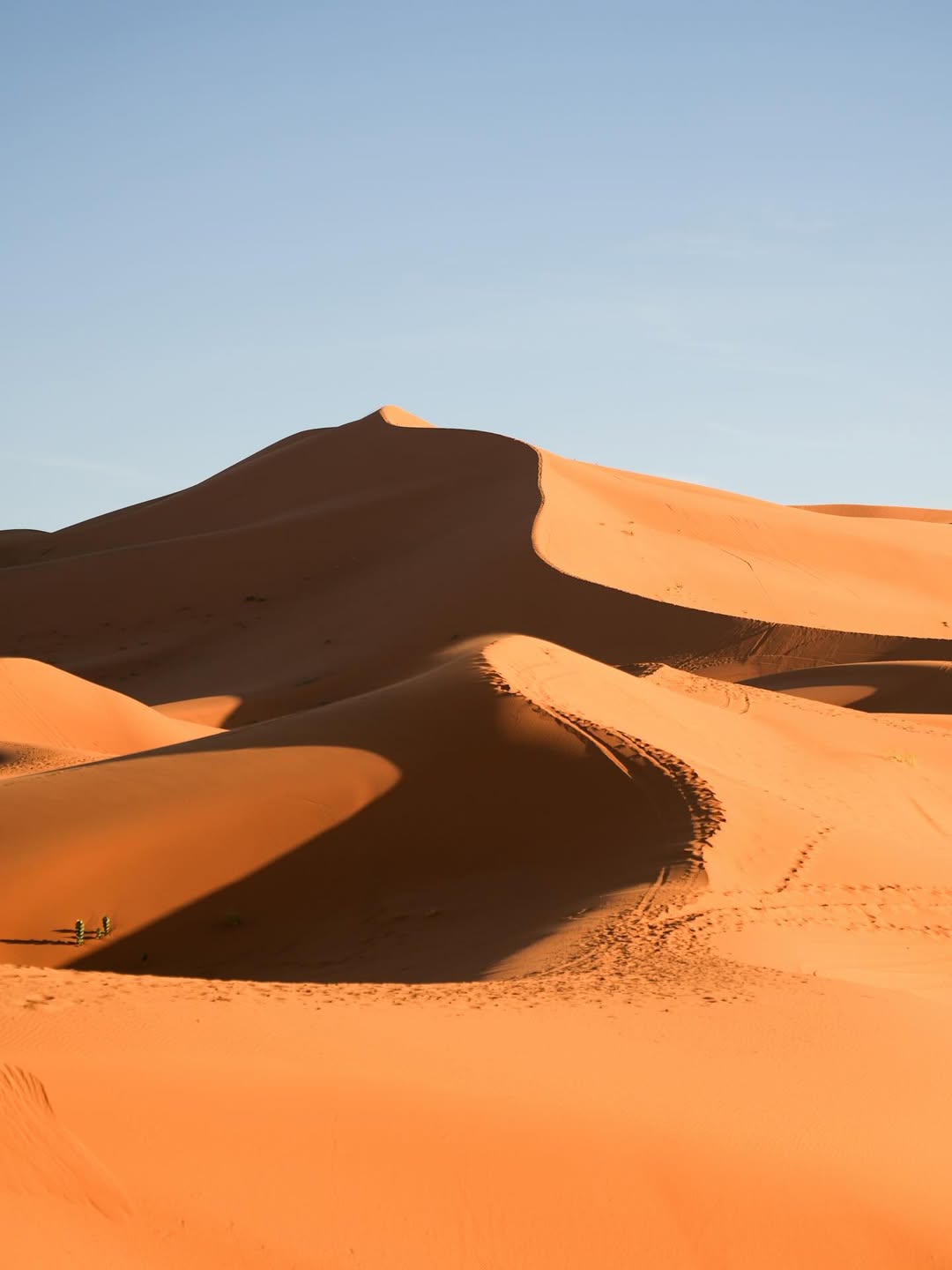
An erg is a sea of wind-blown sand, and Erg Chebbi is the most striking one in Morocco: roughly 22 km long, up to about 5 km wide, with the highest crests rising some 150 m above the surrounding plain. It sits directly beside Merzouga village, which is why almost every Moroccan Sahara photograph you have seen was taken here.
What walking on it is like
Soft sand is harder work than it looks. Climbing a 100 m dune barefoot takes most people fifteen to twenty minutes with pauses, and you slide back roughly a third of every step. This matters for two reasons: pick your sunrise dune the evening before, and do not plan a long dune walk in the middle of a summer day.
The sand is fine and gets into everything — cameras, shoes, hair, bags. A scarf and a closed bag are worth more here than any technical clothing.
Sunrise and sunset
Both are the point of coming, and they are genuinely different.
| Sunset | Sunrise | |
|---|---|---|
| Light | Warm, long shadows, orange crests | Cooler, pink then gold, cleaner sand |
| Crowds | Busiest hour at the erg edge | Almost nobody, camps still quiet |
| Temperature | Still hot in summer | The most comfortable hour of the day |
If you only get one, take sunrise. It is colder, quieter and the wind has usually erased the previous day's footprints.
Things to do besides the camel ride
- Sandboarding — boards are available at most camps; the run is short and the walk back up is the workout.
- 4x4 dune circuits — the standard way to reach the far side of the erg, the dry lake bed and the nomad areas.
- Khamlia — a village south of Merzouga known for Gnawa music, usually visited on a full desert day.
- Rissani market — a working desert market town, best on market days rather than as a photo stop.
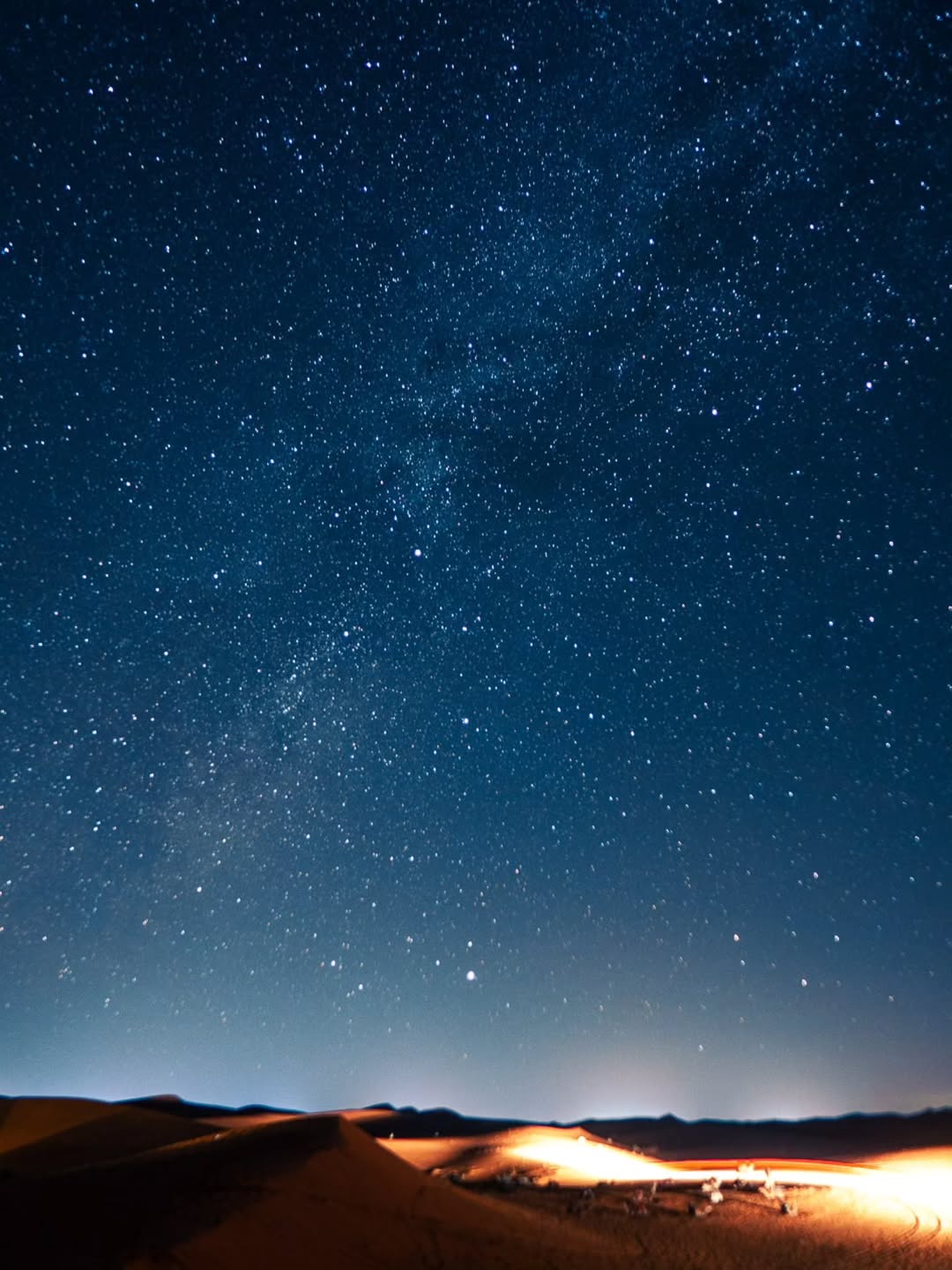
- Stargazing — the reason to sleep out here rather than day-trip in.
Most of these are optional extras rather than inclusions. Our 4-day private luxury Sahara tour (list price €495) is built around a full free day at the erg, which is the itinerary that makes them realistic.
How long to stay in the dunes
One night is enough to see sunset, the night sky and sunrise. Two nights change the trip: you stop rushing, you get a full day at the erg, and you no longer spend the morning after sunrise getting back into a vehicle. If your schedule allows only one night, that is still worth it — see how many days you need.
Heat, wind and sand storms
Summer afternoons regularly pass 40 °C, which is why camps schedule activity for early morning and late afternoon. Spring can bring wind and blowing sand for a day or two at a time; it is not dangerous, but it flattens visibility and is a reason many travellers prefer autumn — see the best time to visit Merzouga.
What to bring onto the sand
A scarf, sunglasses, sunscreen, a warm layer for after dark, a head torch and closed shoes for walking to the camp. The full list is in the Sahara desert packing list.
Frequently asked questions
- How tall are the Erg Chebbi dunes?
- The highest crests rise around 150 m above the surrounding plain, and the dune field runs roughly 22 km north to south.
- Is Erg Chebbi the real Sahara?
- Yes. Erg Chebbi is a genuine Saharan dune field on the edge of the desert in south-east Morocco, unlike the stony deserts near Marrakech.
- How hard is it to climb a dune?
- Harder than it looks. Soft sand gives way under each step, so a 100 m dune takes most people fifteen to twenty minutes with rests. Go at sunrise, not in midday heat.
- Can you go sandboarding at Merzouga?
- Yes, most camps have boards available. The descent is short and the climb back up is the real effort, so treat it as fun rather than a sport.
- Is a 4x4 dune circuit included in tours?
- Usually not. Sandboarding, quad rides and 4x4 circuits are normally optional extras paid locally; we will tell you what is and is not included before you book.
- When is the best light for photographs?
- The hour after sunrise and the hour before sunset. Midday flattens the dunes and washes out the colour.