Marrakech to Merzouga: The Road, the Stops and How Long It Takes
Nine to ten hours of driving separate Marrakech from the Erg Chebbi dunes. Here is how that road is normally split over two days, what you stop for, and how to make the long stretches comfortable.
The single question we answer most often before a Sahara booking is some version of "how long is the drive?". The honest answer: about 560 km and nine to ten hours from Marrakech to Merzouga, before stops. Nobody drives it in one go, and no reputable operator should suggest it.
How the route is split
Almost every Merzouga itinerary from Marrakech uses the same two-day structure, because it matches where the good overnight stops are.
| Leg | Route | Driving |
|---|---|---|
| Day 1 | Marrakech → Tizi n'Tichka → Ait Ben Haddou → Ouarzazate → Dades Valley | 6–7 hours with stops |
| Day 2 | Dades → Todra Gorge → Erfoud/Rissani → Merzouga | 4–5 hours, arriving late afternoon |
| Return | Merzouga → Ouarzazate → Marrakech | 9–10 hours, or split over two days |
That return leg is why we recommend four days rather than three whenever people have the time. Three days works, and it is our most booked Sahara trip, but day three is a long one.
Tizi n'Tichka: the pass that sets the tone
The road climbs to 2,260 m at the Tizi n'Tichka, the main crossing of the High Atlas. It is fully paved and now partly rebuilt, but it is a mountain road with continuous bends. Travellers who are prone to motion sickness should sit forward, take something before departure and tell the driver — stopping for ten minutes at a viewpoint fixes most of it.
Ait Ben Haddou and Ouarzazate
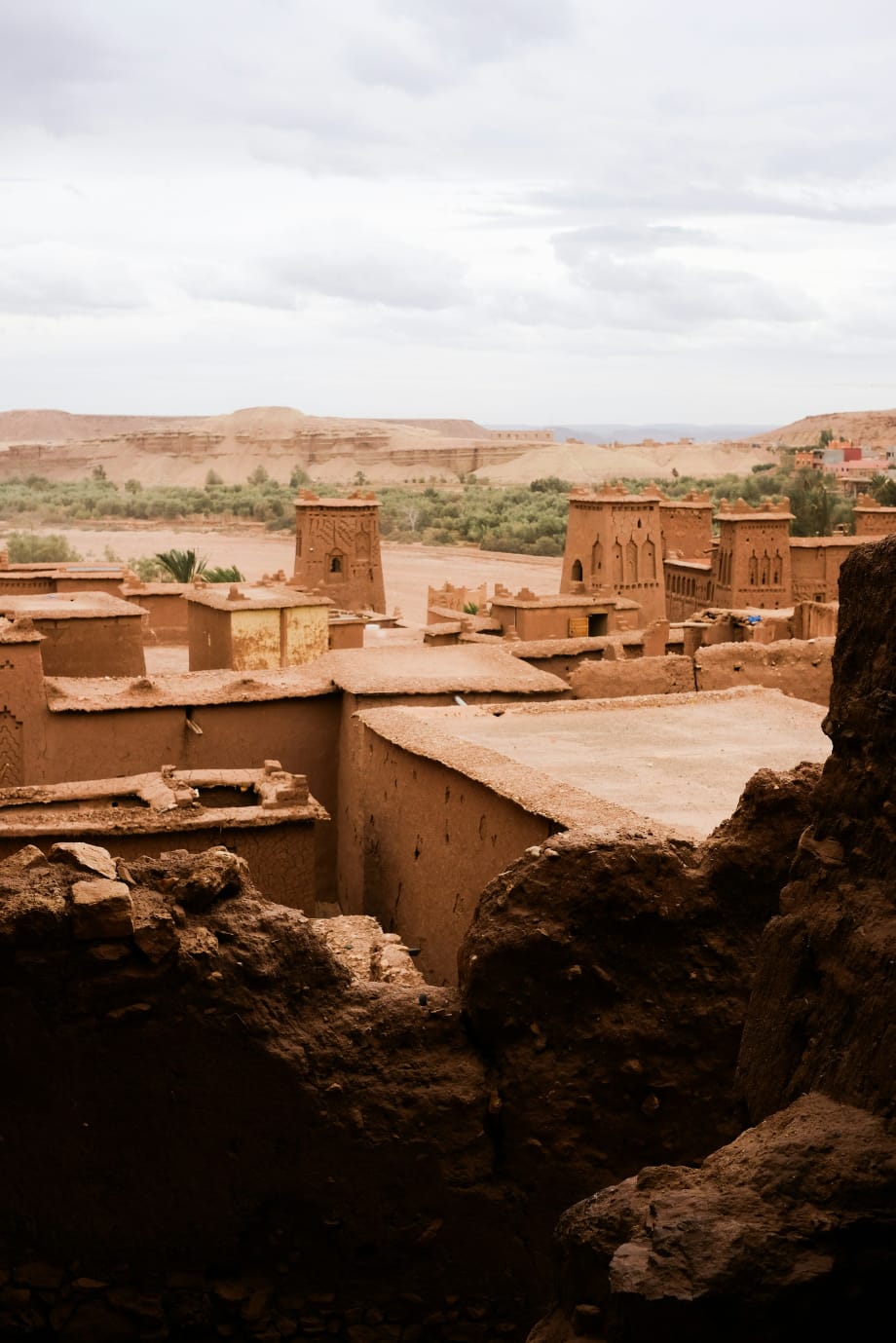
The first major stop is the earthen ksar of Ait Ben Haddou, a UNESCO World Heritage site and the most photographed building on the route. Allow an hour to cross and climb it. Ouarzazate follows: film studios, the Taourirt kasbah and lunch.
Both are covered properly in the Ait Ben Haddou and kasbah route guide.
The gorges
Day two opens with the Dades hairpins and continues to the Todra Gorge, where the cliffs close to a few metres across. These are short stops in driving terms and the best walking on the whole route — see the Dades and Todra gorges guide.
The last hour
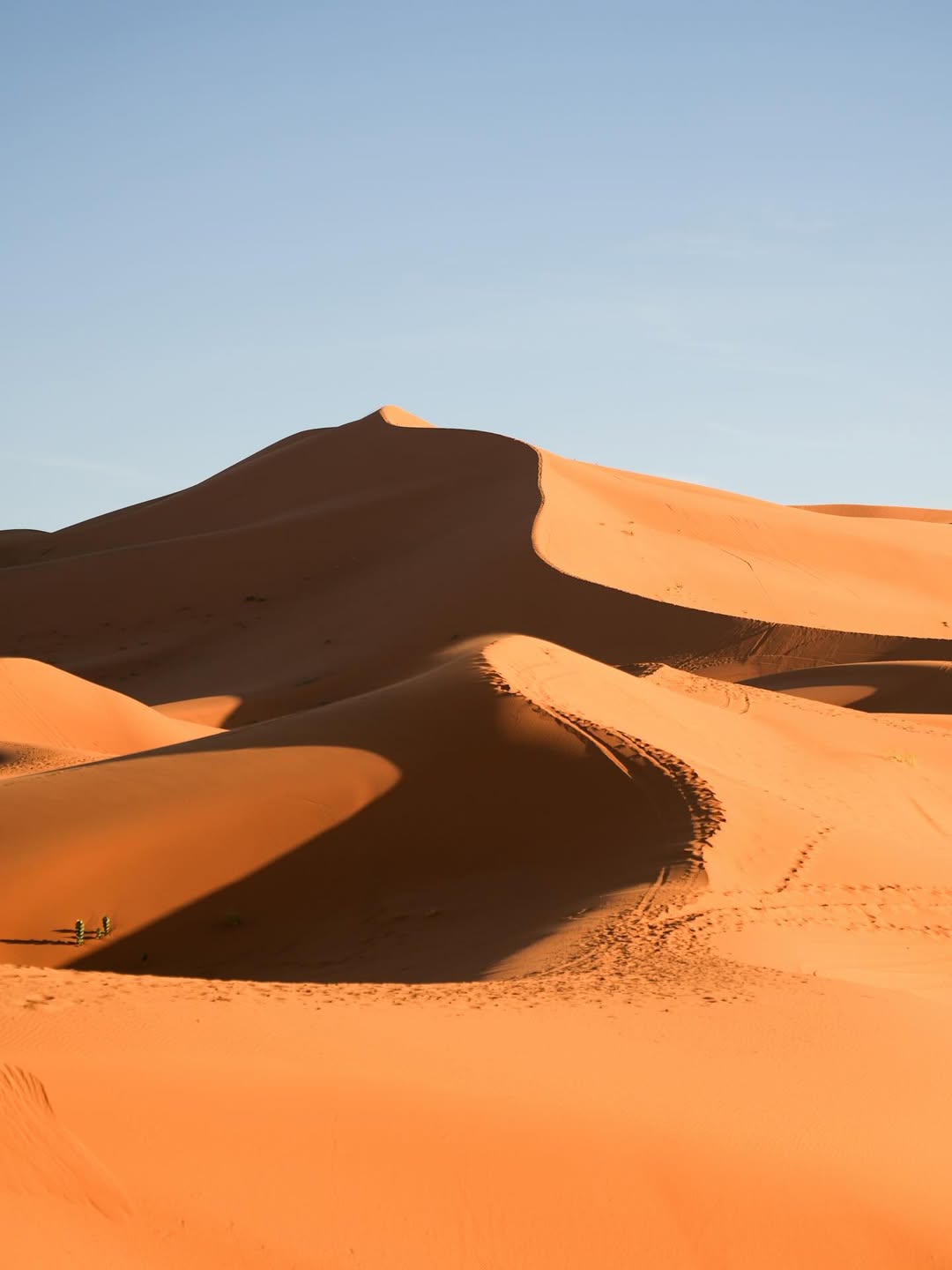
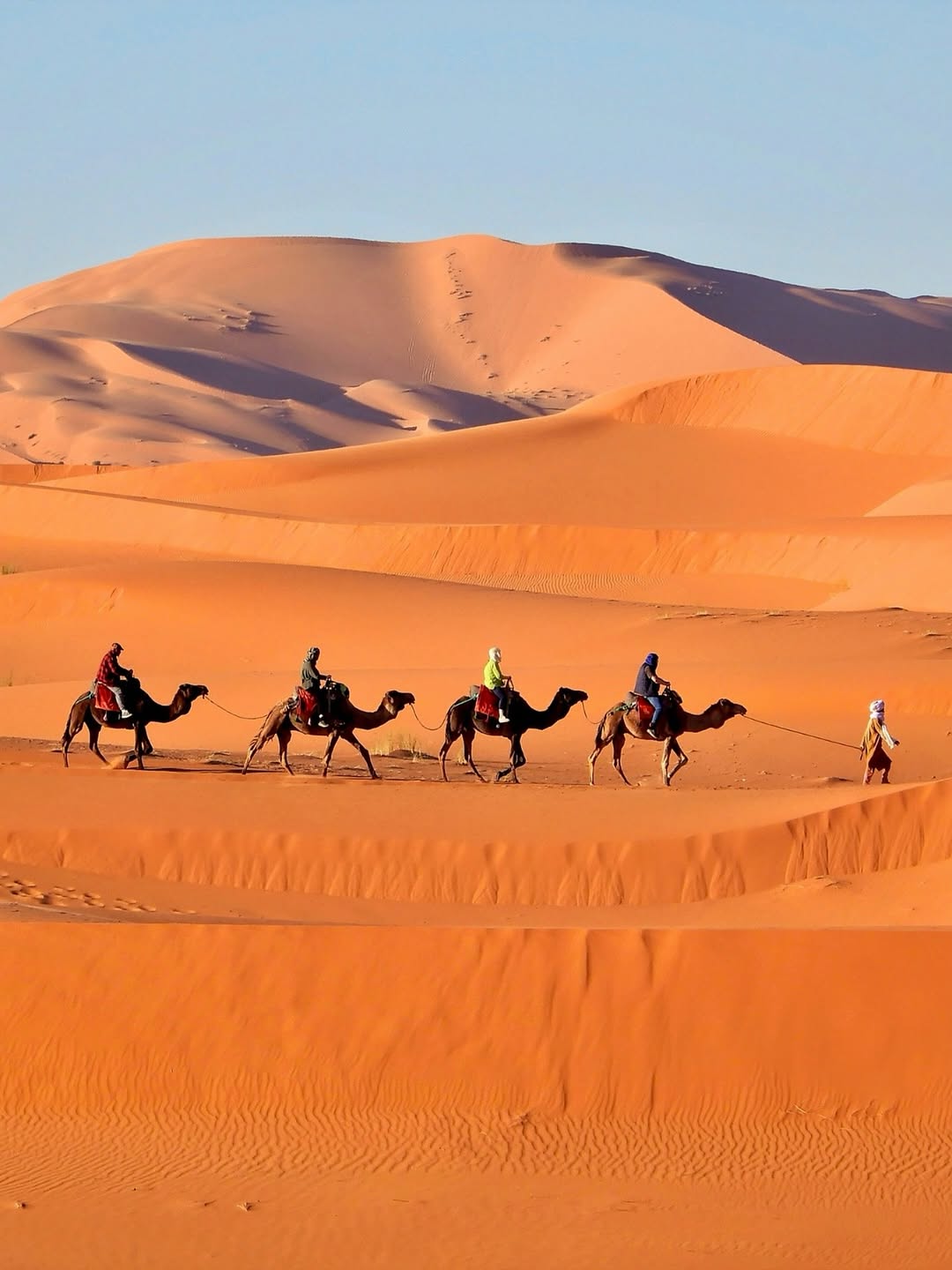
After Tinghir the landscape flattens into black stony hamada, and then, quite suddenly, Erg Chebbi appears on the horizon. Camel teams meet vehicles at the dune edge in the late afternoon so that you ride in for sunset. What happens after that is described in a night in a Sahara desert camp.
Doing it one way instead
If you do not want to drive the same road twice, finish in Fes. The 3-Day Marrakech to Fes tour via Merzouga (list price €179) and the slower 5-day private crossing both leave the desert north through the Ziz Valley and the Middle Atlas cedar forests instead of returning west.
Making the long days comfortable
- Choose a private vehicle if you want to control the stops; a shared minivan is cheaper but keeps its own schedule.
- Carry water and snacks — roadside stops are frequent, but not on your timetable.
- Sunglasses and a scarf matter more than you expect, in the vehicle as well as on the dunes.
- Cash for lunches and entrance fees, which are not included on most Sahara itineraries.
Frequently asked questions
- How far is Merzouga from Marrakech?
- About 560 km by road, which is nine to ten hours of driving before stops. It is normally split over two days with a night in the Dades Valley.
- Can you drive Marrakech to Merzouga in one day?
- Physically yes, but it means nine to ten hours in the vehicle with no time for Ait Ben Haddou or the gorges, and a very late arrival. We do not run it that way.
- Is the Tizi n'Tichka pass difficult?
- It is a paved mountain road with continuous bends, climbing to 2,260 m. It is not dangerous in normal conditions, but passengers prone to motion sickness should prepare for it.
- Is the road paved the whole way?
- Yes, the route to the edge of Erg Chebbi is paved. Only the last stretch into the dunes is off-road, and that is done by camel or 4x4.
- Should I return to Marrakech or continue to Fes?
- If your onward flight is from Fes, the one-way crossing avoids repeating the same road. If you fly out of Marrakech, the round trip is simpler and usually cheaper.
- Are lunches included on the drive?
- On most of our Sahara itineraries lunches are not included, so you choose your own stop and pay locally. Breakfasts and camp dinners are included.