Who Walks With You: The Team Behind a High Atlas Trek
A plain explanation of the guide, muleteer, cook and mule team on a multi-day High Atlas trek, and what each of them actually does.
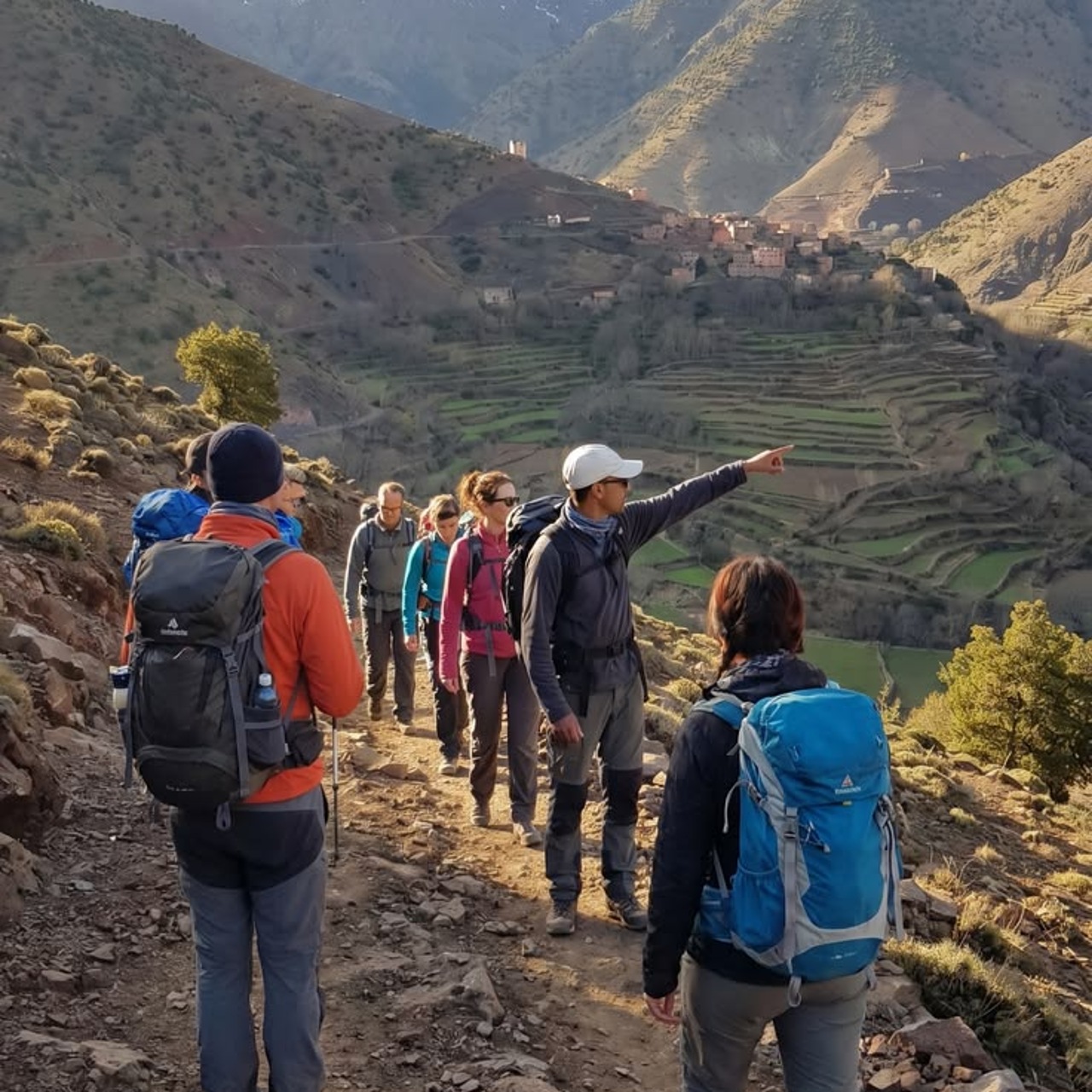
On a day hike from Imlil you walk with one guide. On a multi-day High Atlas trek you are quietly supported by three or four people and several animals, and most travellers only work out who does what on day two.
The guide
Your guide sets the pace, reads the weather, manages altitude, handles village and refuge arrangements, and makes the turn-around decision if one is needed. They are also your translator — into Tachelhit and Darija as much as into local context.
The muleteer
The muleteer moves the heavy load between overnight stops: tents, food, main luggage. They usually leave after you and arrive before you, which is why camp is often already set up when you walk in. Muleteers are local men from the valleys, working with animals they own or know well.
The mules
Mules carry the loads on most High Atlas routes, as they have for generations. They are working animals, not luggage racks: their condition, load and rest matter, and a well-run trek treats that as part of the job. We cooperate with SPANA's animal-welfare work in the Imlil area, which supports the working animals of the valley.
The cook
On longer treks and camping itineraries there is often a dedicated cook. Mountain food in the High Atlas is better than most people expect — tagine, soup, bread, fruit, and an unreasonable amount of mint tea.
What this means for you
You carry a day bag. Water, layers, camera, snacks. Your main bag travels with the mules and you will not see it between breakfast and camp, so keep what you need with you.
Packing matters for the animals. Soft duffel-style bags load better than rigid suitcases, and weight limits exist for a reason. If you are unsure, ask us before you pack.
Communication runs through the guide. Dietary needs, a knee that is complaining, a pace that feels wrong — say it early and say it to the guide.
Tipping
Tipping is customary in Moroccan trekking, and it is normally shared across the team rather than given only to the guide, since the muleteer and cook are part of the same operation. There is no fixed rule and we do not publish an amount, because it depends on trek length and group size. Ask your guide what is usual; they will not be offended.
Who these people are
Toubkal Views works with more than 15 accredited guides plus the muleteers and cooks who make multi-day routes possible. Most live in the valleys you walk through. That is the practical reason our treks can adapt: the team is not flown in for the week.
If you want to understand the mule side in more detail, read how mule welfare works on our routes, or ask us about a specific itinerary on WhatsApp.
Frequently asked questions
- How many people support a multi-day High Atlas trek?
- Typically a guide plus one or more muleteers, and on longer or camping itineraries a cook, alongside the mules that carry the main load.
- Do I carry my own luggage?
- No. On mule-supported routes you carry a day bag and your main bag travels with the mules between overnight stops.
- Is tipping expected?
- It is customary and usually shared across the whole team. There is no fixed amount; ask your guide what is normal for the length of your trek.