How Difficult Is Mount Toubkal? An Honest Answer
Mount Toubkal is a demanding mountain trek: sustained ascent, altitude, rocky terrain and a long descent. Snow and ice change the skills and equipment required. Compare the demands of the published itineraries before choosing.
How difficult is Mount Toubkal?
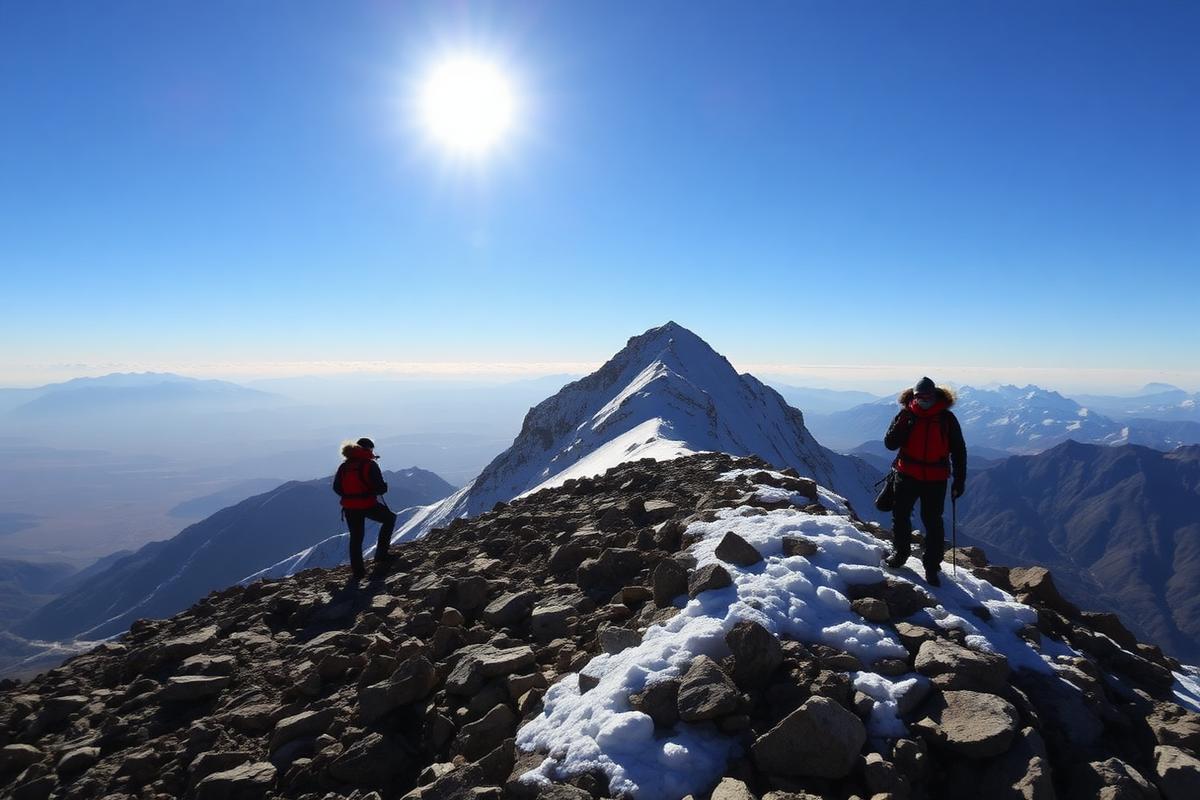
Mount Toubkal is a demanding mountain trek, not a casual sightseeing walk. On the normal route from Imlil, snow-free conditions generally mean sustained walking over rocky ground rather than technical rock climbing. The difficulty comes from combining ascent, altitude, uneven terrain and a long descent—often across consecutive days. Snow and ice change the skills and equipment required, whatever the month.
Being able to walk far on level ground is useful, but it does not tell the whole story. You also need to manage uphill effort, keep your footing when tired and descend without rushing. Fitness helps with the work; it neither guarantees a summit nor prevents altitude illness.
Elevation gain: why the numbers matter
The published itineraries start in Imlil at about 1,740 m, reach the Toubkal refuge at 3,207 m, and attempt the summit at 4,167 m. Those elevations imply roughly 1,467 m of net ascent from Imlil to the refuge and another 960 m from the refuge to the summit: approximately 2,427 m of net climbing overall. This is elevation difference, not a measured cumulative ascent or a GPS route distance; undulations and the chosen path can add effort.
The summit is only the midpoint of the hardest day. Returning from 4,167 m to Imlil involves about the same 2,427 m of net descent. That is a substantial load on tired legs, even when you no longer feel breathless from climbing. Compare the ascent, descent and overnight stops in the actual itinerary rather than judging difficulty from its number of days alone.
Hiking duration and the long summit day
Walking times depend on pace, breaks, route conditions and how the group is doing. They are planning estimates, not deadlines or promises. The published 4-day itinerary describes the refuge approach as 5–6 hours; other approaches and winter conditions are not interchangeable with that estimate. Ask the team about the expected walking time for your chosen itinerary and dates.
The 2-day programme puts the approach and summit-return into consecutive days. Summit day starts before dawn, climbs from the refuge to the summit, then continues down to the valley. Do not budget only for the uphill part. Your recent experience of a full hillwalking day—and how you recover for the following morning—is more useful than your fastest gym session.
Terrain, footing and descent
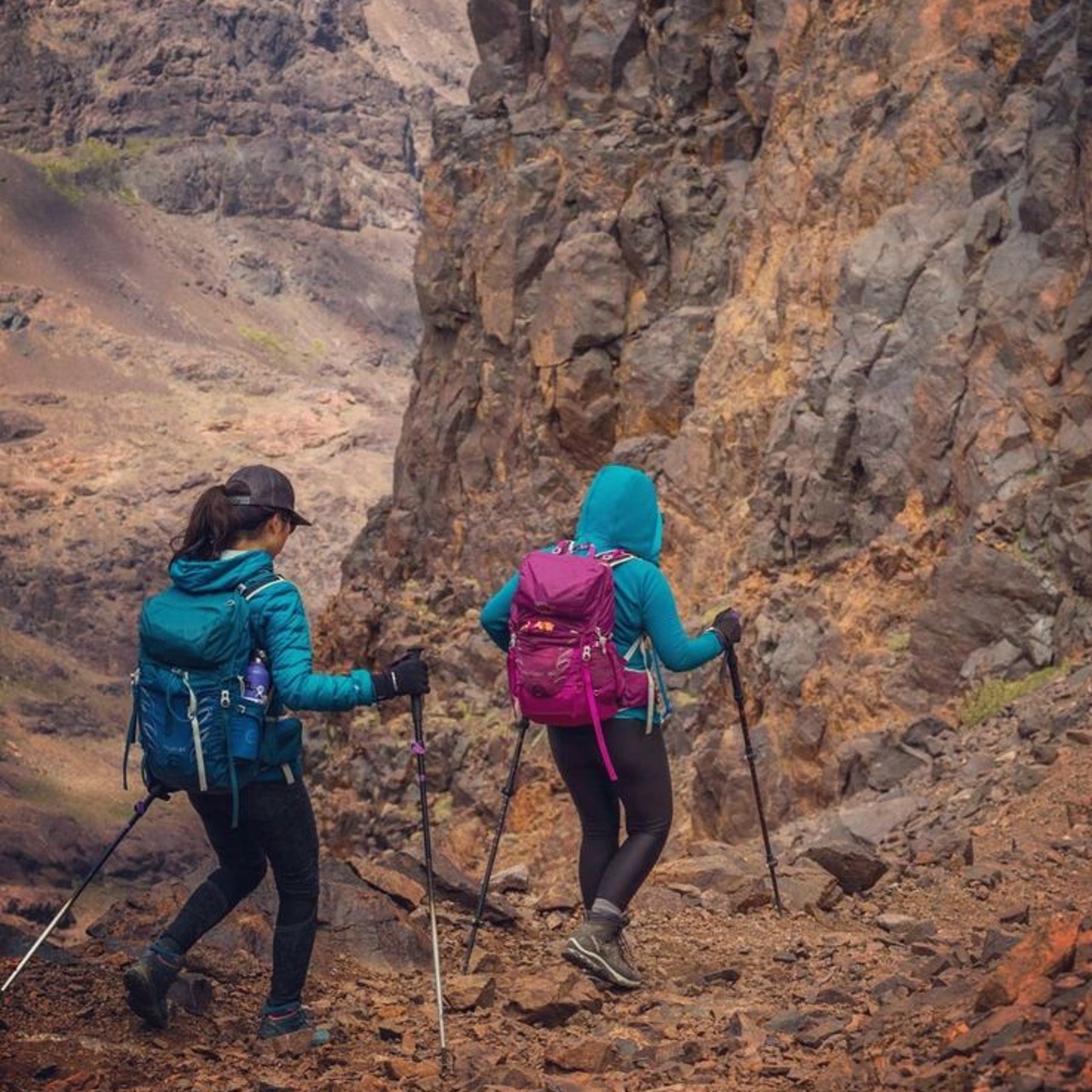
Expect rocky paths, uneven steps, loose stones and scree on the normal approach and upper route. Some sections require careful foot placement; poles can help balance, but they do not remove the need for control. Snow-free does not mean smooth or risk-free. You may use your hands for balance where the ground demands it.
The descent can feel harder than expected because it comes after the summit effort. Loose ground rewards a measured pace, not racing downhill to finish. Practise controlled descents on local hills, break in your boots and learn how your feet and legs respond to a long day. Tell the team about concerns over balance, knees or previous difficulty descending before choosing an itinerary; seek individual professional advice where appropriate.
Altitude: a separate challenge from fitness
Altitude adds difficulty independently of your walking fitness. You may need a slower pace at elevation than you use at home. A fit person can still become unwell; a training plan cannot promise protection. Extra itinerary time may provide opportunities for a more gradual approach, but no number of days guarantees acclimatisation.
Tell the guide promptly if you feel unwell, including headache, nausea, dizziness or unusual breathlessness. Do not dismiss symptoms as proof that you simply need to push harder. Worsening symptoms or difficulty walking or breathing require urgent assessment; continuing higher is not the answer. The mountain guide makes the final safety decision, including turning the group around. Read the altitude and acclimatisation guide, and discuss personal medical concerns with a qualified clinician before travel.
Summer versus winter difficulty
In snow-free conditions, the normal route is primarily a hard hillwalk. Sun exposure, wind, cold and changing weather still matter; neither a summer booking nor a clear morning guarantees favourable conditions throughout the day. Pack for the mountain rather than the temperature in Marrakech.
When snow and ice cover the upper route, Toubkal becomes a winter mountain objective. Crampons, an ice axe and the ability to use them are required where conditions demand them. Equipment needs are confirmed by the guide close to departure, not by a fixed calendar rule. Do not assume an ordinary walking boot is compatible with crampons or that every itinerary includes equipment rental.
The 3-day winter Toubkal trek has a valley night, a refuge night and a summit attempt. Its published itinerary has no dedicated snow-skills day or reserve day. More days on the calendar do not automatically mean a training day or a second summit window. Check that the programme matches your experience, and read the winter climbing guide.
Can a beginner climb Mount Toubkal?
Someone new to high mountains may find a guided, snow-free Toubkal itinerary appropriate if they already have solid hillwalking fitness, can cope with uneven ground and choose a realistic schedule. That is a conditional assessment, not a promise that all beginners can climb it. A beginner to mountain trekking and a beginner to sustained walking are different starting points.
If your recent experience consists of short flat walks, start with regular walking and progressive hill practice rather than treating Toubkal as the training session. An Imlil day hike can also be a different objective for someone who wants to experience the Atlas without committing to a summit trek. Describe your recent longest walk, ascent, descent and recovery to the team; do not rely on age or a general “I am fit” label alone.
Winter adds another layer. Strong endurance does not substitute for winter movement skills, equipment checks or judgement in snow and ice. Discuss your actual experience before requesting a winter trek.
Two days versus a longer itinerary
The 2-day Toubkal summit trek is compact. Its limitation is compressed effort: the approach is followed by the summit and valley descent, without a separate acclimatisation day. It should not be described as easier simply because it is shorter.
The 3-day Toubkal trek through Azzaden Valley adds a valley approach and more walking. It offers a different journey, not a guaranteed easy version or automatic weather buffer. Check its passes and daily stages against your experience.
The 4-day Toubkal summit itinerary includes a dedicated acclimatisation walk before the refuge approach. That changes the preparation pattern, but its final summit-and-return day remains demanding. Longer routes can involve greater total effort even when the approach is spread out. No itinerary guarantees summit success: weather, snow, ice, trail conditions, pace and each person's condition decide what is possible.
Practical preparation before booking
- Build consistent walking endurance gradually from a level you can already manage.
- Include uphill practice and controlled descents, not just flat-distance targets.
- Rehearse with your intended day pack and footwear; deal with rubbing or poor fit before travelling.
- Practise consecutive walking days when appropriate, allowing recovery rather than adding hard sessions indefinitely.
- Prepare layers, headlamp and weather protection; confirm the individual kit list and any supply or rental arrangements with the team.
- Leave room in your expectations for a changed plan or turnaround. A summit is an objective, not an entitlement.
Use the physical preparation checklist and example training schedule for practical habits, and the fitness and training guide for the separate training question. The example schedule is general guidance, not a fitness certification or a summit-success programme.
Choose the right trek, not just the shortest one
Compare the linked product itineraries and current approved prices on their own pages. This guide does not maintain a second price list. For the newly approved private trekking options, request availability: a published private price is not a confirmed departure, and payment must wait for the required confirmation. See the private Toubkal guide.
These linked guided Toubkal programmes include return Marrakech–Imlil transport; do not buy the same transfer twice. Confirm your pickup arrangements with the team rather than assuming a time. For a broader comparison, use the existing Mount Toubkal planning guide or compare the published Toubkal itineraries. Send your dates, party size, recent hillwalking experience and preferred season when enquiring; availability and the right itinerary must be confirmed, not inferred from this article.
Frequently asked questions
- How difficult is Mount Toubkal?
- It is a demanding mountain trek. In snow-free conditions the normal route is primarily hillwalking, but sustained ascent, altitude, uneven ground and a long descent make it challenging. Snow and ice change the skills and equipment needed.
- Can a beginner climb Mount Toubkal?
- A beginner to high mountains may be suited to a guided, snow-free itinerary if already comfortable with sustained hillwalking and uneven terrain. Someone new to long walks needs preparation first. Suitability must be discussed individually; a summit is never guaranteed.
- Do you need climbing experience for Toubkal?
- The normal snow-free route generally does not involve technical rock climbing. Snow and ice require winter equipment and the skills to use it. Confirm conditions and the chosen itinerary with the team.
- How much elevation gain is involved?
- Imlil at about 1,740 m to the 4,167 m summit is roughly 2,427 m of net elevation gain, via the refuge at 3,207 m. This is elevation difference, not a measured cumulative ascent or GPS route distance.
- How long does the hiking take?
- Times depend on the itinerary, pace, breaks and conditions. The published 4-day itinerary estimates 5–6 hours for its refuge approach. Summit day also includes the long descent to Imlil; confirm stage estimates for your chosen programme.
- Is Mount Toubkal harder in winter?
- Snow and ice add winter movement and equipment demands. Crampons and an ice axe are required where conditions demand them; the guide confirms needs close to departure rather than using a fixed calendar rule.
- Is a longer Toubkal itinerary easier?
- Not automatically. The 4-day itinerary has an acclimatisation walk, while the 3-day Azzaden itinerary adds valley walking. The summit descent remains demanding, and extra days guarantee neither acclimatisation nor favourable weather.
- Can fitness prevent altitude illness?
- No. Fitness helps with walking effort but does not guarantee protection from altitude illness. Report symptoms promptly, do not continue higher when unwell, and seek individual medical advice before travel where appropriate.