Training for Mount Toubkal: What to Actually Do
The mountain does not test your gym numbers. It tests whether you can walk uphill for hours, twice, and then come down safely.
What fitness do you need for Toubkal?
A useful benchmark: walk 5–6 hours in hilly terrain with 800–1,000 m of ascent, and be willing to do something similar the next day. If that sounds achievable, you are in range. If it sounds impossible, you have a training target rather than a problem.
Toubkal does not reward gym strength or short bursts of speed. It rewards a body that is used to being on its feet for a long time on uneven ground.
The four things worth training
| Train this | Why | How |
|---|---|---|
| Long, slow walking | Summit day is measured in hours, not kilometres | One long walk each week, building gradually |
| Ascent | There is almost no flat ground on the route | Hills, stairs, or a treadmill on incline |
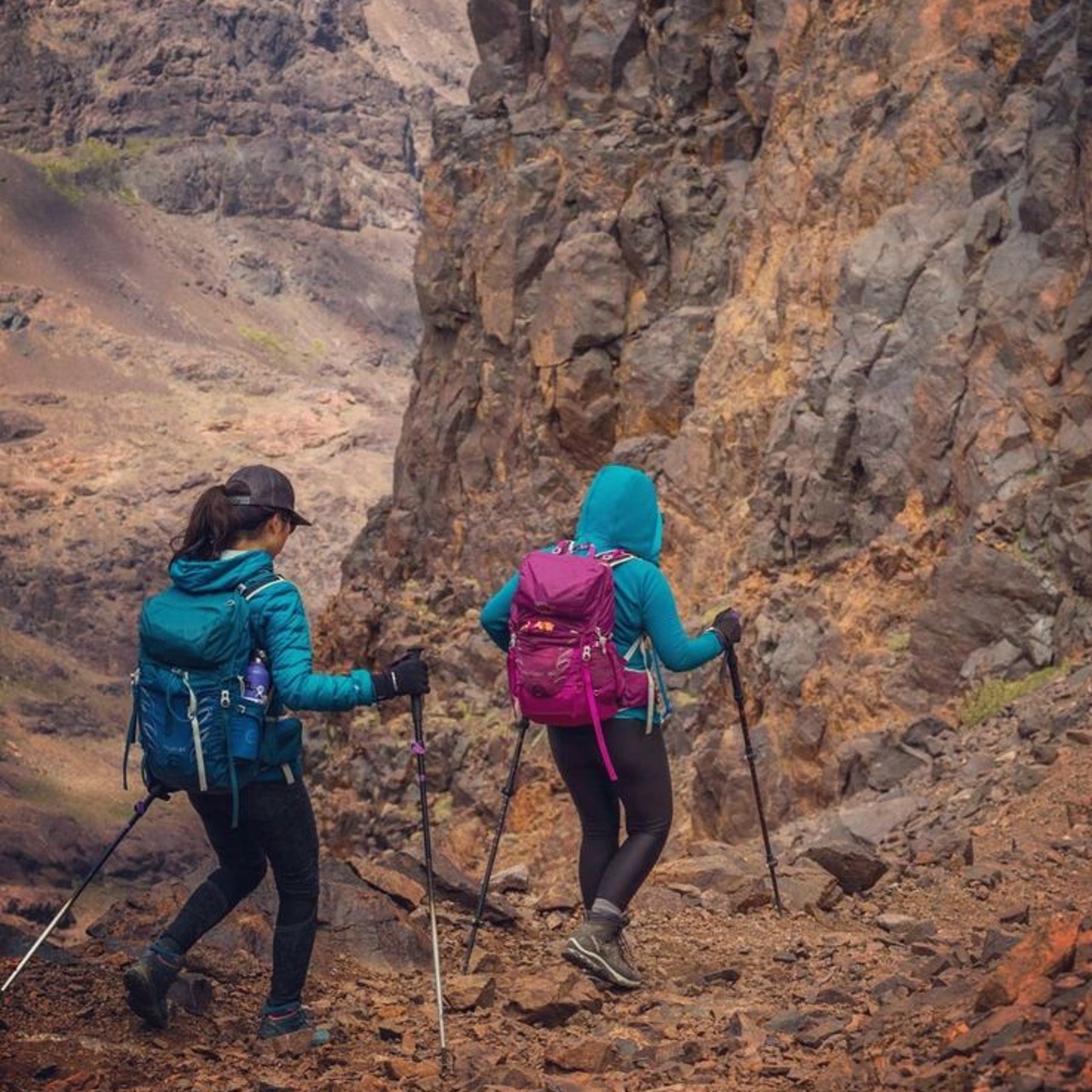
| Descent | Scree and steep paths wreck untrained legs | Deliberately walk downhill; add step-downs and lunges |
| Back-to-back days | Day two starts before dawn on tired legs | Two long walks on consecutive weekend days, once a month |
How long do I need to train?
If you already walk regularly, 6–8 weeks of consistent hill work is usually enough. Starting from a low base, give yourself three to four months. Frequency matters more than intensity — three moderate sessions a week beats one heroic weekend.
What if I only have a few weeks?
Do not try to cram. Instead:
- Walk more often, even short walks, and always with the shoes you will wear on the mountain.
- Add stairs or hills wherever your week allows.
- Choose a longer itinerary. The 3-day Azzaden route or the 4-day trek forgives an underprepared body far better than the fastest option.
- Accept a slower pace on day one. Arriving at the refuge fresh is worth more than arriving early.
Train in your boots
Blisters end more summit attempts than fitness does. Every long training walk should be done in the boots and socks you plan to wear, with the pack weight you will carry. Break in new footwear weeks before you fly, never on the mountain.
Should I train for altitude?
You cannot train for altitude at sea level in any meaningful way. What you can do is remove every other limiting factor, so that thin air is the only thing your body has to deal with. The altitude guide explains what to expect above 3,000 m, and the difficulty guide puts the effort in context and the Mount Toubkal trek guide covers the trip built around it.
A simple weekly shape
- Two shorter sessions (45–70 minutes) of brisk walking, stairs or cycling.
- One long walk each weekend, growing by roughly 10% at a time, on the hilliest terrain you can reach.
- Once a month, two long days in a row.
- Some simple leg strength work — squats, step-ups, calf raises — for the descent.
Tell us your realistic training window on WhatsApp and we will suggest the Toubkal itinerary that matches it, rather than the one that looks fastest on paper.
Knees, descents and older walkers
The question we are asked most often is not "am I fit enough?" but "will my knees cope?". They are different questions and they deserve different answers.
The descent is the harder half. Going up is limited by lungs and patience; coming down is limited by the legs that absorb every step. On a steep, stony path the descent is where untrained legs, and older knees, feel it. This is why the training table above puts deliberate downhill walking next to the ascent work, and why simple leg strength — squats, step-ups, calf raises — is worth doing even if you never set foot in a gym otherwise.
Age is not the limiting factor; recent walking is. We have taken travellers well into their sixties and seventies to the refuge and to the summit, and we have turned back people half that age who had not walked a hill in a year. What matters is whether your body has done long days on uneven ground recently, not the number on your passport. We do not publish an age limit, because there is no honest one to publish.
Pace and rest breaks are yours to set. The mountain is walked at a steady conversational pace with regular short stops, not in bursts. On a private trek you set that pace outright: the guide walks your rhythm, breaks happen when you want them, and the day can be shortened or the summit attempt started earlier without asking anyone else. On a group departure the pace is a shared compromise. If knees, recovery or confidence are the concern, a private trek is usually the honest recommendation — see what a private trek changes.
Things that genuinely help the descent
- Trekking poles. On a stony descent they take real load off the knees; this is the single most effective change most walkers can make.
- A longer itinerary. The 3-day Azzaden route and the 4-day trek spread the descent instead of compressing it.
- Boots with grip you trust, and mule support so you are not carrying a heavy pack downhill.
- Starting the descent early enough that it does not have to be rushed.
When to talk to a doctor first. We are mountain operators, not clinicians, and we give no medical guarantees. If you have a knee or hip problem, a heart or lung condition, are pregnant, or take medication that altitude or exertion could affect, speak to your doctor before you book and tell us what they say. We will tell you honestly which itinerary fits what you describe — including, when it is the right answer, that the summit is not the trip for you and an Imlil valley walk is.
Tell us your age, your recent walking and any joint or health concerns on WhatsApp, and we will match the itinerary to that rather than to the fastest option on the page.
When your training is on track, choose your Toubkal trek — the number of days matters as much as your fitness. If you are still unsure whether the climb suits you, start with how hard Mount Toubkal really is.
Frequently asked questions
- How fit do you need to be for Mount Toubkal?
- A good benchmark is walking 5-6 hours in hilly terrain with 800-1,000 m of ascent and being able to repeat it the next day.
- How long should I train for Toubkal?
- Six to eight weeks of consistent hill walking if you already walk regularly, three to four months from a low base.
- Do I need gym training for Toubkal?
- No. Long walks with ascent and descent matter far more, though simple leg strength work helps protect knees on the descent.
- What if I have very little time to train?
- Walk more often in your trekking boots and choose a longer itinerary, which forgives lower fitness far better than the shortest option.
- Will my knees cope with Mount Toubkal?
- The descent, not the climb, is what knees feel. Trekking poles, deliberate downhill training, simple leg strength work and a longer itinerary that spreads the descent all help. If you have a known knee problem, speak to your doctor before booking and tell us what they advise.
- Is there an age limit for climbing Toubkal?
- We do not publish an age limit. Recent walking matters far more than age — travellers in their sixties and seventies reach the refuge and the summit, and unprepared younger walkers turn back. Tell us your recent walking and we will match the itinerary to it.
- Is a private trek better if I am worried about pace?
- Usually yes. On a private trek the guide walks your rhythm, rest breaks happen when you want them and the day can be shortened or started earlier. On a group departure the pace is a shared compromise.
- Should I see a doctor before trekking Toubkal?
- If you have a knee or hip problem, a heart or lung condition, are pregnant, or take medication that exertion or altitude could affect, speak to your doctor before booking and tell us what they say. We give no medical advice or guarantees.