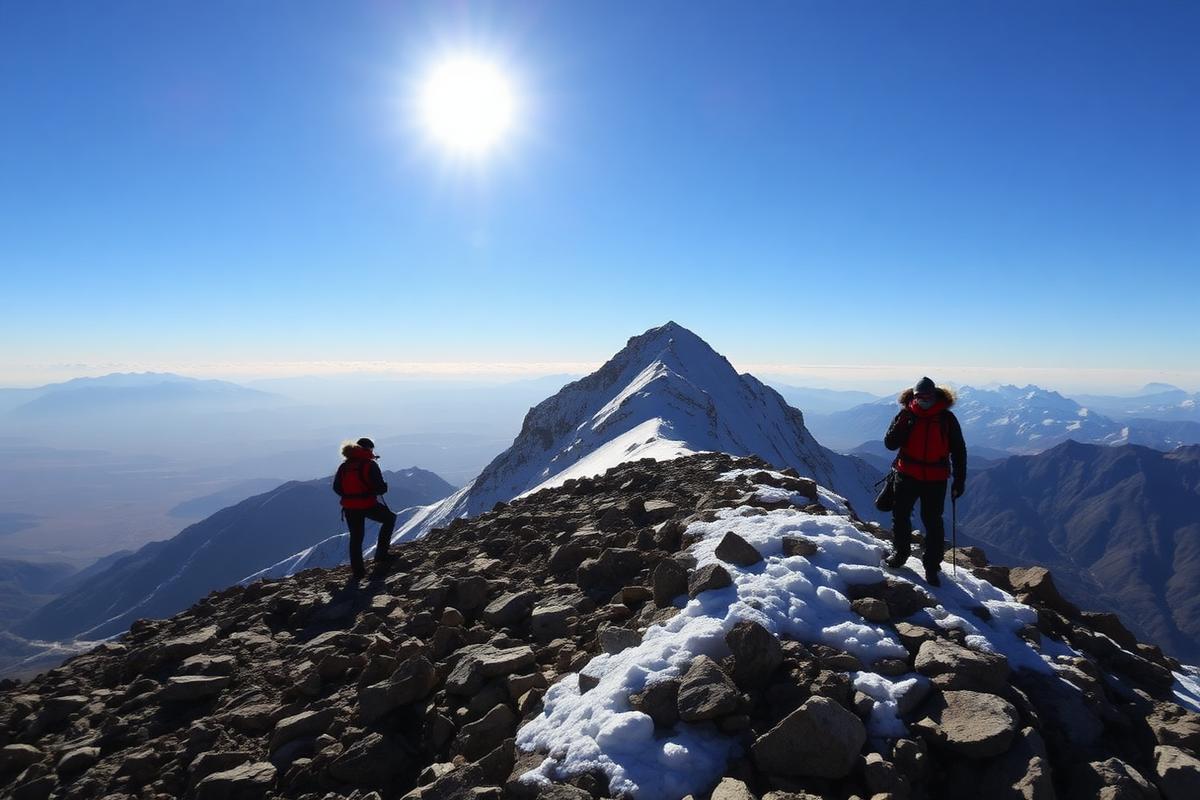
Mount Toubkal: The Complete Planning Guide
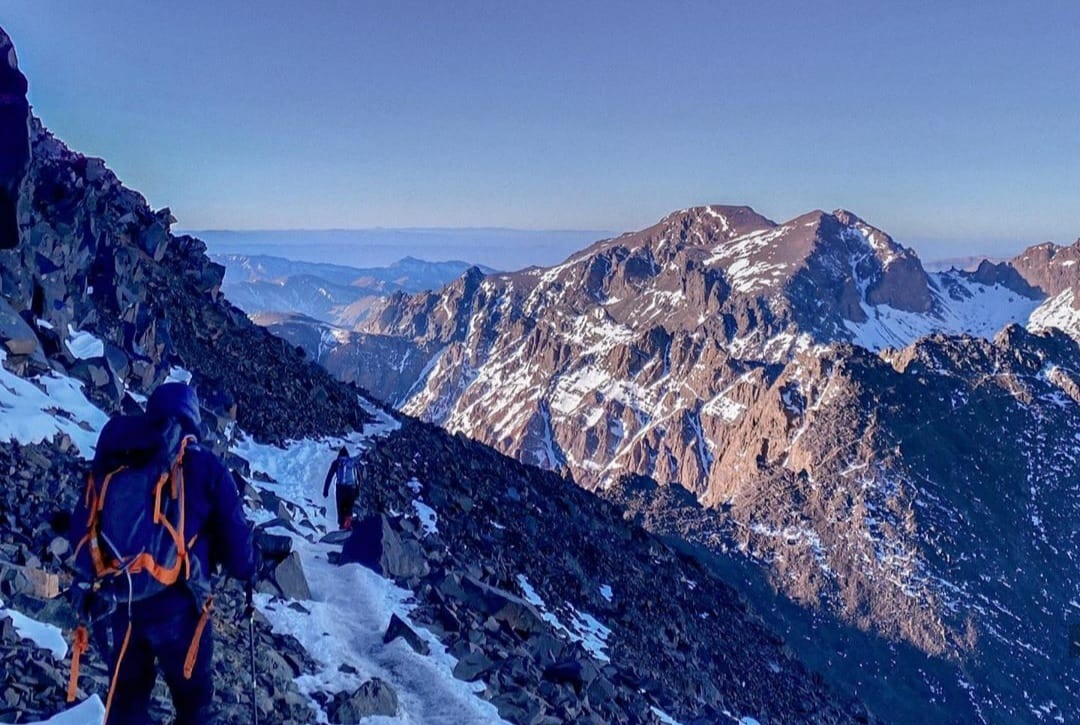
Jbel Toubkal is the highest mountain in Morocco and in North Africa at 4,167 metres. This guide covers where the trek starts, how difficult it really is, how many days to allow, what each season feels like on the mountain, and how the different Toubkal itineraries we run from Marrakech actually differ.
Quick facts. Summit 4,167 m (highest in North Africa) · Start: Imlil, about 1,740 m, around 1.5 hours from Marrakech · Overnight: Toubkal refuge area, 3,207 m · Ascent from Imlil: roughly 2,400 m · Minimum: 2 days · Non-technical in normal summer conditions; a winter mountaineering objective from roughly December to March.
What is Mount Toubkal?
Mount Toubkal — Jbel Toubkal in Arabic, Adrar n Tubqal in Tamazight — is the highest mountain in Morocco and in North Africa, at 4,167 metres. It sits in the High Atlas range, inside Toubkal National Park, and it is the reason most trekkers come to this valley: a genuinely high summit that, in normal summer conditions, is reached on a walking route rather than a climbing one.
This guide covers the planning questions. If you already want to compare and book a trek, the Mount Toubkal treks page sets the 2-, 3- and 4-day itineraries side by side.
Where is Mount Toubkal?
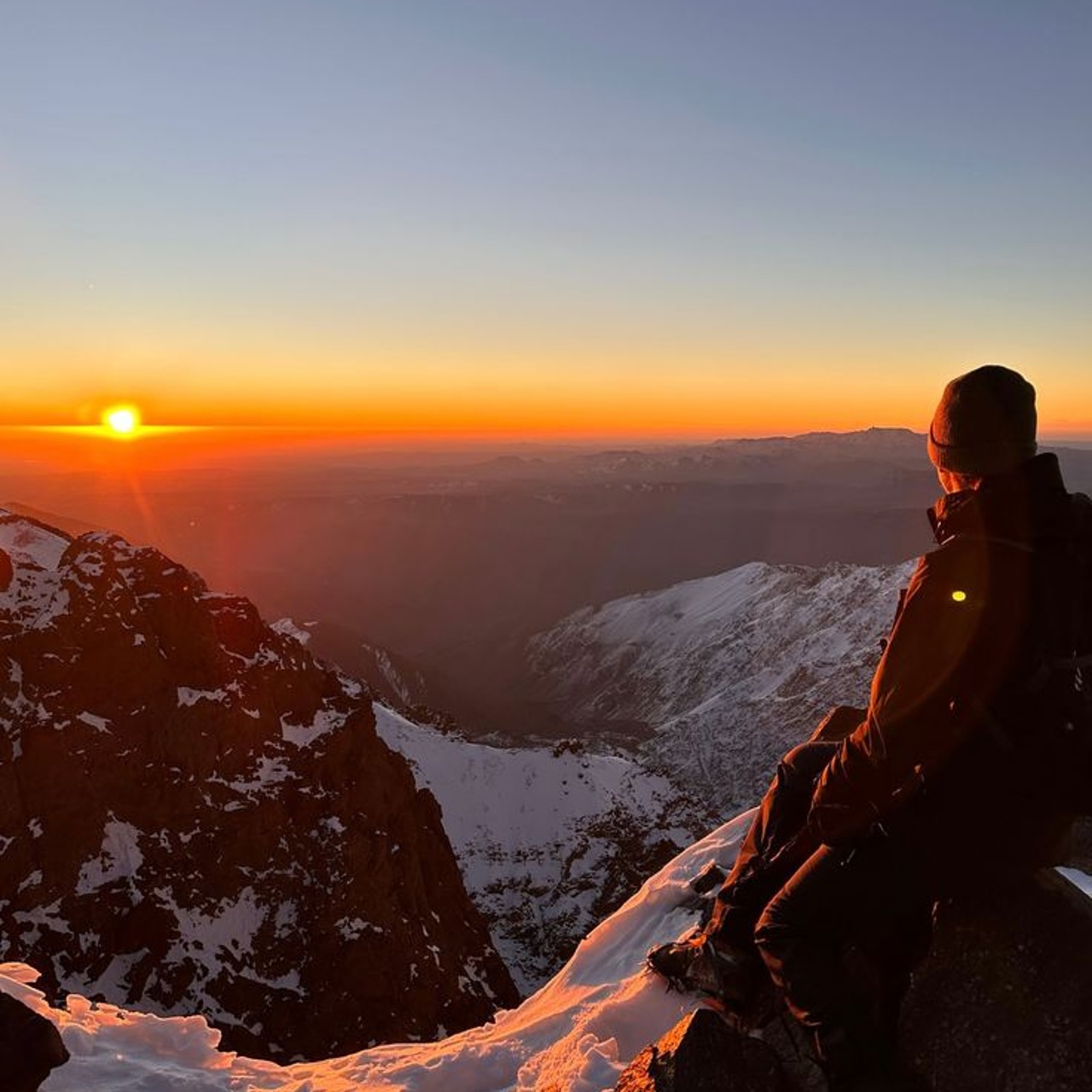
South of Marrakech, in the High Atlas. Trekkers reach it through the village of Imlil, the road-head at roughly 1,740 m at the top of the Mizane valley. The drive from Marrakech to Imlil is short — usually around 1.5 hours — which is why Toubkal is one of the few 4,000 m summits in the world you can start walking towards on the same morning you leave a major city.
If you only want to see the valley and the massif without a summit attempt, the Imlil and Toubkal Valley day trip covers the same approach as a single day out of Marrakech.
How hard is the Toubkal trek?
Direct answer: the standard summer route is a long, steep hike, not a technical climb. No ropes, no climbing skill, no scrambling grade. What it does demand is sustained uphill walking on rough ground at altitude, on consecutive days, with an early-morning summit push.
In practice the difficulty comes from three things:
- Vertical gain. From Imlil at around 1,740 m to the summit at 4,167 m is roughly 2,400 m of ascent, normally split over two walking days.
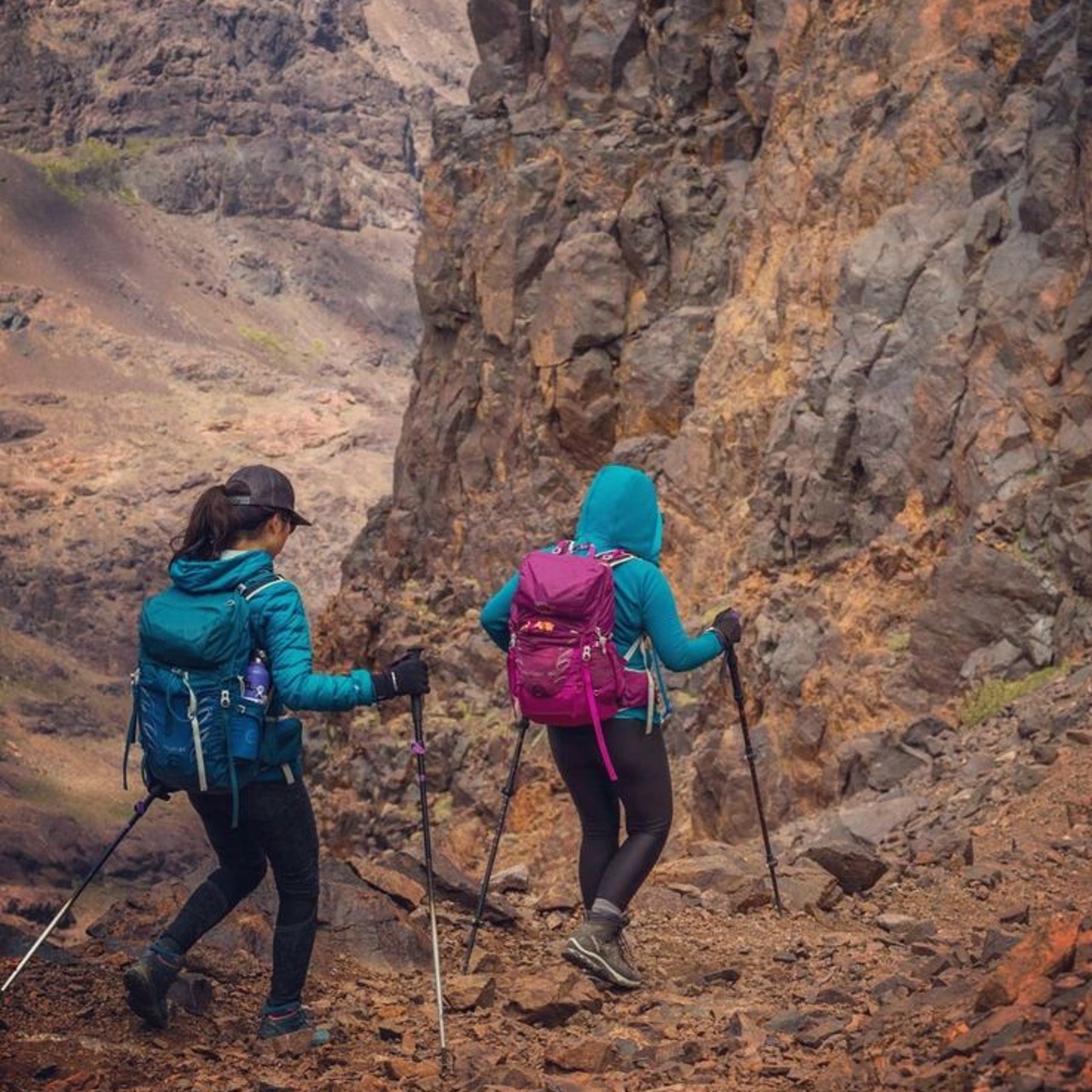
- Terrain. Loose rock, scree and boulder fields above the refuge. Poles help; ankle-supporting boots help more.
- Altitude. Above roughly 3,000 m most people notice the thinner air. See the altitude section below.
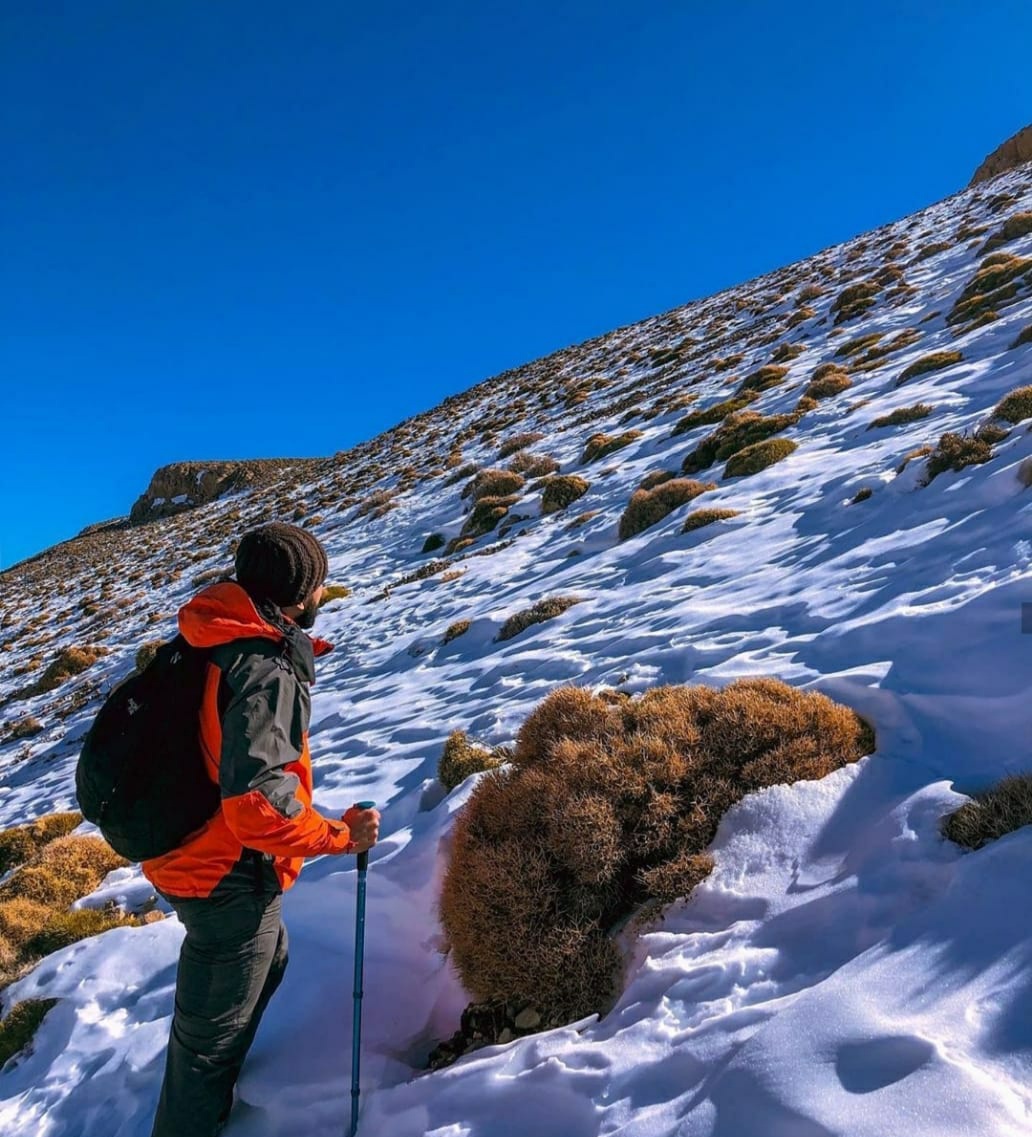
Winter changes the answer completely: snow and ice on the upper mountain can make the same route a mountaineering objective requiring appropriate technical equipment and experience.
Where does the trek begin?
Almost every Toubkal itinerary begins in Imlil. From there the classic line goes:
- Imlil → Aroumd (about 1,900 m). A short walk up the valley to the last big village.
- Aroumd → Sidi Chamharouch. A rocky trail past a whitewashed shrine, the usual mid-morning stop.
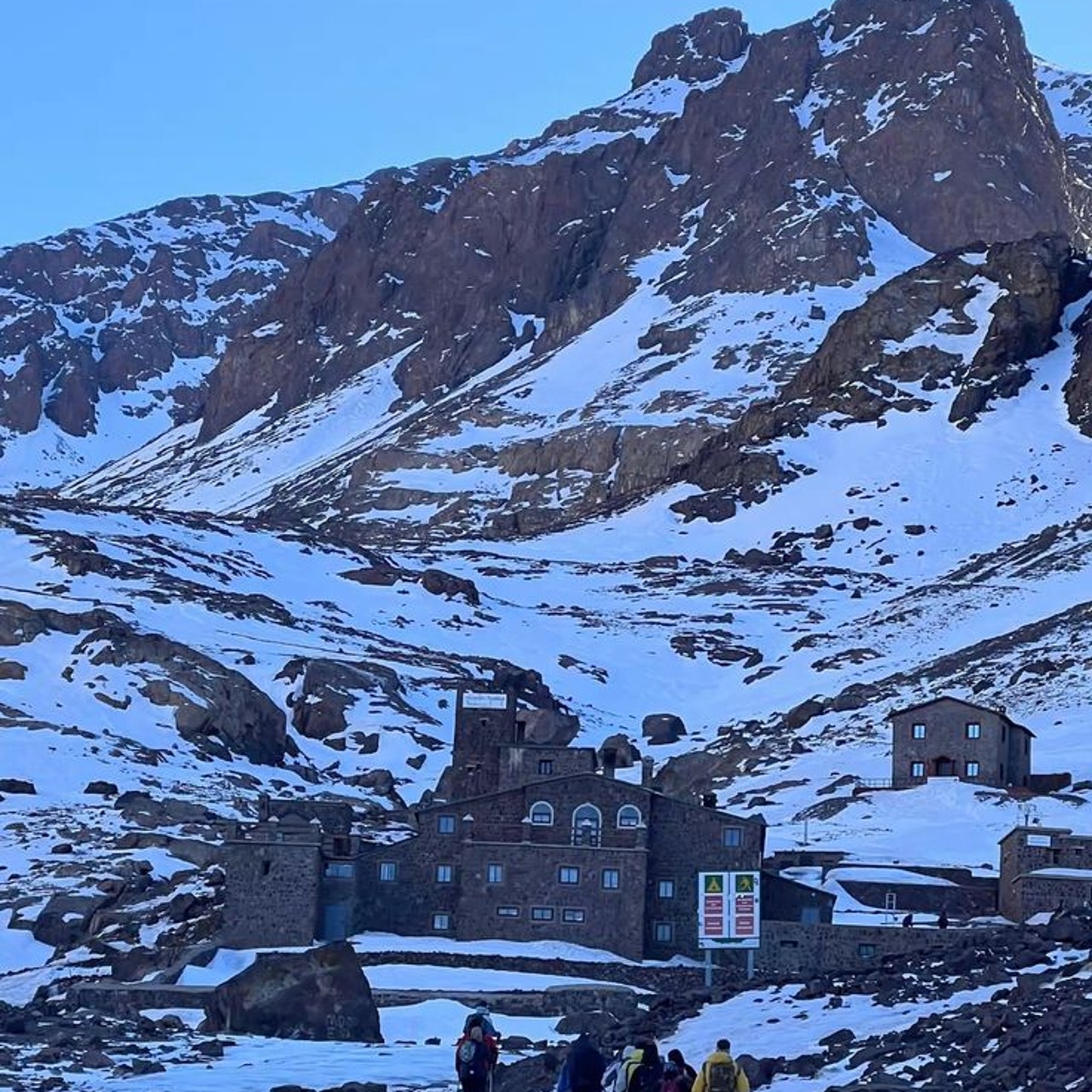
- Sidi Chamharouch → Toubkal refuge (3,207 m). The long grind up the Mizane valley — normally 5–6 hours total from the valley floor.
- Refuge → summit (4,167 m) → descent. A pre-dawn start, then all the way back down to Imlil.
How many days do you need?
You can summit Toubkal in two days from Marrakech. Whether you should depends on how much altitude margin you want.
| Days | What it gives you | Best for |
|---|---|---|
| 2 days | Valley to refuge, summit next morning, straight back | Fit trekkers on a tight schedule |
| 3 days | An extra valley or acclimatisation day before the refuge | Most first-timers |
| 4 days | A dedicated acclimatisation day around 3,000 m, sleeping low | Anyone who has struggled with altitude, or wants the best summit odds |
| 5–6 days | Toubkal plus a second valley or a second peak such as Ouanoukrim (4,089 m) | Trekkers who want the range, not just the summit |
| 8 days | A full traverse, or a winter expedition with a reserve summit day | Experienced trekkers with time |
The honest trade-off: a two-day trip works well for people who are already hill-fit and arrive rested. The extra day in a four-day plan exists for one reason — you walk to about 3,000 m and then sleep low again, which is the single most useful thing you can do for your summit chances.
Our own itineraries map onto that table directly: the 2-Day Mount Toubkal Summit Trek, the 3-Day Toubkal Trek via the Azzaden Valley, the 4-Day Mount Toubkal Summit Trek with its acclimatisation day, the 5-Day Atlas Valleys and Toubkal Trek, and the Atlas Peaks and Valleys Trek, which adds Ouanoukrim before Toubkal.
If you are weighing the two shortest options in detail, our 2-day versus 3-day Toubkal comparison goes through them side by side.
Best time to trek Toubkal
Short answer: late April to October for a walking ascent; December to March for a winter ascent with technical equipment.
- Spring (April–May). Green valleys, snow still lying high. Beautiful, but the upper mountain can still hold hard snow well into spring.
- Summer (June–September). The most reliable window for a non-technical summit. Hot in the valley, cool at the refuge, thunderstorm risk on some afternoons.
- Autumn (October–November). Stable, quieter, cooling fast. A strong choice.
- Winter (December–March). Snow-covered above the refuge. This is a mountaineering season, not a hiking one.
Our full seasonal breakdown lives in the best time to climb Mount Toubkal guide.
Altitude: what to expect at 4,167 m
Toubkal is high enough that altitude matters, and low enough that most reasonably fit trekkers manage it. Common, mild effects above about 3,000 m include shortness of breath, a headache, poor sleep at the refuge and reduced appetite. Walking slowly, drinking steadily and adding an acclimatisation day are the standard ways to reduce the chance of feeling rough on summit morning.
Altitude illness can be serious, and it is not predictable from fitness. If symptoms worsen, the answer is always to descend. This guide is general planning information, not medical advice — if you have a heart, lung or blood condition, or you are unsure, speak to a doctor before booking a high-altitude trek.
Accommodation on the mountain
Two kinds of night are involved in a typical Toubkal itinerary:
- Valley nights in a village guesthouse or gite, in Imlil, Aroumd or a neighbouring valley such as Azzaden.
- A mountain night at the refuge area at 3,207 m below the summit, which is what makes a pre-dawn start possible.
Refuge arrangements vary by operator, season and itinerary, so for exactly where a specific departure sleeps, check that tour page or message us on WhatsApp rather than assuming.
What to pack
Layers, sun protection and boots you have already worn in. Our Toubkal trek preparation guide covers training and kit in detail; the short version is:
- Broken-in boots with ankle support, plus trekking poles
- Warm mid-layer and a windproof shell — the summit is cold even in August
- Hat, sunglasses, high-factor sun cream: the UV at altitude is fierce
- Headtorch for the pre-dawn start
- 2–3 litres of water capacity, and snacks you actually like eating when tired
Winter ascents additionally require appropriate technical equipment and the skills to use it. What any individual trip supplies differs — confirm that directly for the departure you are considering.
Guides and park rules
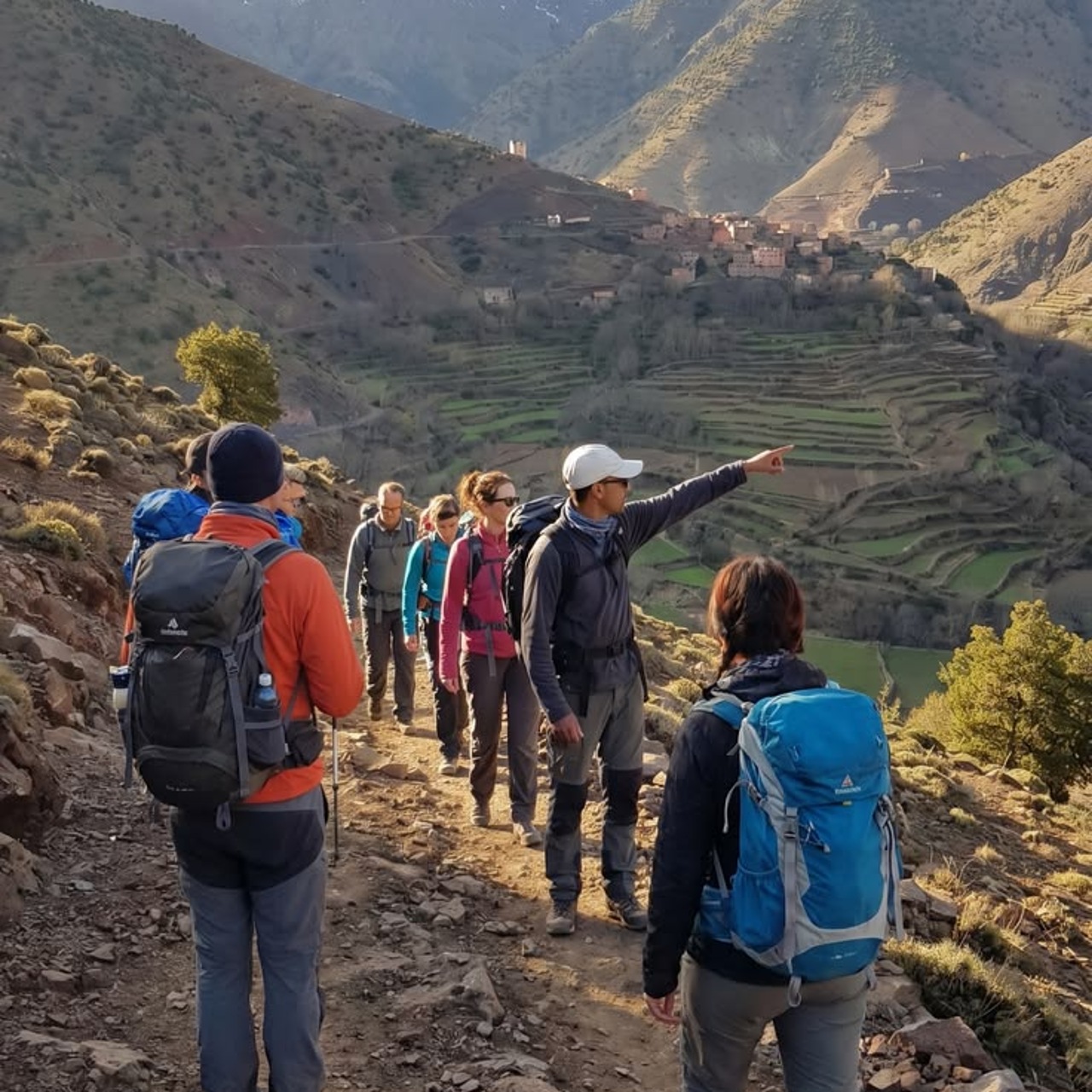
Toubkal sits inside a national park, and trekking here is normally done with a licensed local mountain guide; requirements and checkpoint practice can change, so check the current rules for your dates before travelling independently. Working with a local guide also solves the practical problems — route choice in changing snow conditions, refuge logistics, mules for bags, and the language of the valley.
Getting from Marrakech to Imlil
Around 1.5 hours by road, south through Asni. Our guided Toubkal treks include return transport between Marrakech and Imlil — check the "included" list on the tour page you choose, so you do not book a separate transfer you have already paid for. Independent options are shared taxis from Bab Rob, or a private transfer.
Shared group or private trek?
Every itinerary above runs as a shared small-group trek, and the current price is always the one shown on the tour page — we do not quote different numbers in guides.
The 2-, 3- and 4-day treks can also be arranged as a private trek with your own guide and departure. Private treks are booked as an availability request: we confirm the date, guide and logistics first, and no online payment is taken until that is confirmed. Approved private prices and how the request works are explained in our private Mount Toubkal trek guide.
Travelling in winter? The 3-Day Winter Mount Toubkal Trek is the itinerary built for snow conditions; read the Toubkal winter climb guide first.
Choosing the right Toubkal trek
- Short on time and already hill-fit? Two days.
- First 4,000 m summit, or coming straight off a desk job? Three or four days, with the extra day used for acclimatisation.
- Want quiet valleys rather than the busiest trail? Start through the Azzaden valley.
- Want the range as well as the peak? Five to eight days, ideally as a High Atlas traverse.
- Winter summit? An expedition-length trip with a reserve day, and previous experience on snow.
For the mountain itself — height, where the trek starts and how the options compare — start with our Mount Toubkal guide.
Not sure which fits? Tell us your dates and fitness on WhatsApp and we will tell you honestly which itinerary suits — including saying when a shorter one is a bad idea.
Frequently asked questions
- How high is Mount Toubkal?
- Mount Toubkal is 4,167 metres high, making it the highest mountain in Morocco and in North Africa.
- Do you need climbing experience to summit Toubkal?
- No. In normal summer conditions the standard route from Imlil is a steep hike on rough ground rather than a technical climb. Winter is different: snow and ice on the upper mountain call for appropriate technical equipment and experience.
- How many days do you need to climb Mount Toubkal?
- Two days is enough for fit trekkers. Three or four days is a better choice for most first-timers, because the extra day is used to walk high and sleep low, which improves acclimatisation and summit chances.
- Where does the Toubkal trek start?
- In the village of Imlil, about 1.5 hours by road south of Marrakech, at the head of the Mizane valley.
- What is the best time of year to climb Toubkal?
- Late April to October for a walking ascent, with June to September the most reliable window. December to March is a winter mountaineering season rather than a hiking one.
- How cold is the Toubkal summit?
- Considerably colder than the valley in every season, with wind chill on the summit ridge. Even in summer you should carry a warm layer and a windproof shell for the pre-dawn start.