Toubkal Summit Day, Hour by Hour
Summit day is the part people remember and the part they plan least. Here is the shape of it, stage by stage.
What time does summit day start?
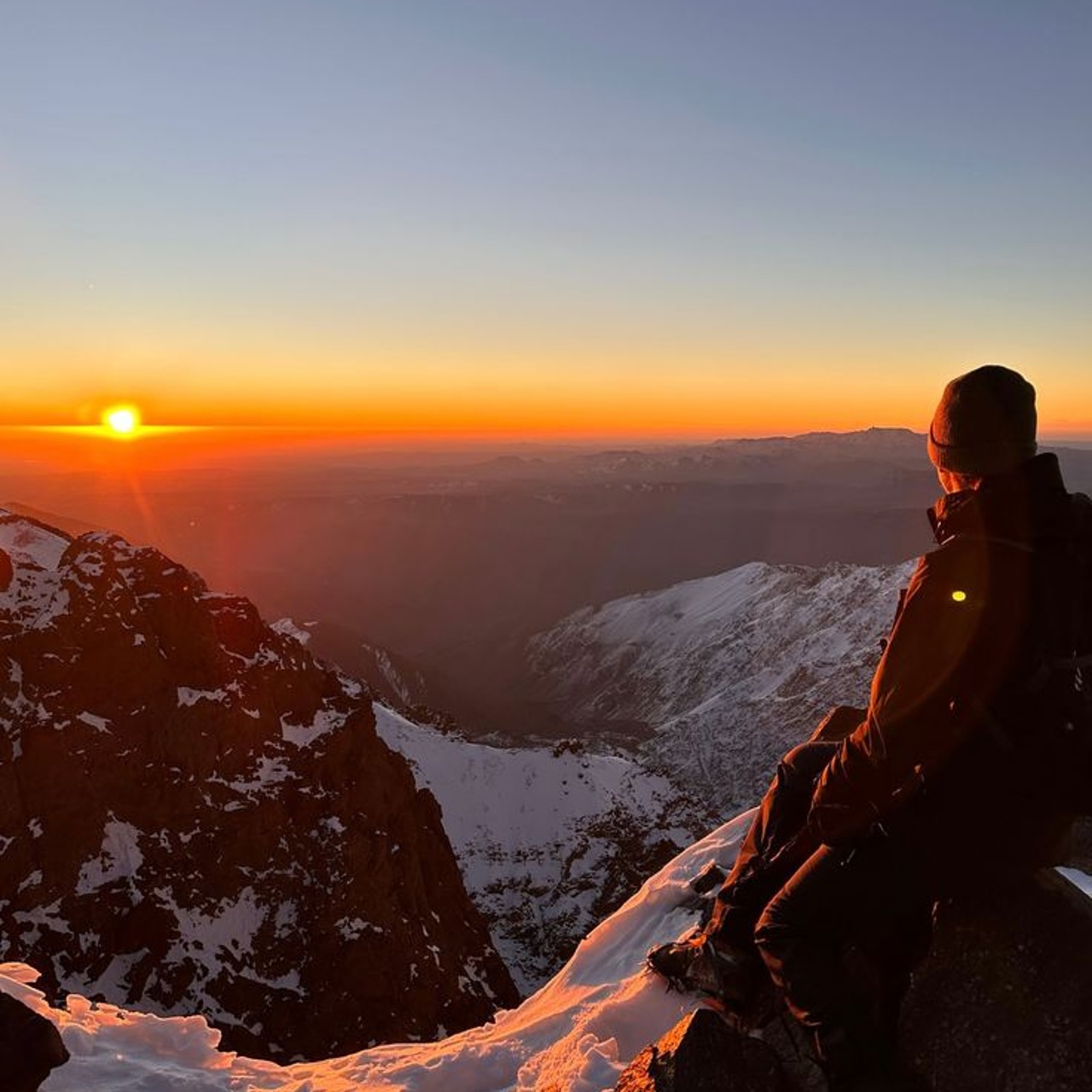
Between 4 and 6 in the morning, from the refuges at around 3,207 m. The early start is not tradition for its own sake: it buys stable morning conditions, cold firm ground underfoot in winter, and — critically — enough daylight for the long descent afterwards.
The shape of the morning
| Stage | Terrain | Feel |
|---|---|---|
| Refuge to the boulder field | Rocky path, headtorch | Cold, slow, quiet |
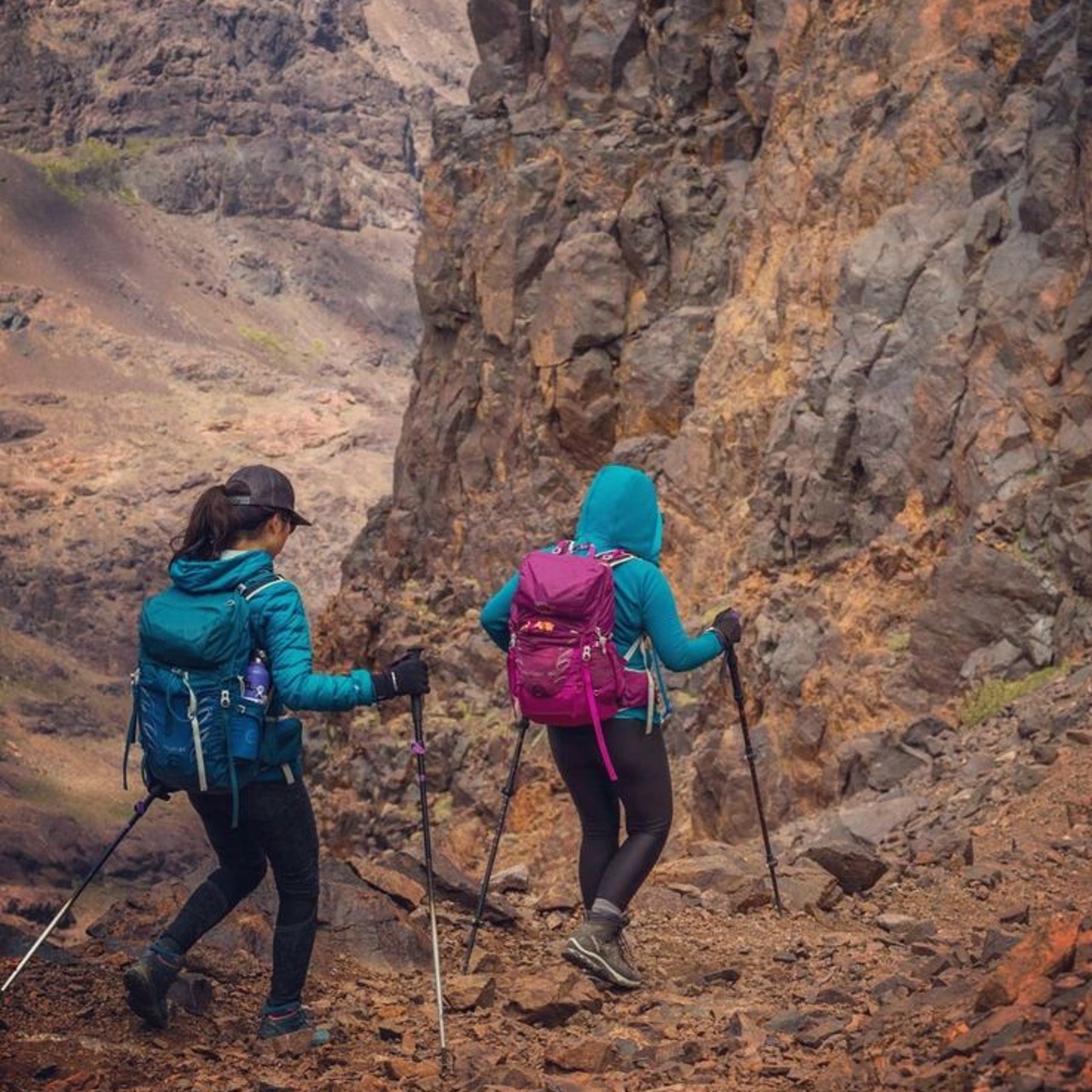
| Boulder field to the upper cirque | Loose rock and scree | Repetitive, steep, the mental low point for many |
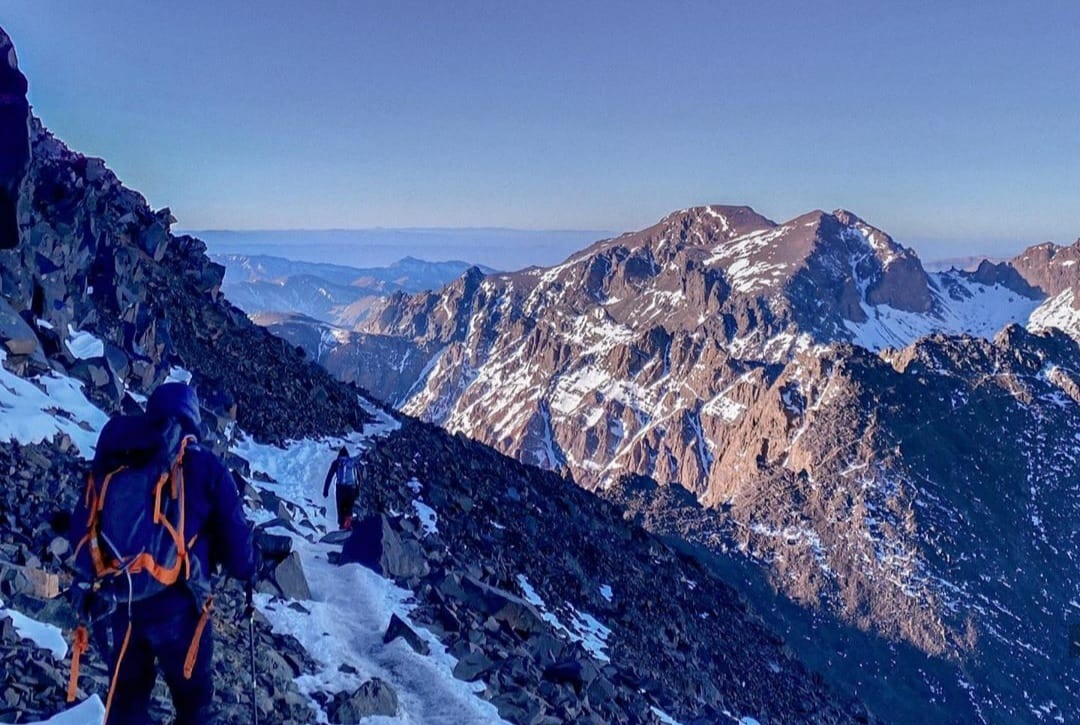
| Upper cirque to the ridge | Zig-zags to a saddle | Wind picks up; layers go on |
| Ridge to the summit | Broad stony ridge | Sudden long views, then the metal summit tripod |
| Summit to refuge | The same ground reversed | Faster, harder on knees than expected |
| Refuge to Imlil | Valley path | Long, warm, satisfying |
Times vary widely with fitness, group size and conditions, so treat any hour-by-hour promise with suspicion. What is consistent is the structure: a slow dark climb, a cold windy top, and a descent that takes most of the rest of the day.
Why is the descent the hard part?
Because it is long, loose and comes after you have already climbed. Scree slides under the foot, knees take repeated impact, and concentration falls away once the summit euphoria fades. Poles help enormously. So does eating something at the top even when you do not feel like it.
What is the summit itself like?
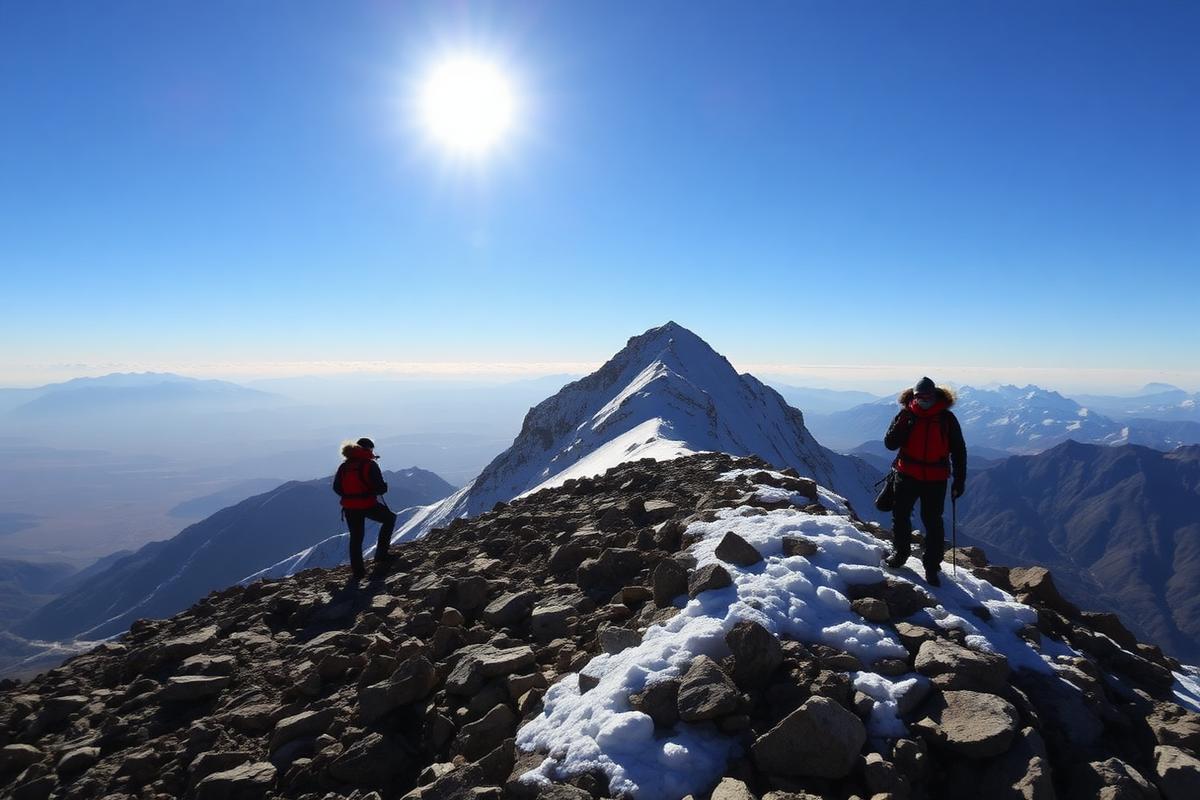
A broad stony dome with a welded metal tripod and, on a clear morning, views over the whole High Atlas towards the Sahara side. It is usually cold and windy even in summer — the temperature difference between the refuge and the summit at dawn surprises almost everyone. Most groups stay 15–30 minutes.
What should I carry on summit morning?
Windproof and warm layers you can put on without stopping long, gloves and a hat, a headtorch with working batteries, more water than you think, and food you will actually eat when your appetite disappears. In winter, add the crampons and ice axe covered in the winter guide.
What makes people turn back?
Rarely a single dramatic problem. Usually: starting summit morning already exhausted from day one, dehydration, cold hands and inadequate layers, or altitude symptoms that are getting worse rather than settling. The first is the most preventable — walk day one slowly.
Choosing an itinerary that protects summit day
The 2-day summit trek compresses everything into one refuge night. The 3-day Azzaden route puts a valley day in first, and the Atlas peaks and valleys trek builds summit day into a longer mountain week. For the background on effort and altitude, start with the difficulty guide, and the complete Toubkal planning guide for how the whole trip fits together.
Message us on WhatsApp if you want a frank answer about which itinerary gives you the best summit morning for your fitness and dates.
Summit day looks different on a 2-, 3- or 4-day itinerary — compare them on the Mount Toubkal page.
Frequently asked questions
- What time does Toubkal summit day start?
- Usually between 4 and 6 in the morning from the refuges, to get stable conditions and enough daylight for the descent.
- How long does the Toubkal summit day take?
- It varies with fitness, group and conditions. Plan for a long day: a pre-dawn climb, a short stop at the summit, and a descent that fills much of the rest of the day.
- What is the hardest part of summit day?
- For most people the descent - loose scree and repeated impact on tired legs, after the climb is already done.
- Why do people fail to summit Toubkal?
- Most often because they arrived at the refuge exhausted, were dehydrated or cold, or had altitude symptoms that were worsening.